Art Therapy- I tried it and you should too! By: Lauren Avila
Art therapy can come in many forms through hands-on experience and engaging creativity, be that through performance or fine arts. There are individual and group sessions of art therapy widely available throughout London. It is a practice that is led by a trained professional with the intention to offer a safe environment to get in touch with feelings that may otherwise remain guarded. There is evidence to support that engaging in art therapy helps individuals to speak more freely and become more relaxed when facing an issue.
Each individual is different and each person’s needs vary. Some people may need the guidance and healing that comes from a trained art therapist. However, that does not discount that art, in its many forms, is therapeutic on its own.
The British Association of Art Therapists state on their website that “art therapy can help people of all ages and at all stages of life, including those whose life has been affected by difficult personal or cultural experiences, illness and/or disability. You do not need to be skilled in art to benefit from art therapy.”
That was the case when I put this theory to the test. I observed and participated in different types of art with groups of normal people from different backgrounds.
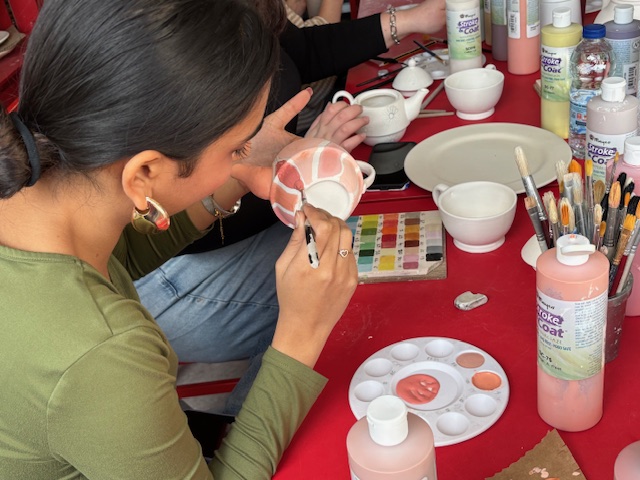
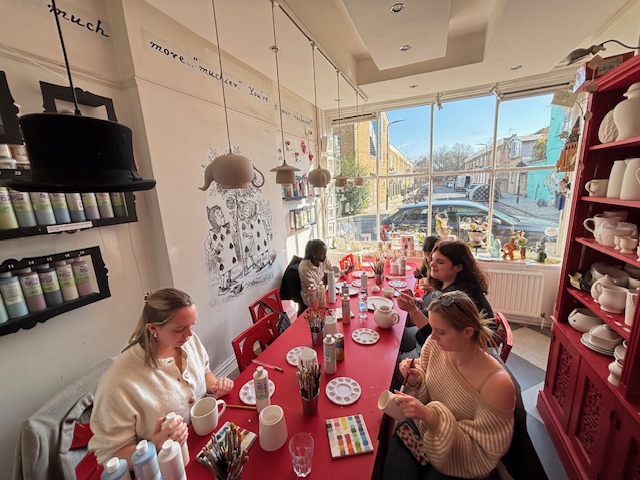
First I went to Wonderland Ceramics to test if fine art really can help people with their mental health. The task? Choose a ceramic item and paint it in any way one wishes to. It turns out that art as therapy really is dependent from person to person. In a group of seven, a couple attendees felt stressed by this task. They found it difficult to choose an item, then choose how to decorate it, and also to efficiently do so.
“I feel stressed because I’m a perfectionist, but I also feel relaxed because I know I can take my time,” Leyonce explained when asked how creating art made her feel.
Others found these steps less intimidating.
“I love this,” Skye said. “I’m so glad I decided to do this.”
Despite the rocky start, over the course of time the challenge became easier and the room’s temperament changed. People felt more at ease and the conversation in this group became more comfortable by each passing minute. As mentioned earlier, evidence supports that art can encourage a person to open up and share deeper thoughts and feelings.
“I was feeling stressed but I’m feeling a lot more relaxed now,” Gilly shared.
I challenged the theory again when attending a performing art event. The task? Have beginner and intermediate dancers try to teach and learn from each other. As an overall observation, this much larger group of about twenty attendees followed a similar pattern. About half the room was filled with timid beginners but by the end of the event there was a buoyancy in the room. Everyone’s spirits were lifted and the whole group bonded in conversation long after the event concluded.
Speaking from personal experience from both activities, I felt relaxed, jubilant, care-free, and fulfilled while participating and immediately following each event. I can also say the same from other art forms such as writing stories and taking pictures. Again, this is different for each person but I believe it is safe to say that art as therapy is worth looking into.
To find out more about the evidence behind art therapy, how it works, what types of therapy there are, and where to start looking for an art therapist, visit Mind. If you are local, consider looking up the classes and events that are offered here at Paddington Arts.