Posts

Tasting Matcha Across London

By Leah Gabriella Cardenas

As a self-proclaimed matcha enthusiast, upon landing in the UK, I was immediately curious to see how the more recent matcha craze hit London and how it compares to my personal taste. Back in Seattle, Washington, my favorite matcha spots are Nana’s Green Tea, Grean Matcha and Phê. However, I most often make my own matcha at home with powder that my roommate bought in Japan. I like my matcha lattes best with oat milk and maple syrup as a sweetener. Some people claim matcha tastes like grass, but I think you just have to find the right place for it. So, I went on a mission to try matcha from different places around London in search of a new favorite.
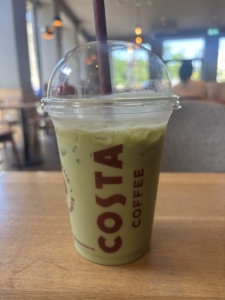
The very first matcha I had in London was from Costa Coffee, the largest coffee chain in the UK. I ordered a medium iced matcha latte with vanilla syrup because the barista asked if I wanted to add any sweetener. I couldn’t see how it was made behind the counter, but it came out pretty quickly. The color was a pale green which is often telling of a not-so-good matcha. Still, I gave it a try. It mostly tasted like vanilla which may be my fault for getting the added syrup. However, if I hadn’t, then I imagine it would have been like drinking a glass of milk.

I had high expectations going into Blank Street because a friend of mine recently visited London and absolutely raved about this place, suggesting I give it a try. It actually first opened in New York, but I haven’t been before. Of the many locations across London, I stopped by the one in Notting Hill Gate. I ordered a classic iced matcha latte. The vibrant color was deceiving because when I gave it a sip, the matcha taste was very subtle. It wasn’t a bad matcha per se, just not what I was looking forward to based on things I’ve heard. However, I will go back to try the blueberry and white chocolate matchas with lower expectations.

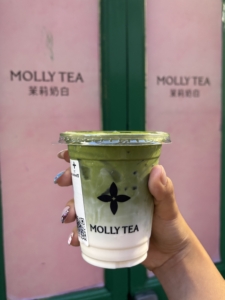
Molly Tea in Chinatown was my next stop. As a Chinese tea chain specializing in jasmine tea, they offer two kinds of matchas. I tried the premium jasmine matcha with a regular sweetness level. It was fairly crowded in the tiny shop, but my drink was ready within five minutes. The color and texture looked immediately promising. I personally enjoy jasmine tea and didn’t mind that this drink’s flavor profile leaned more to jasmine than matcha. It was a little sweeter than I was expecting so I should have gotten 70% sweetness instead of regular. Still, it was a delicious matcha.

Then, I went to Matchado in Bloomsbury but they have four different locations. On top of the variety of drink options, Matchado offers many matcha flavored sweets like brownies and Japanese pancakes. I ordered a regular iced matcha latte with brown sugar syrup. It was ready almost immediately, so I’m assuming a matcha concentrate was pre-made. Still, it looked like good quality matcha. The brown sugar part was not overpowering as I could still taste the umami of the matcha.
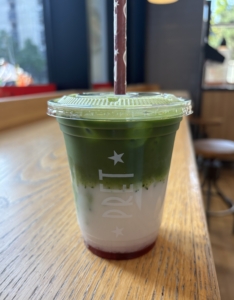
On my first day in London, I heard someone say that Pret a Manger is the “Starbucks of the UK” so I had to give it a try. I wanted a guava iced matcha latte because I was intrigued by the flavor combination, however, the location I went to was out of guava. I settled for an iced blueberry matcha latte which comes with coconut milk. The blueberry syrup was quite nice and not too sweet, but it was somehow still overpowering. I couldn’t taste even a hint of matcha. I tried drinking from the top or mixing it better, but it was all blueberry. 

Next, I visited Jenki in Spitalfields. They emphasize how their matcha is sourced from Japan and whisked to order, so I was looking forward to both the taste and texture. I tried the iced matcha latte with maple syrup which would be the closest to how I make it myself. They do in fact whisk it to order and right in front of you, but they had an electric attachment to speed up the process. Though I got maple syrup, the matcha was still very bitter. I prefer a balance of sweet and umami so having paid the extra pound for syrup, I feel like it could have been better.

The last place I tried for this list is Tsujiri, a matcha dessert and tea house. I visited the Camden Market location and ordered a sweetened iced matcha latte. It was prepared quickly and the worker mixed it for me so I didn’t get to see the color of the matcha alone. Still, it tasted great. There was that balance of sweet and umami that I prefer. It also had a creamy texture, better than the rest of the matchas on this list. I definitely want to go back to try their matcha sundaes. 

Overall, the matcha scene in London is not all that different from what I’m used to in the states. There are some exceptional matcha places, some just ‘alright’ matcha, and some coffee shops with inconsistent matcha. I would also say the pricing is comparable to Los Angeles and Seattle with a few places here being slightly cheaper. My favorites from this list are by far Matchado and Tsuijiri. I would still try all of these places again as sometimes the quality depends on the location and barista. I suggest you give these places a visit too to see how you like the matcha for yourself.
The Summer I Left My Heart in London

By: Natalie Kreider

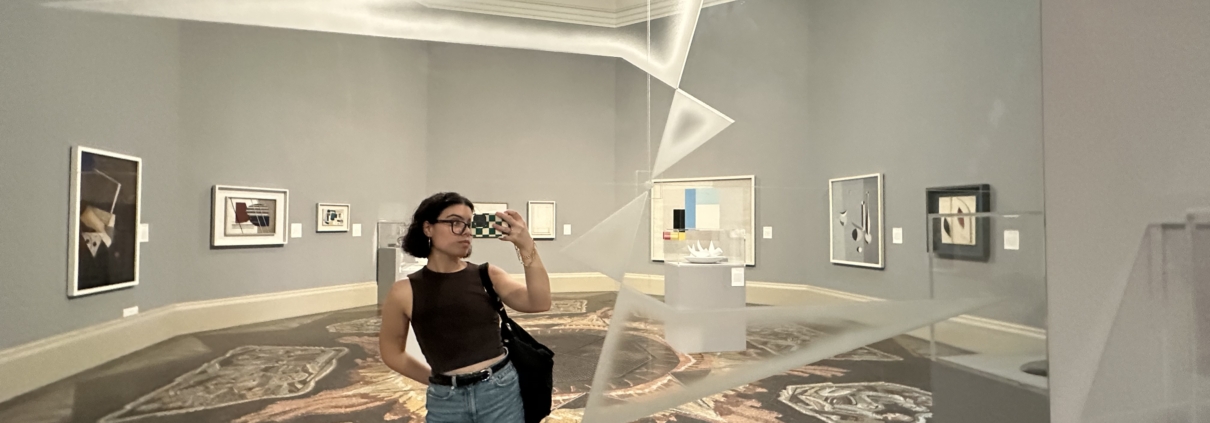
One could only imagine all the things that could happen living in London for three months. There were times that I approached with wonder and curiosity, while there were those where I’d be lying if I said that I didn’t want to go home. However, those moments forever changed me, and I couldn’t be more grateful.

To quote Jake Keller, Paddington Art’s intern before me, “London broke my bank account…” I knew that was going to happen, but not in the first month and a half. To be honest, I got caught up in the shopping and going out to London’s pubs with my new friends. It was easy to forget that I was an international student on a visa, living in one of the world’s most expensive cities without permission to receive public funding. Then, reality hit. For a moment, I just wanted to go home to leave the discomfort behind. But I wasn’t going to let that define the rest of my time here, so I decided I needed to get creative and make the best of the situation. I cooked more of my meals, spent my days in awe of the free art museums, and wandered through Hyde Park in my new clothes — small things that brought me joy. 

I’ve always been drawn to roles that support and uplift others, which is why I believe I was led to Paddington Arts—a not-for-profit that embodies those values and has made it its mission to empower youth through the arts. My role there was to write and post content for their blog, where I was given visionary freedom. That said, I had only ever written within a scholarly context, so this was a creative challenge. Initially, I was going to approach my articles by combining a journalistic and academic tone. That was more challenging than I anticipated, so I changed course and started writing about my interests, my reflections, and what was on my mind. These articles soon became another archive for my last six weeks here in London.

Looking back, my summer in London was far from perfect, but that’s what I needed. This was my first time living by myself and for myself. My mom told me that I wouldn’t be the same person when I came back home, and I know she’ll be right. Through every high, low, and quiet in-between, I’ve evolved more into who I’m meant to be. From navigating financial realities to finding my creative voice at Paddington Arts, each challenge shaped the experience into something I’ll carry with me long after leaving. And with that, London will always have a special place in my heart. 

Advice That Meant More Than I Knew

By: Natalie Kreider

Before I left for my three-month study abroad here in London, I was given a lot of much-needed advice because this was my first time doing something this grand. However, there was one piece of advice that stuck with me, and that was to “go meet people and take chances.” To me, studying abroad, regardless of where you go, is the perfect opportunity to do this. However, it was easier said than done, but I wanted to push myself out of my comfort zone, especially since I came by myself and didn’t know what to expect. Taking that advice to heart, I had one of the most adventurous and memorable summers of my undergraduate years. 

I’m someone who loves meeting new people, but initiating conversation to make that happen is nerve-wrecking to me. On my first day here, I challenged myself to do just that at my study abroad intro orientation. As I left that meeting with my roommate, now friend, Sandra, whom I had only met a few hours prior, I approached and complimented a girl’s heart-shaped Coach purse that I genuinely thought was cute. However, I remember that I was hesitant for a split second beforehand, not wanting to be awkward, but I reminded myself that’s what I came to do. Fortunately, Morgan, the one who had the purse, excitedly accepted it as she complimented me on my outfit afterwards.  Nonetheless, it just so happened that she was standing with another girl, Caroline, who was one of my Biology lab mates from a year ago at uni, but she recognized me before I recognized her. From there, the three of us struck up a conversation, and I invited them to join Sandra and me for dinner, where we all got to know each other. From that point forward, the four of us became inseparable and did almost everything together. Looking back, if I had not spoken up and let my anxieties get the best of me, I would’ve missed out on one of the most meaningful connections I made abroad. 

 I grew up always having company, as I have two older siblings and live near my extended family. Since this was the first time I had been this far away from them, I made it one of my goals to be more independent and be more comfortable being with myself. Through this opportunity, I was determined to cook for myself every week. Consequently, I think I became known as the “chef” in my flat since my three roommates would typically tell me that my food smells delicious, ask me what I’m cooking, or inquire about what ingredients I’m using. I’ve also taken it upon myself to go on solo adventures within the city. For instance, I attended a free meditation session at the London LGBTQ+ Community Centre, where I had the chance to meet local LGBTQ+ individuals and was welcomed with warmth. I have also gone on a solo day trip to Brighton on a very windy day, where a seagull tried to steal my sandwich at the beach, even though they were far in sight, and I couldn’t help but laugh about it. With that same spirit, I flew out to Amsterdam, and upon landing that night, I wandered through the lit-up neighborhood behind my hotel, happily eating gelato on a sprinkle cone and taking photos of a cat named Larry sleeping outside before meeting up with my friends the following day. Amid those solo experiences, I began to realize that being alone in a new place didn’t make me feel lonely, but rather freeing, as if I were building trust in myself and creating little joys in real time.  
The advice, to “go meet people and take chances,” came out of love and with the hope that I would follow through. At the time, it sounded almost obvious, but living it out this summer rendered something completely different. During my term here, I kept those words in the back of my mind, trying to grasp what they meant. What I noticed is that taking a chance doesn’t necessarily mean having to act upon a bold or grand gesture. Sometimes, it simply means initiating a conversation or showing up alone in a new space. Those small moments shaped my summer in ways that I couldn’t have imagined through friendships, unexpected adventures, and a greater trust in myself. Through it all, I learned how to feel more at peace and at home with who I am. 

The Value of the Arts within a City’s Culture

By: Natalie Kreider

When I first arrived in London, I didn’t know what to expect from its art scene, except for the research I had done online and on social media. However, as a lover of the arts, that doesn’t nearly depict what I have discovered in the two months I have been here. From those unexpected artistic encounters to the start of my time here at Paddington Arts and exploring London’s many neighborhoods, I’ve come to recognize the value of the arts within a city’s culture.

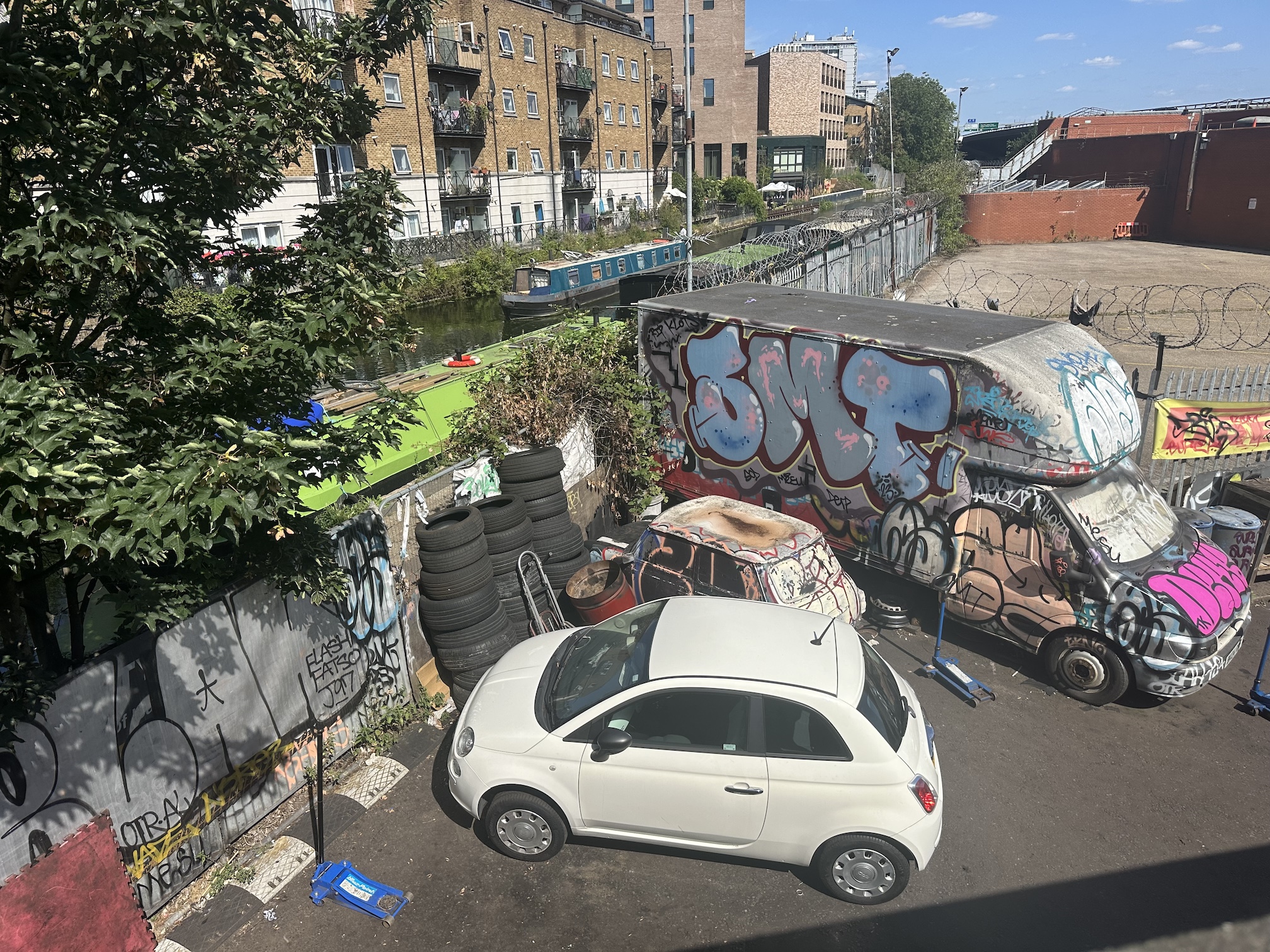
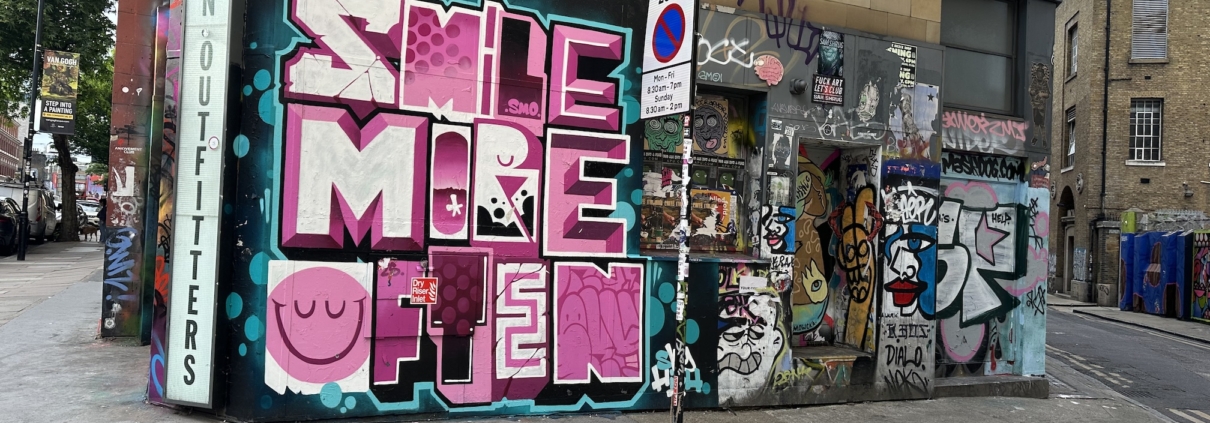
Almost every week, I’ve found myself walking into London’s many free art museums, where I could stay for hours, which I have. However, I was not expecting to witness it so often in everyday life. Specifically, what’s enthralling is the deliberate nature of a crafted piece in the streets, but it’s placed in an unconventional setting. One sunny morning, while walking from the Westbourne Park Tube station to Paddington Arts, I slightly tilted my head and noticed the graffiti on some old cars in a small junkyard by the canal. The beauty behind this discovery was not just the art itself, but how one has to pay attention to the little details to discover this artistry.

As a study abroad student on a limited budget, not all the art that London has to offer is accessible to me. Starting my internship at Paddington Arts, a youth arts nonprofit that makes art an attainable, creative, and explorative outlet for all, has put into perspective what it means for art to be accessible. This organization provides young people, especially those from marginalized backgrounds, with the space to rewrite the narrative and share the untold stories of the arts. It also gives them the chance to express themselves and grow in ways that they probably never thought were possible. In the short time I’ve been here, it’s become clear that spaces like this are essential in providing art for all in this city and influence artistic culture.

From the street art in Shoreditch to the musical theater posters displayed throughout the Tube stations, London’s art reflects the character of its people and what matters to them.  As I’ve wandered throughout the different neighborhoods, I’ve come to recognize that the art depends on where you are in the city. In the artfully subversive East End neighborhoods of Shoreditch and Camden, the walls are adorned with graffiti and murals, some of which are political, while others are purely self-expressive. In other parts of the city, there’s a more subtle hint of art. Throughout the West End neighborhoods of Soho and Covent Garden, a more polished, theatrical environment emerges, mirroring its historical prestige, where the city is reflected in its baroque theater façades, curated gallery exhibitions, and illuminated posters for its many musicals. This contrast between the neighborhoods exemplifies how London’s art reflects the diversified identity and values of its people.

Over my past two months in London, I’ve become more aware that the means of art is not just for pure observation but something you experience, navigate, and learn from. It’s the subtle little details that I didn’t plan to discover, such as the hidden graffiti-covered car by a canal, that made me view the city through a broader artistic lens. This change in perspective has further expanded once I started my internship at Paddington Arts, where I’ve witnessed the significance of making creative expression accessible. Providing young people with the opportunity to express themselves through art, especially for those who are often overlooked, reinforces the value that art plays in contributing to London’s cultural identity. These experiences began to connect as I continued exploring London’s neighborhoods, where I’ve recognized how their distinctive artistic styles reveal a great deal about who they are and what they are about. In the weeks I’ve been in London, I’ve witnessed how the arts shape identity, create space for expression, and reflect the voices of its communities.

A Love Letter to London and Paddington Arts

By: Jake Keller

In the blink of an eye, my time here at Paddington Arts has come to a close. During my stay in London, I have learned countless lessons that will stick with me for the rest of my life. I am incredibly grateful to the people at Paddington Arts who have helped to make this experience better than I ever could have asked for, and I am sad to say goodbye. 

It shocks me to say this, but my short 6-week stay here is the most time I have ever spent outside of my hometown in the United States. I was born and raised in Bloomington, Indiana, and I reluctantly decided to stay there for university as well. Although I am excited to see my loved ones, I don’t want to leave London behind. 

London was not my first choice of a city to live in; it just happened to be the city that my program chose to send me to. I’m glad that this is where I ended up because if it were left to me, I may have never gotten the opportunity to fall in love with this city. I do have a few complaints: London broke my bank account, hayfever nearly killed me, and I have several qualms with the plumbing… However, the list of what I love about London is much longer. 

There’s no time to be bored here, and there are endless activities to do and sights to see. Even on days when I felt like sitting around and doing nothing in my flat, I’d opt instead to make my way to a new park, grab a bite to eat, and just sit and read.  The options for grub are endless here as well, and as a foodie, that spoke to my soul. I made a new best friend in Too Good To Go, scoring deals on Indian, Japanese, and Ethiopian cuisine. The variety of food in London is one of the many benefits of the city’s multicultural spirit. 

The mission of Paddington Arts spoke to me, and I feel like I was meant to find my way to this organization. The arts, particularly theatre, helped me navigate through many challenges growing up. Performing helped me to find myself, and it truly shaped me as a person. Paddington Arts gives children the same opportunity to find themselves and provides them with the support they need to grow. I feel as if working as an intern here has allowed me to give back to the arts what they gave to me, and to pass the baton on to future generations. 

One thing I immediately noticed about Paddington Arts is how dedicated the people here are to the organization. The time and dedication that they give to this cause are beyond admirable, and I’ve been able to see firsthand the impact their work has on the community. 

Looking back on the past six weeks, there is not a single thing I would change, and for that I am thankful. 

Retreating from the City: The Seven Sisters Cliffs

By: Jake Keller

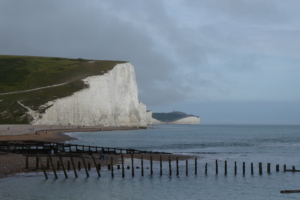
After a few weeks of getting lost in the bustling metropolis of London, I was ready to take a break from the city. The Seven Sisters offered me an idyllic escape along the southern coast of England. It only took around two hours to get there, and the sights were truly breathtaking.

I departed from Victoria Station around 12:30 p.m. with my travel companion, Simran, and we embarked on a train ride to Eastbourne. It was a charming town with a few shops and restaurants, but I only saw a small part of it as we rushed to catch our bus. There’s an option to take a 13-mile hike beginning at Eastbourne, but we opted for the 7–8 mile route from Birling Gap. The trip to Birling Gap requires a bus from Eastbourne. We accidentally got on a hop-on-hop-off bus, and although it was a little more expensive (£12), the upper deck’s open top offered us fantastic views.

Birling Gap has a visitor center and a café, which offers your last chance to purchase food; however, we had decided to pack our own. It was a little unclear where to go next, but we eventually found a gravel road that led us to the cliffs. A heavy shroud of fog made visibility limited; it felt as if we were in the clouds. I slowly walked toward the edge and peered down at the ocean as waves crashed onto the shore. It was stunning. 

The first half of the hike took us over the Seven Sisters themselves. As the name suggests, there are seven peaks. The trek is a pattern of walking uphill and then treading down a steep decline. The haze was thick, but we could still see the sisters’ faces protruding over the infinite sea below. An hour or so passed before we reached the halfway point: Cuckmere Haven.

The path dipped down and led us toward a rocky beach. The sky was gray, almost like a storm was near, but a few people still swam in the water. We were in a valley between the Seven Sisters and their neighboring cliffs, with a river dividing them. We explored the beach for a moment but decided to make our way forward in pursuit of a picnic spot. As we approached the river, we realized there was no bridge. I checked my map and saw that the nearest bridge was a mile down the Cuckmere River.

At first, I was annoyed by this unexpected detour, my stomach grumbling, but as we ventured into the countryside, my spirits shifted. There were pastures full of cows and sheep, backdropped by the distant cliffs. The rolling green hills seemed never-ending, and the sun began to peek through the clouds. On our way back toward the sea, after crossing the bridge, I stopped to photograph bunnies snacking on the grass.

When we finally made it back to the cliffs, the weather had turned. We continued our hike and looked back at a clear view of the peaks we had traversed. We found a spot above the cottages at Cuckmere Haven and settled in for our picnic. It was perfectly serene, and we had a stunning view of the Seven Sisters. We were in no rush as we tried to take it all in.

Onward we went to the town of Seaford, where our train home was set to depart. The conclusion of the hike was much flatter. I felt euphoric and continued to look back at the gorgeous cliffs now behind us. On the horizon, the sky was painted with shades of tangerine and cerulean, and we walked toward it. Our hike came to an end, and we took the train back to the city. The day was complete, and my heart was full.

A Journey Back in Time at Shakespeare’s Iconic Globe Theatre

By: Jake Keller

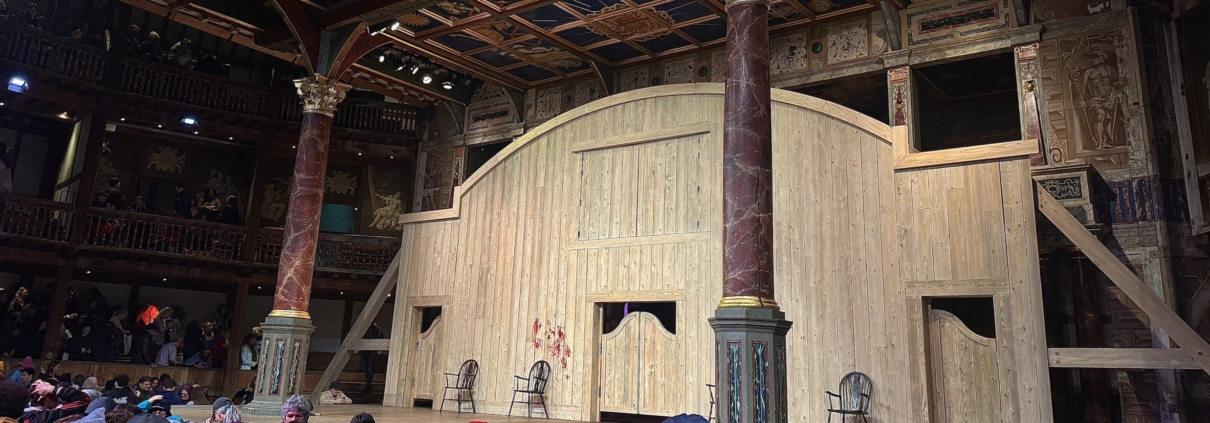
Stepping into the Globe Theatre is like a waltz back into the 17th century. The exposed wooden beams and thatched roof work together to transport you to medieval times, and when the performers step foot on the stage, your place in the past is solidified. 

I visited Shakespeare’s Globe to watch the classic play “Romeo and Juliet, but the performance differed slightly from the original. Although the script was largely the same, and the plot remained, the well-known tragedy was set in the Wild West. Actors spoke in American country accents, engaged in saloon brawls, and were adorned with cowboy hats and boots. The show maintained the integrity of William Shakespeare’s original script while offering an exciting modern twist. 

The Globe Theatre first opened in 1599, and surprisingly enough, it was constructed by Shakespeare’s own company of actors, the Lord Chamberlain’s Men. It burned down in 1613 after a cannon misfired during a performance of “Henry VIII”, and it was rebuilt a year later. Unfortunately, the Globe only stood for another 30-odd years before it was demolished to make room for housing, as the Puritans who had obtained power in Parliament deemed theatrical performances “sinful”. 

In 1971, actor and director Sam Wanamaker embarked on a journey to fulfil his dream of reconstructing the Globe. While this endeavor took over 20 years of fundraising and research, construction of the new Globe Theatre was finalized in 1997. The theatre that stands now is merely a replica of the original. It’s about half the size of the Globe where Shakespeare set foot, and despite being near the original site, it was not built in the exact location. Nonetheless, these small details are obsolete in comparison to the work Wanamaker did to bring the magic of the original playhouse back to life in our time.  

The performances are raw. Rather than focusing on over-the-top set design and lighting, they focus on the play itself. The actors don’t wear microphones, but the emotion in their voices carries throughout the house. The audience interacted with the show like none I had ever seen before. There was endless laughter and audible gasping. The performers artfully broke the fourth wall, and at one point, Mercutio sat on the edge of the stage, bending down slowly to kiss a member of the audience right in front of my eyes. He pulled back sharply, and the audience roared with delight. 

If you’re visiting London, I strongly encourage a trip to the Globe. I found that even those who do not usually enjoy theatre found a deeper appreciation after the show’s conclusion. There is perhaps no more authentic a representation of what a Shakespearean play may have felt like circa 1613. We have added modern comforts, but when you dial in to the performance itself, coupled with the atmosphere of the gorgeous theatrical space, you are truly sent on a journey back in time. 


I Became a Wedding Crasher on My First Day in London

By: Jake Keller

After around 12 hours of travel, by car, plane, and foot, I arrived in the illustrious city of London. I only received around 4 hours of less-than-ideal sleep in an airplane seat, but I was told that the best way to overcome jet lag was to make it through the day. Thankfully, I had a plan to fight fatigue and simultaneously immerse myself in the multicultural city: attend an Indian wedding.

My friend and fellow student traveler, Simran, had a sister visiting London for the wedding, and she wanted us to go; we agreed without hesitation. After getting ready, we embarked on our journey, which began with a walk to hop on the Elizabeth line of London’s train system, known as the “Tube” by locals. It should be no surprise that we got on the wrong train, but we persevered, and after traveling about an extra hour than we should have, we made it to the wedding.

In my head, I had pictured a crowded event, but as we entered the doors, I began to feel like a wedding-crasher. Simran left with her sister for the bathroom, and I sat alone at a table, avoiding what I interpreted as strange looks from the guests and the bride who wondered why I was there. I had never been to anything other than a traditional American wedding before. The customs were different from what I was used to, as was the music and the garb. I felt like a bit of an outsider, worrying that I was unwanted, but then, I got invited to the dance floor.

I’ve always hated dancing at weddings. I feel exposed as my lack of skill is on display for all to see. One time I attended a wedding where the pair getting married were clogging instructors, and as you can imagine, everyone took to the dance floor to clog. I was a plus one to that wedding as well, and when my friend dragged me onto the dance floor, I clicked and clacked my heels on the ground like a newborn giraffe. Flashforward, and I was once again forced to dance at a wedding where the style was unfamiliar, but I did my best to mimic the movements of my dance partner. She smiled and laughed as Simran recorded us, and I found myself grinning ear to ear.

I felt included in the wedding of these two people whom I had never met. They did not know my name, yet they welcomed me with open arms. Most of those whom I talked to spoke to me in Punjabi, a language that I don’t know, but that never limited their hospitality. One man in particular kept offering me drinks and asking me if I was having fun. Simran had to translate for me, but his energy was enough to make me feel welcomed.

After we left the wedding, we visited a nearby gurdwara, a Sikh place of worship. Nobody questioned why I was there, despite my knowing nothing about the religion or its customs. Simran’s sister helped me secure a bandana on my head and direct me where to store my shoes before we entered the Darbar Sahib, the prayer hall. We approached the Guru Granth Sahib, the holy scripture, and I copied the motions of those before me: saying a silent prayer, dropping a dollar in the golak, and touching my head to the ground. I then sat criss-crossed on the men’s side of the room for personal reflection.

I reflected on how grateful I was to be in a city surrounded by culture and by people who allowed me to learn about their way of life. I’m not used to being around people from different backgrounds who can walk around speaking different languages and wearing different clothing without being looked at sideways. Although I’ve only been here for a few days, I feel as if London has welcomed me with open arms, and it seems to have done the same for many others.

Where to Find Undiscovered Talent in London By: Lauren Avila

If you visit any tourist spot in London, or perhaps a busy tube station, you are sure to spot a busker putting their best foot forward. They want to be noticed, they want to share their talent, and they want you to help them do that. In any profession, it takes hard work, commitment, and confidence to know that you have what it takes to be successful. Busking is no different. 


Creative artists throughout London are making their dreams a reality simply by having the courage to show their talent. In the halls of the London Bridge tube station there is a one man band performing Caribbean music, a poet in Trafalgar Square sharing sonnets created on the spot, a magician in Leicester Square striving to amuse the public, an accordion player outside Warren Street tube station, and an acrobat in Covent Garden putting every ounce of physical effort into their performance. The list can go on and on with artists of all kinds, including the painter, the violinist, and the singer doing the same thing. They are pursuing their dream one stage at a time, regardless of where that stage is and who is watching. 


Of course, it isn’t always easy. 


There is still a big hurdle to have to overcome in order to get to the next step. It is important to not lose focus. There is a phrase that originated here in England, yet it is plastered on merchandise across the world: “Keep Calm & Carry On.” It is true that one must carry on despite hardships and challenges. Sometimes perseverance and commitment speaks even more than talent alone. 


Gathering all the courage one has and putting themself in the center of the public’s attention for the sake of a dream is not limited to the streets either.


At the Top Secret Comedy Club on Drury Lane, you can find comics who test their new material on an audience. I can hardly imagine many more terrifying tests to put yourself through. I recently saw two comics, Katie Green and Evaldas Karosas, doing this very experiment and were vulnerable enough to take feedback in real time. As it turns out, their reactions to our reactions were just as entertaining as their material. 


Suffice to say, it was an opportunity for growth which we can all use yet some are more afraid than others to put into practice. Bravo to those complete professionals who do!

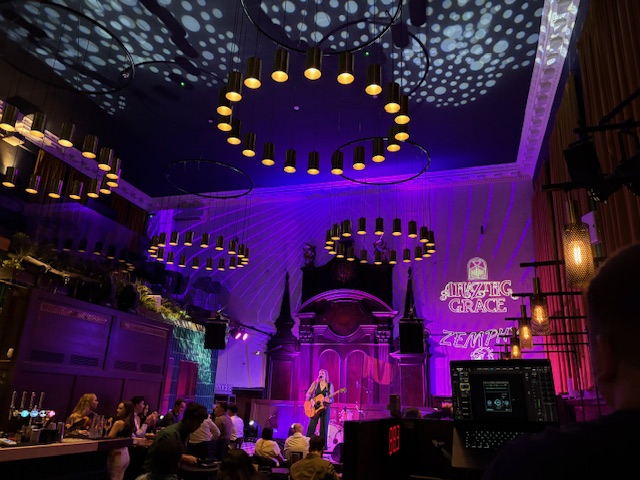
Another example includes Zemphy, an Irish singer and guitarist, who used to busk on the streets of London. She now has a residency at Amazing Grace London where she puts on a show of 90’s & 00’s hits. 


There are artists who recently introduced their work and also sold their art during the Print Fair at Somerset House for a few days. They are making their dreams a reality while facing the public right in front of them. 


It goes without saying that success is subjective. I believe that success happens when a person goes from dreamer to doer, even if they never become a household name.


There are plenty of success stories in the London arts scene if you look for it. Go out and explore. It will not take long to find someone who could be the next Vincent Van Gogh or the next Ed Sheeran. 


Star Power in Theatre By: Lauren Avila

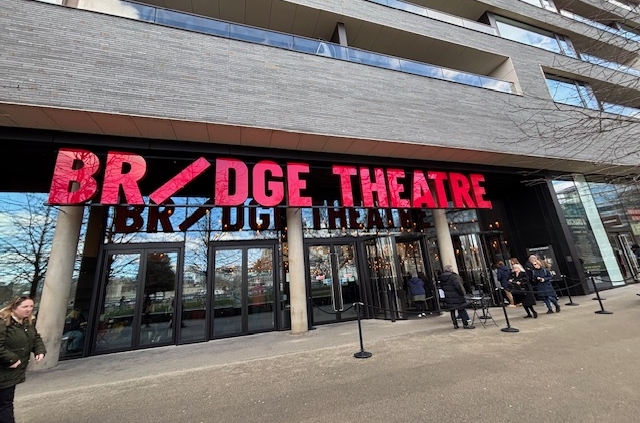
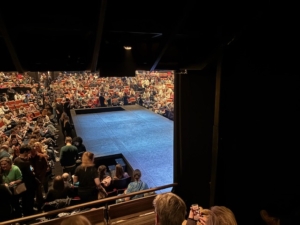
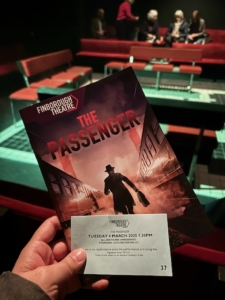
Imagine the inside of a theatre. The room is hushed, the lights dim, and a show is about to begin. It is staged in the round, with little to no props and sets. The story is a profound and intriguing tale of a man who has lost the perfectly comfortable life he once knew for one that is uncertain and unsettling. The performers are playing to a sold out audience and bring their best efforts to the stage. This very scene can be experienced at the Bridge Theatre, where Jonathan Bailey of Bridgerton and Wicked fame is currently starring in Richard II to a packed house of 900. The average price of a ticket is £69.50. The premium ticket is well over a hundred pounds and the cheapest comes at low financial price of £29.50 but a much higher cost of view. However, would it surprise you that this same scene could have been found at the Finborough Theatre earlier in March while “The Passengers” played to approximately 50 people for £20. The difference? Perhaps the influence of star power. 
It is hardly a new idea to have a headliner bring in a crowd to entertainment. The concept has been around since the beginning of show business. Does it work?… Should it?

Perhaps. 

Whether a live show, a new film, or series television, there is always the possibility that the content is rubbish regardless of the celebrity status. People will still watch it to catch their favorite star. The tradition carries on with an influx of celebrity actors on stage. On Broadway in New York City, Denzel Washington, Jake Gyllenhaal, George Clooney, Kieran Culkin, Joey Fatone and Joe Jonas are entertaining crowds of fans. 

Here in London, a person can buy a ticket to see Jonathan Bailey, Ewan McGregor, Tom Hiddleston, Hailey Atwell, Brie Larson, John Lithgow, Cate Blanchet, Martin Freeman, Brian Cox, Rosamund Pike, Sean Hayes, and Rami Malek for current and upcoming shows. Ticket prices vary from moderate to reflective of celebrity status. But is it worth it?

Having seen both shows that were previously mentioned, I can’t help but wonder: is star power what sells a show?

Fortunately, “The Passenger” was a sold out show for its entire run in February and March. With an inescapably intimate theater, every seat is a premium seat, incapable of missing a performer’s blink. It’s wonderful to think that over the course of its run almost 2000 people got to experience this show, which was one of the very best productions I’ve seen in the many, many years I’ve been attending the theatre. “The Passenger” is about a Jewish German citizen who tries to hide from Nazis by riding trains across Germany. Personally, the show had me on the edge of my seat for the entirety of the 90 minute show, without an interval. It was made up of a cast of only five actors, led by the talented Robert Neumark Jones as Otto Silbermann. He is extraordinary and I can’t wait to see where his career goes next. 

“Richard II” is a classic play from William Shakespeare about the rise and fall of the King of England. The show’s run time is 2 hrs and 40 mins, including the 20 min interval. The interval provides a needed break from the marathon of words that are lavishing delivered off the tongues of capable actors but still relentlessly presented scene after scene. Nevertheless, I was quite moved by the monologues that exuded visceral emotion, particularly from lead actor, Jonathan Bailey. 

During the break at “Richard II,” I had a conversation with the patron seated beside me. It turns out that this play was the first time she had seen Jonathan Bailey in anything. What luck that I should find a person who came merely to watch a Shakespearean play. 

I asked what her thoughts were about the play so far. She felt that the actor playing Henry Bolingbroke was giving a stronger performance than the actor playing King Richard but noting Bailey’s credits she supposed that “he’s the big draw.”

So is it the celebrity that brings a patron to the stalls? Perhaps it’s the material. Perhaps it truly is both. If that is the case, can a great show stand on its own even without a big name? Must it work harder to garner an audience and win them over? 

On the other hand, is merely having a celebrity enough? Are they worth their weight in gold? 

I reached out to Time Out’s resident theatre critic, Andrzej Lukowski, to get his opinion on the matter. 

“I’d say celebrities are more likely to take on big demanding roles that (theoretically) show off what a good actor they are,” Lukowski said. “They don’t turn up, collect the paycheque and play a minor supporting part and let some unknown classic actors do the lion’s share.”

In other words, one can rely on the idea that if a celebrity joins a show, they are going to put on a performance of high caliber. Everyone on the cast and crew will certainly put their best foot forward too. If you plan to see a famous actor, you can feel confident that the production will likely be as premium as the price. Go ahead and nab that hot ticket (if you can). But remember that great things can be found in small packages. I strongly recommend venturing out to small venues and fringe theatre companies to find hidden gems!