Posts

Retreating from the City: The Seven Sisters Cliffs

By: Jake Keller

After a few weeks of getting lost in the bustling metropolis of London, I was ready to take a break from the city. The Seven Sisters offered me an idyllic escape along the southern coast of England. It only took around two hours to get there, and the sights were truly breathtaking.

I departed from Victoria Station around 12:30 p.m. with my travel companion, Simran, and we embarked on a train ride to Eastbourne. It was a charming town with a few shops and restaurants, but I only saw a small part of it as we rushed to catch our bus. There’s an option to take a 13-mile hike beginning at Eastbourne, but we opted for the 7–8 mile route from Birling Gap. The trip to Birling Gap requires a bus from Eastbourne. We accidentally got on a hop-on-hop-off bus, and although it was a little more expensive (£12), the upper deck’s open top offered us fantastic views.

Birling Gap has a visitor center and a café, which offers your last chance to purchase food; however, we had decided to pack our own. It was a little unclear where to go next, but we eventually found a gravel road that led us to the cliffs. A heavy shroud of fog made visibility limited; it felt as if we were in the clouds. I slowly walked toward the edge and peered down at the ocean as waves crashed onto the shore. It was stunning. 

The first half of the hike took us over the Seven Sisters themselves. As the name suggests, there are seven peaks. The trek is a pattern of walking uphill and then treading down a steep decline. The haze was thick, but we could still see the sisters’ faces protruding over the infinite sea below. An hour or so passed before we reached the halfway point: Cuckmere Haven.

The path dipped down and led us toward a rocky beach. The sky was gray, almost like a storm was near, but a few people still swam in the water. We were in a valley between the Seven Sisters and their neighboring cliffs, with a river dividing them. We explored the beach for a moment but decided to make our way forward in pursuit of a picnic spot. As we approached the river, we realized there was no bridge. I checked my map and saw that the nearest bridge was a mile down the Cuckmere River.
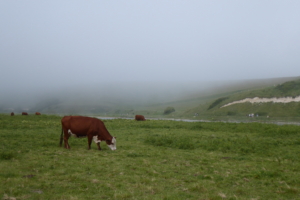
At first, I was annoyed by this unexpected detour, my stomach grumbling, but as we ventured into the countryside, my spirits shifted. There were pastures full of cows and sheep, backdropped by the distant cliffs. The rolling green hills seemed never-ending, and the sun began to peek through the clouds. On our way back toward the sea, after crossing the bridge, I stopped to photograph bunnies snacking on the grass.

When we finally made it back to the cliffs, the weather had turned. We continued our hike and looked back at a clear view of the peaks we had traversed. We found a spot above the cottages at Cuckmere Haven and settled in for our picnic. It was perfectly serene, and we had a stunning view of the Seven Sisters. We were in no rush as we tried to take it all in.
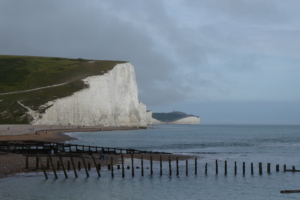
Onward we went to the town of Seaford, where our train home was set to depart. The conclusion of the hike was much flatter. I felt euphoric and continued to look back at the gorgeous cliffs now behind us. On the horizon, the sky was painted with shades of tangerine and cerulean, and we walked toward it. Our hike came to an end, and we took the train back to the city. The day was complete, and my heart was full.
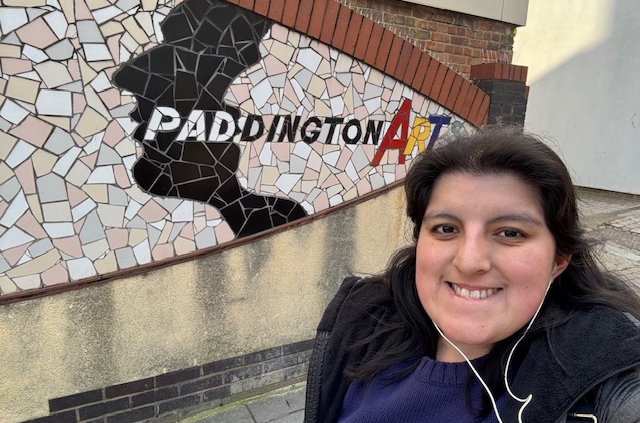

My Farewell to Paddington Arts By: Lauren Avila

“Consider yourself at home

Consider yourself one of the family

We’ve taken to you so strong

It’s clear we’re going to get along…”


I’ve heard this song from the musical, “Oliver,” playing a few times here at Paddington Arts. It feels like an applicable theme song to sum up the wonderful adventure I’ve had in London as part of the Paddington Arts team. As my time with Paddington Arts comes to an end, I have found myself reflecting on what I have gained through this experience. I feel very fortunate to have been surrounded by warm and welcoming people from the very first moment I arrived. Everyday has been a learning opportunity. I learned about this wonderful organization that has been alive for more than four decades through all the pieces and people that are part of its foundation. I also learned by being immersed in the environment. There is joy that exudes from each person who walks about the building. They truly want to be here! They want to be part of the community in a meaningful way. I feel very lucky to have experienced this type of positive and passionate energy that is not often found in workplaces. I’ve learned directly from the people here, not only about their lives but about how to act. The entire team here has always been friendly and helpful to me but also to everyone else! Each interaction I have witnessed has shown me the character of each individual. I have cherished getting to know them through their professional qualities and through their personalities too. 


I have learned so much from the experiences I’ve had pursuing stories for the Blog. Every single blog I created has dozens of memories attached to them. The hours that I have spent learning about these topics, having first-hand experience with them, and sharing them with the Paddington Arts audience have truly been a privilege. As you may notice in the stories I created, I followed a theme involving art in its many forms. I believe there can never be enough appreciation for all the arts and I highly encourage you to participate where you can. Since I have joined the team, I find myself paying more attention than I ever have before to the artists and their work throughout London. 


I will miss being part of the team. During my time here I have become attached to the building, the neighborhood, and all the people who are part of it. I’ll also miss the sound of dancing feet, the voices that carry through the halls, and the bits of music that brighten the day, whether that’s the upbeat tunes accompanying the lessons or the singing that vocalizes from the heart of staff members going about their day.


During my time at Paddington Arts I have been a temporary resident in London and I have fallen in love with this city! I will always value the opportunities I’ve had to go out and explore different pockets of this magical place. I have never been to a location that had so much to offer in ways of food, entertainment, and general tourism. I have not had a bored moment since I have arrived and I doubt very much I would, even if I was here for a year. I must also note that the people really say so much about a place. I tend to be a rather inquisitive person and will start a conversation with anyone. As I have gone out and explored, be it for a story or not, I have found that the people here on the whole are very friendly, interesting, and good-spirited. Getting to know the locals has been one of my favorite parts of being here. 


To everyone who has joined me on this journey, including readers, participants, and most importantly the team here at Paddington Arts, I would like to thank you very much for our time together and all the memories I will carry with me for years to come.


Where to Find Undiscovered Talent in London By: Lauren Avila

If you visit any tourist spot in London, or perhaps a busy tube station, you are sure to spot a busker putting their best foot forward. They want to be noticed, they want to share their talent, and they want you to help them do that. In any profession, it takes hard work, commitment, and confidence to know that you have what it takes to be successful. Busking is no different. 


Creative artists throughout London are making their dreams a reality simply by having the courage to show their talent. In the halls of the London Bridge tube station there is a one man band performing Caribbean music, a poet in Trafalgar Square sharing sonnets created on the spot, a magician in Leicester Square striving to amuse the public, an accordion player outside Warren Street tube station, and an acrobat in Covent Garden putting every ounce of physical effort into their performance. The list can go on and on with artists of all kinds, including the painter, the violinist, and the singer doing the same thing. They are pursuing their dream one stage at a time, regardless of where that stage is and who is watching. 


Of course, it isn’t always easy. 


There is still a big hurdle to have to overcome in order to get to the next step. It is important to not lose focus. There is a phrase that originated here in England, yet it is plastered on merchandise across the world: “Keep Calm & Carry On.” It is true that one must carry on despite hardships and challenges. Sometimes perseverance and commitment speaks even more than talent alone. 


Gathering all the courage one has and putting themself in the center of the public’s attention for the sake of a dream is not limited to the streets either.


At the Top Secret Comedy Club on Drury Lane, you can find comics who test their new material on an audience. I can hardly imagine many more terrifying tests to put yourself through. I recently saw two comics, Katie Green and Evaldas Karosas, doing this very experiment and were vulnerable enough to take feedback in real time. As it turns out, their reactions to our reactions were just as entertaining as their material. 


Suffice to say, it was an opportunity for growth which we can all use yet some are more afraid than others to put into practice. Bravo to those complete professionals who do!

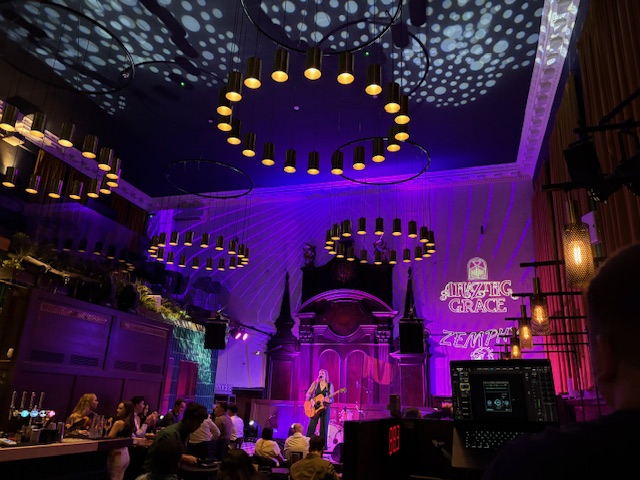
Another example includes Zemphy, an Irish singer and guitarist, who used to busk on the streets of London. She now has a residency at Amazing Grace London where she puts on a show of 90’s & 00’s hits. 


There are artists who recently introduced their work and also sold their art during the Print Fair at Somerset House for a few days. They are making their dreams a reality while facing the public right in front of them. 


It goes without saying that success is subjective. I believe that success happens when a person goes from dreamer to doer, even if they never become a household name.


There are plenty of success stories in the London arts scene if you look for it. Go out and explore. It will not take long to find someone who could be the next Vincent Van Gogh or the next Ed Sheeran. 


Star Power in Theatre By: Lauren Avila

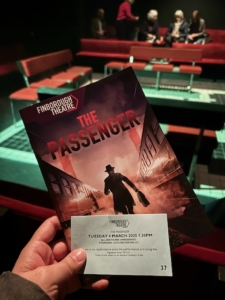
Imagine the inside of a theatre. The room is hushed, the lights dim, and a show is about to begin. It is staged in the round, with little to no props and sets. The story is a profound and intriguing tale of a man who has lost the perfectly comfortable life he once knew for one that is uncertain and unsettling. The performers are playing to a sold out audience and bring their best efforts to the stage. This very scene can be experienced at the Bridge Theatre, where Jonathan Bailey of Bridgerton and Wicked fame is currently starring in Richard II to a packed house of 900. The average price of a ticket is £69.50. The premium ticket is well over a hundred pounds and the cheapest comes at low financial price of £29.50 but a much higher cost of view. However, would it surprise you that this same scene could have been found at the Finborough Theatre earlier in March while “The Passengers” played to approximately 50 people for £20. The difference? Perhaps the influence of star power. 
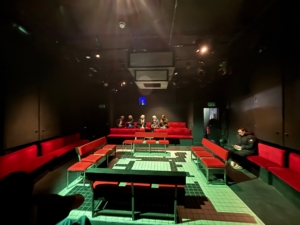
It is hardly a new idea to have a headliner bring in a crowd to entertainment. The concept has been around since the beginning of show business. Does it work?… Should it?

Perhaps. 

Whether a live show, a new film, or series television, there is always the possibility that the content is rubbish regardless of the celebrity status. People will still watch it to catch their favorite star. The tradition carries on with an influx of celebrity actors on stage. On Broadway in New York City, Denzel Washington, Jake Gyllenhaal, George Clooney, Kieran Culkin, Joey Fatone and Joe Jonas are entertaining crowds of fans. 

Here in London, a person can buy a ticket to see Jonathan Bailey, Ewan McGregor, Tom Hiddleston, Hailey Atwell, Brie Larson, John Lithgow, Cate Blanchet, Martin Freeman, Brian Cox, Rosamund Pike, Sean Hayes, and Rami Malek for current and upcoming shows. Ticket prices vary from moderate to reflective of celebrity status. But is it worth it?

Having seen both shows that were previously mentioned, I can’t help but wonder: is star power what sells a show?

Fortunately, “The Passenger” was a sold out show for its entire run in February and March. With an inescapably intimate theater, every seat is a premium seat, incapable of missing a performer’s blink. It’s wonderful to think that over the course of its run almost 2000 people got to experience this show, which was one of the very best productions I’ve seen in the many, many years I’ve been attending the theatre. “The Passenger” is about a Jewish German citizen who tries to hide from Nazis by riding trains across Germany. Personally, the show had me on the edge of my seat for the entirety of the 90 minute show, without an interval. It was made up of a cast of only five actors, led by the talented Robert Neumark Jones as Otto Silbermann. He is extraordinary and I can’t wait to see where his career goes next. 

“Richard II” is a classic play from William Shakespeare about the rise and fall of the King of England. The show’s run time is 2 hrs and 40 mins, including the 20 min interval. The interval provides a needed break from the marathon of words that are lavishing delivered off the tongues of capable actors but still relentlessly presented scene after scene. Nevertheless, I was quite moved by the monologues that exuded visceral emotion, particularly from lead actor, Jonathan Bailey. 

During the break at “Richard II,” I had a conversation with the patron seated beside me. It turns out that this play was the first time she had seen Jonathan Bailey in anything. What luck that I should find a person who came merely to watch a Shakespearean play. 

I asked what her thoughts were about the play so far. She felt that the actor playing Henry Bolingbroke was giving a stronger performance than the actor playing King Richard but noting Bailey’s credits she supposed that “he’s the big draw.”

So is it the celebrity that brings a patron to the stalls? Perhaps it’s the material. Perhaps it truly is both. If that is the case, can a great show stand on its own even without a big name? Must it work harder to garner an audience and win them over? 

On the other hand, is merely having a celebrity enough? Are they worth their weight in gold? 

I reached out to Time Out’s resident theatre critic, Andrzej Lukowski, to get his opinion on the matter. 

“I’d say celebrities are more likely to take on big demanding roles that (theoretically) show off what a good actor they are,” Lukowski said. “They don’t turn up, collect the paycheque and play a minor supporting part and let some unknown classic actors do the lion’s share.”

In other words, one can rely on the idea that if a celebrity joins a show, they are going to put on a performance of high caliber. Everyone on the cast and crew will certainly put their best foot forward too. If you plan to see a famous actor, you can feel confident that the production will likely be as premium as the price. Go ahead and nab that hot ticket (if you can). But remember that great things can be found in small packages. I strongly recommend venturing out to small venues and fringe theatre companies to find hidden gems!

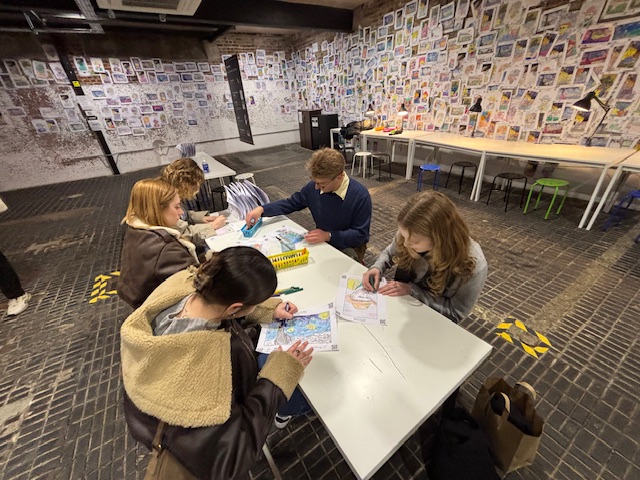
Art Therapy- I tried it and you should too! By: Lauren Avila

Art therapy can come in many forms through hands-on experience and engaging creativity, be that through performance or fine arts. There are individual and group sessions of art therapy widely available throughout London. It is a practice that is led by a trained professional with the intention to offer a safe environment to get in touch with feelings that may otherwise remain guarded. There is evidence to support that engaging in art therapy helps individuals to speak more freely and become more relaxed when facing an issue. 

Each individual is different and each person’s needs vary. Some people may need the guidance and healing that comes from a trained art therapist. However, that does not discount that art, in its many forms, is therapeutic on its own. 

The British Association of Art Therapists state on their website that “art therapy can help people of all ages and at all stages of life, including those whose life has been affected by difficult personal or cultural experiences, illness and/or disability. You do not need to be skilled in art to benefit from art therapy.”

That was the case when I put this theory to the test. I observed and participated in different types of art with groups of normal people from different backgrounds. 


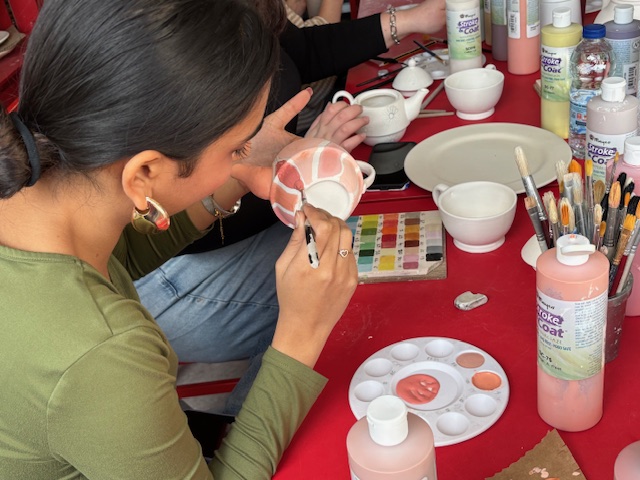
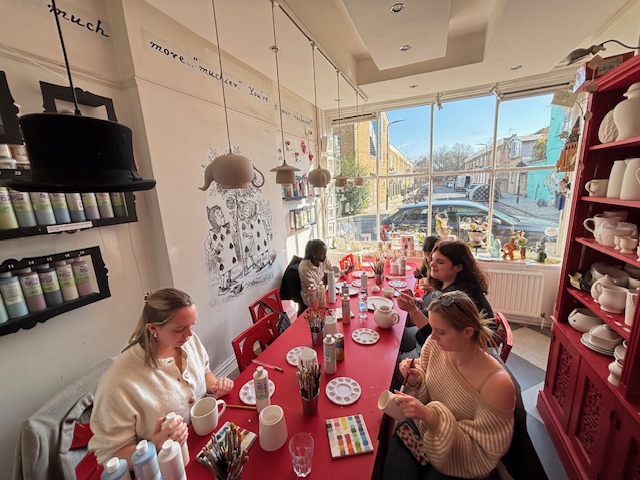
First I went to Wonderland Ceramics to test if fine art really can help people with their mental health. The task? Choose a ceramic item and paint it in any way one wishes to. It turns out that art as therapy really is dependent from person to person. In a group of seven, a couple attendees felt stressed by this task. They found it difficult to choose an item, then choose how to decorate it, and also to efficiently do so. 

“I feel stressed because I’m a perfectionist, but I also feel relaxed because I know I can take my time,” Leyonce explained when asked how creating art made her feel.

Others found these steps less intimidating.

“I love this,” Skye said. “I’m so glad I decided to do this.”

Despite the rocky start, over the course of time the challenge became easier and the room’s temperament changed. People felt more at ease and the conversation in this group became more comfortable by each passing minute. As mentioned earlier, evidence supports that art can encourage a person to open up and share deeper thoughts and feelings.

“I was feeling stressed but I’m feeling a lot more relaxed now,” Gilly shared.

I challenged the theory again when attending a performing art event. The task? Have beginner and intermediate dancers try to teach and learn from each other. As an overall observation, this much larger group of about twenty attendees followed a similar pattern. About half the room was filled with timid beginners but by the end of the event there was a buoyancy in the room. Everyone’s spirits were lifted and the whole group bonded in conversation long after the event concluded. 

Speaking from personal experience from both activities, I felt relaxed, jubilant, care-free, and fulfilled while participating and immediately following each event. I can also say the same from other art forms such as writing stories and taking pictures. Again, this is different for each person but I believe it is safe to say that art as therapy is worth looking into. 

To find out more about the evidence behind art therapy, how it works, what types of therapy there are, and where to start looking for an art therapist, visit Mind. If you are local, consider looking up the classes and events that are offered here at Paddington Arts. 


Van Gogh: The Immersive Experience By: Lauren Avila

Likely if a person mentions the name of the famous Dutch artist, Vincent Van Gogh, it immediately prompts images of deep hues of swirling skies or bright yellow flowers resting in a vase. Van Gogh: The Immersive Experience, which has been open since 2021, is elevating old classics and converting them into  new forms for anyone to enjoy. 

Upon entering the exhibit and throughout the layout of rooms there is an abundance of information about Van Gogh. As much as it is a welcome change to approach well-known art in a new way, it is vital to first understand the artist. The exhibit includes various ways to get to meet Vincent, the man. There is a comprehensive history provided pertaining to his birth, family, physical and mental challenges, and the end of his life. Of high interest to those who may not know about Van Gogh’s style, this information also includes the reason why he created art the way he did. 

Beyond learning about the art is the art itself in various forms. The exhibit introduces large scale versions of some of Van Gogh’s most notable works. What was previously only known to the world through oil paintings is brought to life by set pieces, backdrops, and computer animations. 

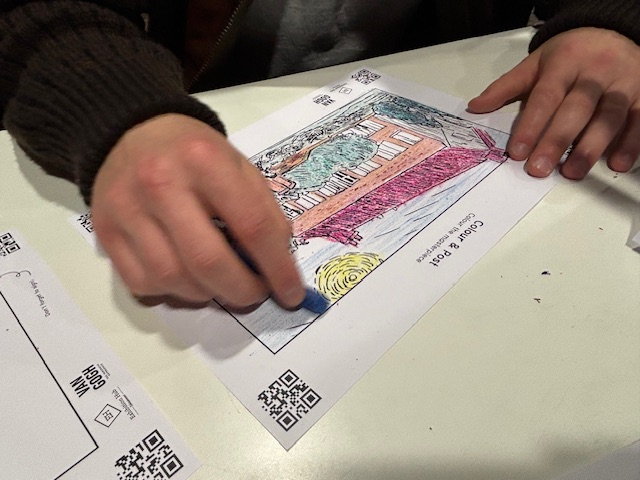
Additionally, visitors are given the opportunity to be hands-on and fully immersed as the name of the exhibit implies. There is an entire room full of art from past visitors who paid homage to Van Gogh’s most well known paintings, such as “Starry Night,” “Self Portrait,” and the “Sunflowers” series by creating their own version of it. The Immersive Experience also offers a VR experience (that comes at additional cost) to see the paintings up close in a digitally-advanced environment.

“I really liked that the whole point of the immersive experience is to see his life from his point of view,” Van Gogh the Immersive Experience visitor, Udeshna, observed. “I like that the asylum and The Bedroom paintings were immersive and that it gave a brief of his life.”

Throughout the exhibit there are ways to observe the man, the paintings, and also a way to engage with them. Still, it is the conclusion that truly brings the visitor into the art. Visitors step into a room that is covered in screens from floor to ceiling and creates a 360 degree world of art. It is flooded with lights, music, and moving projections. Chairs, benches, and loungers provide a welcoming environment to relax and submerge completely into the art that was only looked upon moments before but now surround the visitor in an all-consuming way. After learning about Vincent and his trade, it is more emotional to feel a real and deep connection to his art, including quotes from him. 

One may experience a new sense of appreciation of a man’s life work when surrounded by his art and reading his own words: “Success is sometimes the outcome of a whole string of failures.”

Van Gogh: The Immersive Experience is self-guided so a person may enjoy it at their own pace. The exhibit provides several rooms of information, art, and photo opportunities, therefore it is easy to let hours slip by, particularly in the final room. It can be enjoyed for a few minutes or much longer, with footage looping every ten minutes or so. 

Tickets for the exhibit begin at £20.90. It is currently an ongoing experience.

Instagram-Worthy Spots near Paddington Arts By: Lauren Avila

The Notting Hill Carnival, which is the largest street festival in Europe, will take place in August. With it, plenty of visitors from around the world will flood the area from near our location at Paddington Arts through Notting Hill. The festival is a boisterous event filled with music and local talent. However, throughout the area there is plenty to see. Whether you are coming for the festival or just visiting London, here are some wonderful places to visit to capture the pleasant aesthetics and adorable locals that will impress your social media followers.

Beginning with nearby Paddington Station, a railway and tube station. For Paddington Bear lovers, this is the very location where the fictional character first arrives in London. As such, there are a few tributes that you can take pictures of (and with), including a few statues, a bench, and a store. Paddington Bear can also be found in several other locations throughout London, including other statues and a mural. There are also locations nearby that were used for the  Paddington films such as Alice’s shop that stands in for Gruber’s Antiques. 
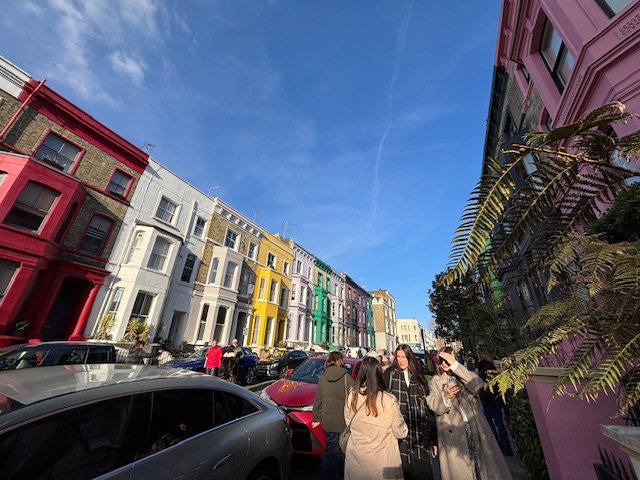
While on the subject of movies that we love, there is also nearby Notting Hill. There are photo spots for the Blue Door and The Travel Bookshop from the movie. Additionally, there are the Colorful Houses of Notting Hill that will sure to be your new favorite profile picture. They sit just off of Portobello Road which hosts a huge market that provides many photo opportunities. Though be sure to avoid taking pictures of merchandise. Vendor hosts often prefer that you do not photograph their supply. Still, with wall art throughout the market, the hustle and bustle of the people, and the general atmosphere, it’s a photographer’s paradise. 

Looking for some place calmer than a train station or a market? Look no further than Paddington Recreation Ground. It is a 27 acre park space that has a gym, running track, pitches for multiple sports, tennis courts, and a cafe. Located inside the park is a playground featuring miniature houses that are meant to replicate colorful houses in the area. This serves as a perfect cheat to capture the look within a scale that is easy to frame. 

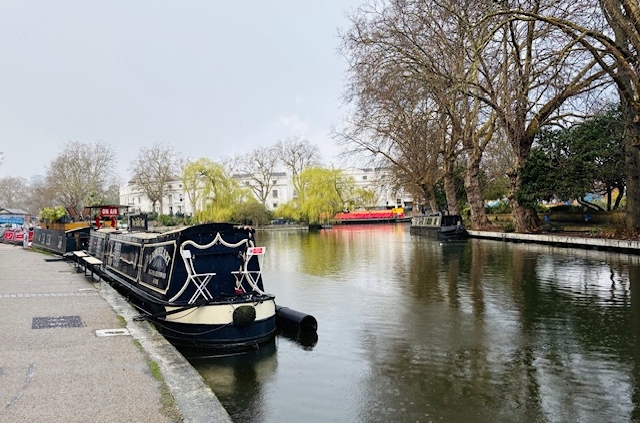
Take a walk down to Little Venice which as the name implies has a similar ambience to Venice, Italy with its canal and little boats (as seen above). This area is a junction between Grand Union Canal and Regents Canal, with a nearby bridge close to Paddington Arts. It is a beautiful hidden gem that is a moving postcard to behold. Fun Fact: this area was also used for a scene in Paddington 2. 

Finally, there’s Paddington Arts itself. It is a beautiful building easily accessible by tube or bus, and offers opportunities for the community to engage in art forms. It is a colorful, three-level building that offers a welcoming environment. It is also a stone’s throw away from the real Windsor Gardens (not seen in the films) that Paddington Bear lives at with the Brown Family. 

Be sure to come visit the Paddington and Notting Hill area soon!


Discovering Ireland in the Heart of London By: Lauren Avila

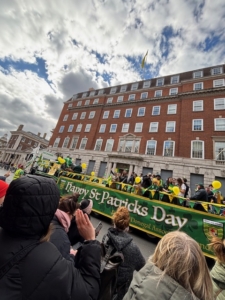
On Sunday, 16th March, London’s Trafalgar Square was host for the St. Patrick’s Day Festival & Parade, celebrating Irish culture with thousands of locals and tourists. It was a feast for the senses with the colors, music, food, drink, and Irish lore everywhere. The event kicked off with a parade from Hyde Park, along Piccadilly Circus, Trafalgar Square and concluded at Whitehall. Attendees came out in droves and in high spirits, adopting the Irish culture, even if only for the day, regardless of their origin. There was a sense of joy and pride illuminating the streets as everyone cheered alongside the parade.. The cavalcade, shining in hues of green and gold, included floats, musicians, singers, dancers, runners, costumed performers, and representatives of charities. Each group celebrated and recognized contributions of the Irish community, whether locally or internationally. Along the route, parade viewers could spot the Council of Irish County Association of London, a children’s Irish marching band, the Irish London Running Club, ASM Recycling and SISK Contractors, a company established in Cork, Ireland. 
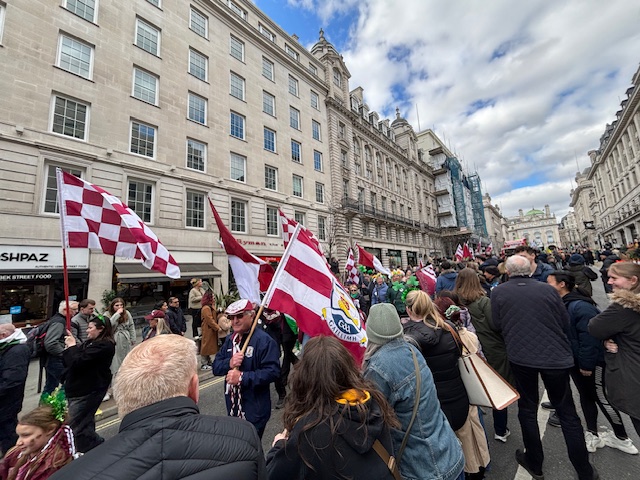
In the midst of the Square was an abundance of Irish arts and culture. At the main stage was an ongoing presentation of Irish talent, from traditional Irish dance to a ceilidh band to singers. Surrounding the stage was a culmination of more Irish cultural immersion. Vendors for merchandise, food, Ireland tourism, and local Irish groups in London. There was also a beautiful art exhibit, called “Peace Heroines,” which recognized some of Ireland’s most accomplished female contemporaries working towards peace, including Bronagh Hinds, Susan McRory, Pat Hume, Eileen Weir, Saidie Patterson, Anne Carr, Monice McWilliams, Pearl Sagar, and Baroness May Blood. 

Behind the food stalls were some of the best booths, including a booth to learn the dances, try some Irish crafts, and be introduced to Irish creators and their work. This last booth mentioned was presented by the Irish Creative Collective, an organization which showcases Irish talent from musicians to comedians to filmmakers. In this booth, there was an entire schedule of events for Irish creative arts to be shared with the public. These events were intended to educate, entertain, and inform about Ireland and their heritage. Among the creatives was a storyteller who also presented an introduction to the Irish language with words and phrases, such as “my name is…” 

There was also a screening of three short films made by Irish filmmakers. They were called “Boogaloo and Graham,” “Color Me Pink,” and “Dear Imelda.” Each film was made in Ireland and not only had a touching story, but wonderful visuals to enjoy. Fortunately they are all available to watch online. Catch “Boogaloo and Graham” on Disney+, “Color Me Pink” on YouTube, and “Dear Imelda” on the Samansa app. 

From every corner of the arts and culture world, it was thrilling to see that the arts are alive and well in Ireland! How wonderful that Irish natives came to share their talents and introduce their culture in a beautiful and warm way. 

Civil War and the Objectivity of War Journalism

Thumbnail Credit: Landmark Cinemas

By Carissa Leong, intern

Following its release, Alex Garland’s dystopian version of America in his new film Civil War became indie distributor A24’s highest-grossing opening to-date. Plotted as a road trip following a crew of journalists including highly experienced Lee (Kirsten Dunst) and young, aspiring war journalist Jessie (Cailee Spaeny), they pursue the story of the end to the civil war in the fantastical, apolitical landscape of America where numerous states have been trying to secede from the fascist rule of the government. 

Credit: IGN

In a near future version of America, Lee and her colleague Joel (Wagner Moura) intend to get an interview with the president (Nick Offerman) before secessionists take control of the White House. Tagging along for experience, Jessie is taught by Lee of the important side effect of numbing objectivity in their line of work, especially as they face atrocities as they travel toward Washington D.C. As the war draws to an end, Jessie’s objectivity numbs her to the tragedies around her as she develops her skills in war photography, just as she was taught; in contrast, Lee becomes more affected emotionally and mentally due to attachment and guilt revolving around her crew, and it’s something that doesn’t end well for her.

The apolitical nature of the film’s setting is something that has drawn criticism from numerous sources, but it’s something that I personally don’t have an issue with. Either way, if the world-building villainized either the conservative or the democratic party, then it would’ve drawn criticism regardless, especially toward an English filmmaker. The fictional factioning of the United States, generally rebelling against fascism, allows for realistic commentary on the actual point of the film–the atrocities of war and war journalism. 

Credit: Roger Ebert

The most overt commentary revolves around the objectivity of war journalism, depicted especially through Lee and Jessie’s shifting dynamic. As a photographer, I related to the sentiment portrayed–I used to live longingly for the shots that I missed, everything seen distantly through the frame of my viewfinder, and I had to get myself back to feeling emotionally connected, especially to the shots that I actually did get. I never photographed wars, thankfully, but Lee’s hardened outlook didn’t seem so far off from what I could imagine for myself if that was my job. The act of constantly watching people die and capturing them rather than interfering would be enough to drive someone crazy if they didn’t desensitize themselves to it. That’s not to say all journalists don’t care, specifically calling into reference the passionate teenagers in Gaza documenting the destruction of their homes on social media, but this is only another realistic take by someone less connected to the tragedies. Their only purpose is to get the stories out so others would become fueled by outrage and change would be instigated.

Jessie’s shift from someone caring, naive, and emotional into someone impulsive with risk buried at the very back of her mind quickly shows the development of what happened to Lee, long ago in her career. It’s hard to like her for how the film ended, but it omits the longer-term aftermath of her actions or inaction–whether she remains numb forever or opens herself back up to sympathy and guilt. Regardless, her trajectory is among the most interesting in Civil War, and the film really speaks to what the “invisible” people go through, the ones who we know nothing about and scarcely consider, yet who create all of the work that make up our perception of current events.

Credit: WBUR

Through previous films including Ex Machina (2015), Annihilation (2018), and Men (2022), Alex Garland has had a consistent track record of depicting destruction to be eerily bleak and beautiful, and Civil War is no exception. Utilizing wide-angle shots glamoured with lens flares and minimalistic, smooth motion, the fly-overs of burning towns or the gory deaths of characters are all portrayed through a similarly objective view, prioritizing the cinematic above all else. The score is equally bleak and beautiful, only aiding the visual tension.

Ultimately, Civil War is a strong film both visually and thematically, revolving around characters whose motives and emotions feel real. Spinning the war genre to focus on the mentality of journalists rather than soldiers, the film’s commentary feels like a highly relevant cautionary tale of a possible future amidst the news of war in the areas of Gaza and Ukraine. From this and accompanied by the current state of violence, it unfortunately isn’t too far off to imagine America falling apart into this dystopia born from rebellion of the people against the president, especially with the controversial coming election.

Credit: Geek Tyrant