
Star Power in Theatre By: Lauren Avila
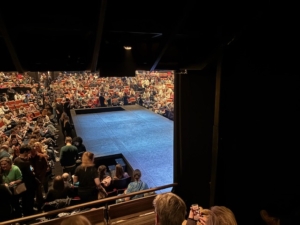 Imagine the inside of a theatre. The room is hushed, the lights dim, and a show is about to begin. It is staged in the round, with little to no props and sets. The story is a profound and intriguing tale of a man who has lost the perfectly comfortable life he once knew for one that is uncertain and unsettling. The performers are playing to a sold out audience and bring their best efforts to the stage. This very scene can be experienced at the Bridge Theatre, where Jonathan Bailey of Bridgerton and Wicked fame is currently starring in Richard II to a packed house of 900. The average price of a ticket is £69.50. The premium ticket is well over a hundred pounds and the cheapest comes at low financial price of £29.50 but a much higher cost of view. However, would it surprise you that this same scene could have been found at the Finborough Theatre earlier in March while “The Passengers” played to approximately 50 people for £20. The difference? Perhaps the influence of star power.
It is hardly a new idea to have a headliner bring in a crowd to entertainment. The concept has been around since the beginning of show business. Does it work?… Should it?
Perhaps.
Whether a live show, a new film, or series television, there is always the possibility that the content is rubbish regardless of the celebrity status. People will still watch it to catch their favorite star. The tradition carries on with an influx of celebrity actors on stage. On Broadway in New York City, Denzel Washington, Jake Gyllenhaal, George Clooney, Kieran Culkin, Joey Fatone and Joe Jonas are entertaining crowds of fans.
Here in London, a person can buy a ticket to see Jonathan Bailey, Ewan McGregor, Tom Hiddleston, Hailey Atwell, Brie Larson, John Lithgow, Cate Blanchet, Martin Freeman, Brian Cox, Rosamund Pike, Sean Hayes, and Rami Malek for current and upcoming shows. Ticket prices vary from moderate to reflective of celebrity status. But is it worth it?
Having seen both shows that were previously mentioned, I can’t help but wonder: is star power what sells a show?
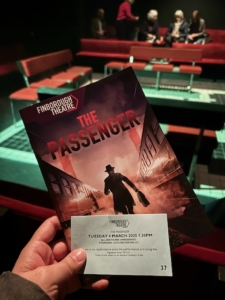
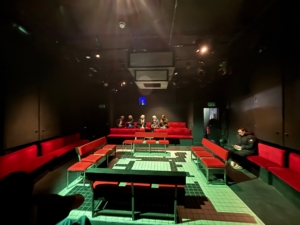 Fortunately, “The Passenger” was a sold out show for its entire run in February and March. With an inescapably intimate theater, every seat is a premium seat, incapable of missing a performer’s blink. It’s wonderful to think that over the course of its run almost 2000 people got to experience this show, which was one of the very best productions I’ve seen in the many, many years I’ve been attending the theatre. “The Passenger” is about a Jewish German citizen who tries to hide from Nazis by riding trains across Germany. Personally, the show had me on the edge of my seat for the entirety of the 90 minute show, without an interval. It was made up of a cast of only five actors, led by the talented Robert Neumark Jones as Otto Silbermann. He is extraordinary and I can’t wait to see where his career goes next.
“Richard II” is a classic play from William Shakespeare about the rise and fall of the King of England. The show’s run time is 2 hrs and 40 mins, including the 20 min interval. The interval provides a needed break from the marathon of words that are lavishing delivered off the tongues of capable actors but still relentlessly presented scene after scene. Nevertheless, I was quite moved by the monologues that exuded visceral emotion, particularly from lead actor, Jonathan Bailey.
During the break at “Richard II,” I had a conversation with the patron seated beside me. It turns out that this play was the first time she had seen Jonathan Bailey in anything. What luck that I should find a person who came merely to watch a Shakespearean play.
I asked what her thoughts were about the play so far. She felt that the actor playing Henry Bolingbroke was giving a stronger performance than the actor playing King Richard but noting Bailey’s credits she supposed that “he’s the big draw.”

So is it the celebrity that brings a patron to the stalls? Perhaps it’s the material. Perhaps it truly is both. If that is the case, can a great show stand on its own even without a big name? Must it work harder to garner an audience and win them over?
On the other hand, is merely having a celebrity enough? Are they worth their weight in gold?
I reached out to Time Out’s resident theatre critic, Andrzej Lukowski, to get his opinion on the matter.
“I’d say celebrities are more likely to take on big demanding roles that (theoretically) show off what a good actor they are,” Lukowski said. “They don’t turn up, collect the paycheque and play a minor supporting part and let some unknown classic actors do the lion’s share.”
 In other words, one can rely on the idea that if a celebrity joins a show, they are going to put on a performance of high caliber. Everyone on the cast and crew will certainly put their best foot forward too. If you plan to see a famous actor, you can feel confident that the production will likely be as premium as the price. Go ahead and nab that hot ticket (if you can). But remember that great things can be found in small packages. I strongly recommend venturing out to small venues and fringe theatre companies to find hidden gems!