This spring, I had the exciting opportunity to intern at Paddington Arts and contribute to its online blog. At the beginning of my internship experience, I was incredibly eager to learn about Paddington Arts and its work in North Paddington and even more excited to see how my contributions to the online blog would contribute to the organization’s broader goals. Before this internship, my experience with journalism was limited, and I found myself nervous about diving into unfamiliar tasks.
However, my nerves quickly dissipated after my first week at Paddington Arts. The Paddington Arts environment is incredibly conducive to fostering creativity and supporting personal growth. I focused on topics I truly cared about and was excited to explore. This creative freedom allowed me to center my attention on passionate subjects, which allowed me to generate higher-quality pieces and become immersed in the work. There were seldom moments where I felt creatively stumped or as though I needed more time to explore new concepts I was interested in. This uniquely unconfined internship experience was pleasantly surprising, and this creatively focused environment has allowed me to gain a greater perspective on my career aspirations.
If not for the opportunity to intern at Paddington Arts, I would not have afforded the space to dive into journalism and learn about the British entertainment industry. My experience at Paddington Arts will stay with me throughout my career. I am leaving this internship with a new outlook on community and teamwork and insight into the journalism world. As my time at Paddington Arts ends, I firmly assert that prospective interns should jump on any opportunity to work for this organization.
https://www.paddingtonarts.org.uk/wp-content/uploads/2024/04/Paddington-arts-scaled.jpeg19202560paddingtonhttp://www.paddingtonarts.org.uk/wp-content/uploads/2022/01/Paddington-Arts-Fade-Logo.pngpaddington2024-04-19 13:33:322024-04-19 13:33:33Internship Experience at Paddington Arts
From my experience as a journalist for Paddington Arts and through other extracurriculars, here is a list of the top five journalism tips that I’ve found to be the most useful.
Reverse Triangle Structure
One of the best ways to structure an article is with the reverse triangle structure which implies the largest side, the foundation, to be what starts it off. With a hook that especially covers the action of the event, lay all of the information out at the beginning–the who, what, where, when, how, and why. Then, narrow down the story, fleshing it out with the details in consecutive order.
Objective or Subjective?
Consider how the article should be written. For event reporting, especially on news and social justice, it should take a more objective stance. However, there is more forgiveness when it comes to life and arts coverage while opinion or satire pieces are generally supposed to skew the reader’s thinking.
Keeps Things Concise
Something that people don’t often want to read is a lot of writing. Cut down on excessive words and make sure that every sentence is necessary to draw them in or convey information.
Past or Present Tense?
Events that have already happened should always be reported on in past tense including with a story that’s still developing. In areas revolving around art such as film reviews, the present tense can be appropriately used. I like to think that it’s because art and its interpretations are eternal, and there will always be people still watching and interpreting it into the present.
Implementing Quotes
Don’t use descriptive words like “shouted” or “muttered.” Keep it simple and objective by using “said.” Additionally, you can use neither and opt for the Q&A format which reflects an organic conversation between the interviewer and interviewee. Each line lists out the name of the person speaking and what they ask or say. Finally, make sure you include if you received the quotes through email, as it specifies that the interviewee had abundant time to revise their intended words.
After seven weeks, my time as an intern in the Digital Newsroom is finally coming to an end. During my time, I’ve appreciated the opportunity to get to know more about the local area while also engaging in media that I enjoy, whether it be about films or music.
My time at the company started off strongly with my analysis and review of Dune: Part Two, a film and franchise sequel that I loved. Surely excessive in length, I enjoyed breaking it down thematically and comparing it to the book, and it was one of my favorite projects that I engaged with.
Another cool experience was the opportunity to work with artist managers from UROK Management, Laura Leon and Annabelle Scott-Curry, to cover Tom Odell’s show at the Roundhouse. Having gone in knowing so little about his work, I ended the night discovering an incredible artist with completely warranted popularity. His vocals, instrument composition, and minimalist aesthetic were all so well put-together and immensely impressive to witness live.
Following that up, I compiled a list of publications for send-outs and drafted a press release for Steve Shaw’s photo exhibition, aided by the social media manager Karina Saniuk. I also had the opportunity to develop my interview skills by asking her questions about her career in social media marketing and as a freelancer. On top of all that, I was able to create my own graphic through Canva promoting the upcoming Slam Dunk 2024 rock music festival with a brief playlist of recommendations.
I got to wrap up my time at Paddington Arts with reviews of a few more recent releases that I enjoyed. One of them was English director Alex Garland’s Civil War which was a dystopic take on America that lent commentary on the role of war journalists. Meanwhile, the other was Fallout, an Amazon Prime Video television adaptation of the popular post-apocalyptic video game series. I finished it in two days, loving the black humor and retro aesthetic clashing with dystopia, and I really appreciated that I was able to share my thoughts on it.
Something that I wish I’d been able to do while I was here was pursue marketing and PR more, as I had gotten the option and assignments late into the term. I would’ve loved to have more time to practice my skills with videography and editing, but I am at least grateful that I got practice with PR and press releases. While I will end up utilizing some skills from journalism in the future, it ultimately is not of interest to me for a career, and I would’ve loved to have the alternative option of marketing earlier. Music photojournalism will always be what I can do on the side, but music marketing–whether it be with a record label or concert promoter–is my end goal which I didn’t get to develop skills specifically for.
Ultimately, I had a good experience at Paddington Arts and I greatly appreciate the team for giving me free reign to engage in my interests and share it with the world. It supplemented my already existing content creation and journalism experience, and I believe growth from this internship will help me shift career directions in the future.
https://www.paddingtonarts.org.uk/wp-content/uploads/2024/04/PXL_20240118_125244357.RAW-02.ORIGINAL-scaled.jpg14362560paddingtonhttp://www.paddingtonarts.org.uk/wp-content/uploads/2022/01/Paddington-Arts-Fade-Logo.pngpaddington2024-04-19 13:17:582024-04-19 13:17:59My Time at Paddington Arts
As my internship at Paddington Arts comes to a close, I’ve been reflecting on the last four months that I’ve spent in London. I’ve been studying abroad here through a program that works with my home institution in the US. The first half of the semester I spent focused solely on courses, and in this latter half I have continued two courses along with adding an internship. Because we are placed in our internships, students don’t get to know ahead of time where they’ll be interning or what their tasks might entail. I’m currently studying English with a concentration in Creative Writing (my major), and I’m minoring in Book Arts and Art Studio. Ultimately, my goal is to be an author of creative works. I’d also love to work in the book publishing industry, potentially as an editor or designer.
When I was placed at Paddington Arts, I was unsure how my skills and goals would fit with the internship. Our program told us to be openminded to new experiences, and that’s the mindset I took on. When Steve, the director at Paddington Arts and our internship supervisor, told me and the other two interns about his online magazine project, I was happy to help. I enjoy writing, which is what much of my internship has revolved around. Our internships are focused on journalism, which is something I don’t have much experience in. It has been a bit tricky to navigate this different kind of writing style along with the idea of interviews.
I’ve enjoyed writing every week, because I think writing must be a regular practice if I am to get better at it. Since I haven’t had a lot of time to write on my own time while being in London, it’s been nice to go to my internship and do so. I liked getting to know the local area as well. Though my internship experience has been relatively short compared to one I had last fall in the US, I’m pleased to have practiced my writing skills and to have learned a bit about the community here where Paddington Arts is.
https://www.paddingtonarts.org.uk/wp-content/uploads/2024/04/PA1.jpg16001200paddingtonhttp://www.paddingtonarts.org.uk/wp-content/uploads/2022/01/Paddington-Arts-Fade-Logo.pngpaddington2024-04-19 13:01:312024-04-19 13:01:32My Internship at Paddington Arts
I met up with Em (pronouns: she/they) at Europe’s largest bookstore. We went to the Waterstones Piccadilly café, where Em ordered a matcha and I ordered chai.
Once we sit down with our drinks, Em smiles pleasantly at me, anticipating the questions I have for her. We’re both American students who have studied abroad in London for the past four months, and I want to get their full take on the experience.
We both sip our warm drinks, commenting on how good they are. Em takes in the design of the café with its warm wood and lively plants, and she looks relaxed in her whimsical dinosaur sweater. I feel a sense of calm, too—bookstore cafes do that to me.
I start at the beginning, wanting to know why Em chose to come to London in particular. There are many study abroad program offerings, what made this one stand out?
Em tells me that they had actually considered transferring to a London school after their first year in college. She always wanted to study in London, so why not? Her mom had different thoughts, though, and ultimately Em decided to stay where she was. Plus, she would still have the opportunity to study in London for a semester, which seemed like a good alternative. And anyway, the required internship as part of the program was appealing to her.
I ask Em about their internship. She actually has had a very good experience, which she seems to be surprised by. She works on customer visitor experience for a museum but said she “would rather be in curation.” Even so, Em enjoys their days at the Courtauld. The people there, she explains, are more comforting than most of the people she attends class with.
Working where she does, Em has found that people can be casual about spending extraordinary amounts of money. She connects this to other study abroad students, who come from wealthy homes and aren’t aware of their privileges. “Sometimes, people don’t bat an eye that the print for sale is, like, 2,200 pounds. Which is a lot of money for a piece of paper, in my opinion.”
Em knows that their coworkers feel the same way. “It’s wild that people can essentially throw money at something, and I’m not being paid, all of us are just working and watching people do that.” She continues, saying of the museum’s guests that, “Also, it’s wild they don’t view you as a person, they view you as a problem-solver. No, I cannot fix the fact that [the museum is] five floors.” It’s hard for her to keep these thoughts to herself when there are ridiculous complaints aimed her way. “I’m like… I can’t fix that.”
Em enjoyed spending time seeing some Shakespearian plays for one of her courses. However, she found herself people-watching on some occasions. She recalls to me that for her class viewing of Othello, she noticed how many attendants were white and upper class. The type, she theorizes, that go to the theatre just to say they went.
Em loves to talk—she tells me so, that small talk is her strength—and we skip around from topic to topic. When asked about what they’re taking back to the US with them, they pause. She says she’ll be taking back a lot—things she wouldn’t have access to back in the states. She lists off books, figurines, K-pop stuff, even plushies. Though she has many physical items she’s taking back, she also brings up the incredible friendships she’s made that will outlast the time she spent abroad. She learned a lot about herself, too—she’s leaving feeling proud of herself given the amount of stress she went through this semester. Em then wears a wry smile and picks up her matcha, “I’ll miss this glorious tea.”
I ask Em if she has any final comments, and she mentions something about a K-pop group’s lore. I roll my eyes, and she says, “Don’t put that in.” But I have to!
https://www.paddingtonarts.org.uk/wp-content/uploads/2024/04/PAphoto.heic00paddingtonhttp://www.paddingtonarts.org.uk/wp-content/uploads/2022/01/Paddington-Arts-Fade-Logo.pngpaddington2024-04-19 12:54:232024-04-19 12:54:24American Student on Living in London
As the world became increasingly digital through the 2020s, as did its careers. An example lay in the music industry; the shift from physical formats to streaming led to a scramble to figure out how artists would be compensated for their work with people no longer paying for specific music but rather a subscription-based service that encompassed all music. The gatekeeping by record labels to nurture a brand and market became less vital, as it became easy and accessible to market independent artists through viral platforms like TikTok.
In addition to the music industry, this change resonated with many other sectors. Advertising became easier and more accessible–you could do it as long as you had a screen and wifi connection–but the pool of competitors drastically increased. This form of marketing became so necessary for companies to stay afloat that new, media-oriented job positions emerged. With the influx in hybrid and remote working environments post-COVID pandemic and the accessibility of the Internet from almost anywhere, the social media manager is among some of the most flexible to date, though still quite challenging to sustain oneself on.
Paddington Arts’ own Karina Saniuk, freelance social media manager, most recently kept up with her work from abroad during a three-month trip through Central America. Well-seasoned in the industry, Paddington Arts was only one of the clients that she worked with, all spanning various different sectors. I had the opportunity to communicate with her through email to shed some light on the realistic details of the job and the accessibility of it as a marketing career path for youths in-tune with social media.
Carissa Leong (CL): How do you stay on top of the rapidly shifting digital landscape?
Karina Saniuk (KS): I read many articles and follow industry experts. Some of my favourite are Later, Hubspot, Social Media Today. Also since I manage between 4-10 accounts at a time I’m able to sense shifts naturally throughout all accounts, whether it’s dependent on niche or just an overall change. However, to understand the digital landscape is to understand the psychology of the mind and today’s society too as the rapidly changing world we live in today shapes how we interact with certain topics and social media.
CL: Do you have a favorite sector to work with and why?
KS: I’m particularly drawn to both the charity and food sectors. The charity sector offers a sense of fulfillment, knowing that I’m contributing to something impactful. On the other hand, the food sector allows me to unleash my creativity and experiment, especially when I can showcase more editing techniques with videos.
CL: What was your career trajectory?
KS: I opted out of studying History at The University of Nottingham to explore different paths. With a background in hospitality since the age of 16, I juggled work alongside various courses while nurturing a desire to travel. Shortly after leaving sixth form, I stumbled upon an opportunity to manage a social media account which later evolved into a paid position.
Amidst the pandemic, I launched my own Instagram account, leveraging it to showcase my services to small businesses, particularly supporting women entrepreneurs without charge to hone my skills.
Slowly, people started reaching out to me about my services and I only improved from there. Adaptability has been key; as social media continuously evolves, so must my skills. For example, when I first started working in social media, photos were still very much in, reels did not exist, neither did Tiktok.
Credit: Karina Saniuk
CL: What’s the most difficult and most rewarding aspect of freelancing?
KS: The inconsistency that can come with it is the most difficult. Specifically when you lose one of your biggest clients, it is especially a financial stress but it has helped me to become resilient and cultivate a positive mentality. It also has helped me to work with what I have and roll with it.
The most rewarding thing is seeing your work do well knowing full well that you were the one who did that. Also working in small teams is so fun and you get to meet so many people from different walks of life. Being a young woman in her early twenties, it’s nice connecting with different people and seeing the possibilities that are out there.
CL: What campaign are you the most proud of?
KS: In terms of metrics, one of my TikTok campaigns reached an impressive 1.5 million viewers with just a single video. This campaign, featuring myself, was organised for a startup company last summer. While I find satisfaction in various projects, I take particular pride in endeavours benefiting Paddington Arts. The ability to inspire positivity within a community is far more gratifying than merely encouraging users to buy something they don’t need.
Credit: Karina Saniuk
CL: What would be the most helpful tip that you would give someone who might also be interested in this area?
KS: The most valuable advice I can offer to anyone interested in this field is to proactively create opportunities for yourself. During times when I didn’t have clients, I invested my energy into crafting content for fictional accounts and actively engaged in conversations about social media. I lived and breathed social media for the first few years.
Start by establishing your own presence on social media, focusing on topics you’re passionate about, and don’t be deterred by others’ opinions. Taking initiative is key; don’t hesitate to reach out to companies and offer your services. Remember, even if they decline, it’s simply a redirection that can serve as motivation to improve.
https://www.paddingtonarts.org.uk/wp-content/uploads/2024/04/thumbnail_20230307-D85_2131.jpg10001500paddingtonhttp://www.paddingtonarts.org.uk/wp-content/uploads/2022/01/Paddington-Arts-Fade-Logo.pngpaddington2024-04-19 12:53:372024-04-19 12:53:38A Digital Career in the Digital Age: Q&A with Karina Saniuk
We all have felt the pull of true crime stories—horrific, and yet we find it hard to look away. Stories of crime have long been a fascination of ours, like with murder mysteries and crime fiction. Today, there are many ways to access true crime stories. Many of us continue to read, but even more so people are listening to podcasts, watching YouTube videos, browsing the web, and turning off safe search on Google.
Our collective intrigue with the darker side of real life has led to the rise of what are commonly referred to as internet sleuths. There’s often both praise and pointed accusations aimed at these amateur detectives. I have personally heard of many cases where web sleuths involved themselves in a crime investigation. In fact, my home institution in the US resides in two different areas that have a history of missing persons cases.
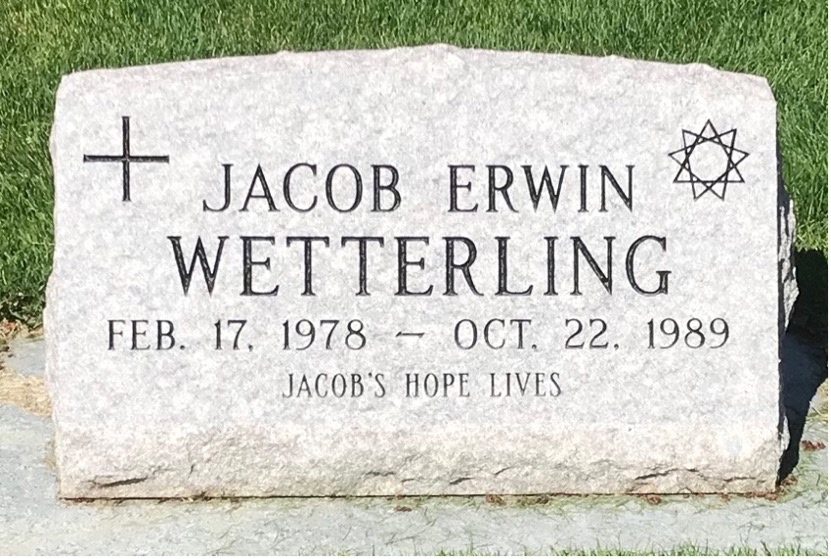
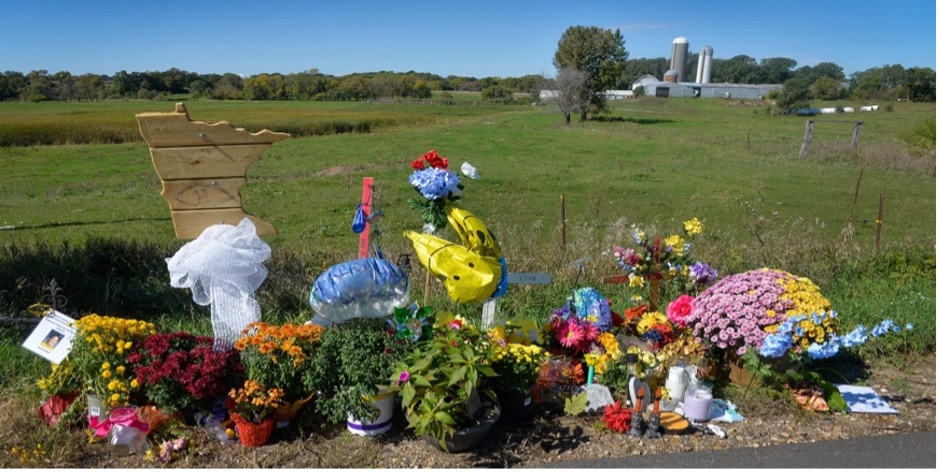
The College of Saint Benedict and Saint John’s University (CSB+SJU) are located in St. Joseph and Collegeville, Minnesota, respectively. Jacob Wetterling, from St. Joseph, was abducted as a child and killed. Most everyone in the area is aware of his case, as he was missing for 27 years before his remains were found. Joy Baker, a woman drawn to Jacob’s case, was a blogger and ultimately helped authorities find Jacob after meeting with men who had been abducted as young boys. One boy had been abducted ten miles away from Jacob’s home in 1989, and all of the events involved sexual attacks by a masked suspect thirty minutes away from where Jacob lived. After tracking down the victims and sharing details in her blog, their stories grabbed the attention of the public, and, in turn, the police. DNA testing linked Danny Heinrich to the case, and eventually he did confess to abducting, sexually assaulting, and killing Jacob as part of a plea that he would not be charged with murder if he revealed the location of Jacob’s remains. Joy is an example of an internet sleuth who caused a much-needed breakthrough. In 2023 she helped Patty Wetterling, Jacob’s mother, release a book that they co-authored. Her blog, Joy the Curious, is still active. Jacob is now buried in the Saint John’s Abbey Cemetery, where the community keeps his memory alive.
Jacob Wetterling’s grave
Memorial for Jacob
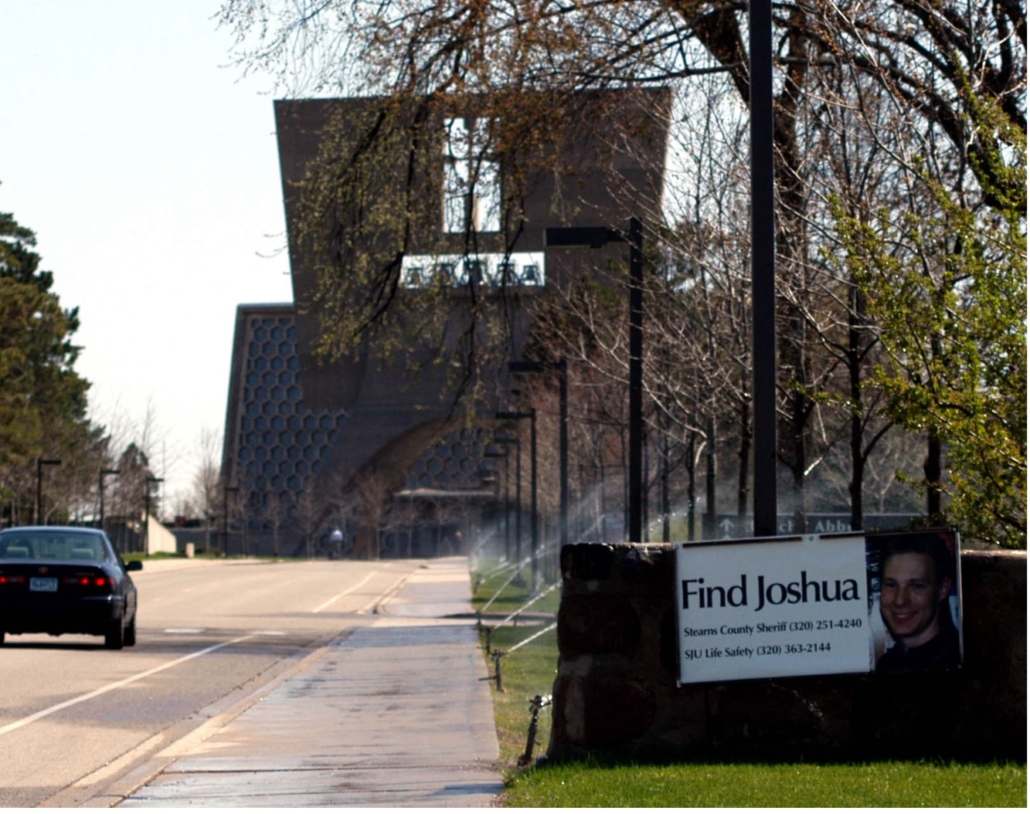
Another case that is close to home for me is that of Joshua Guimond. Josh was a college student at CSB+SJU, where I currently attend. It is said that Josh left an on-campus party at St. John’s and was never seen again. The police investigation into his 21-year disappearance still remains active. Around the 20thanniversary of his disappearance, the popular Netflix series Unsolved Mysteries aired an episode about the investigation, exploring theories as to why Josh disappeared. There is also a podcast, Simply Vanished, that looks into the depths of Josh’s case. The mystery has managed to stay open and relevant with the help of the community and, of course, online sleuthing.
St. John’s University
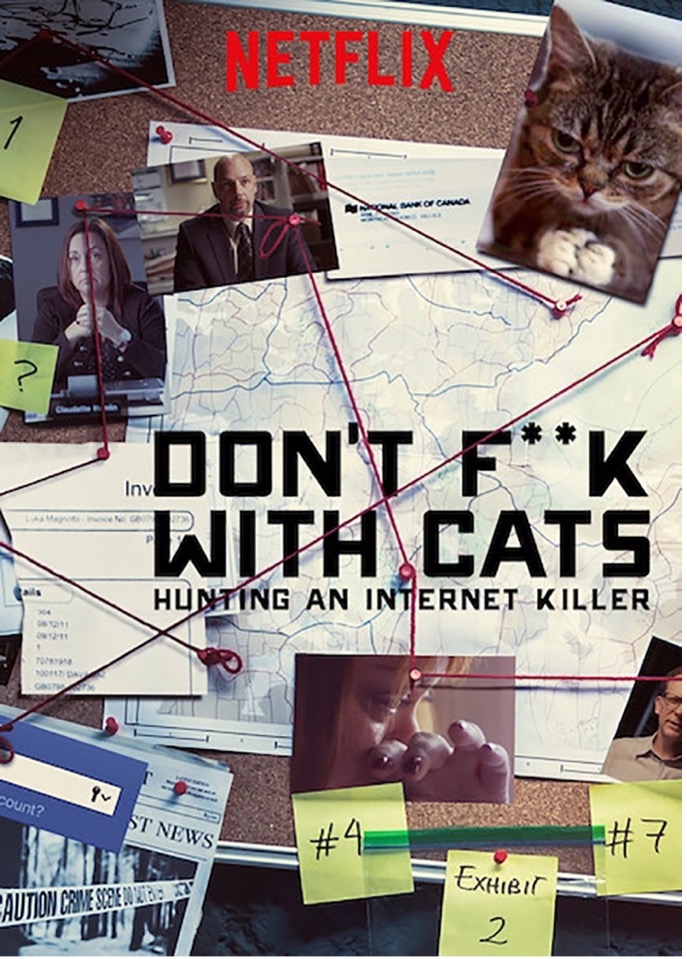
I’ve further been made aware of online sleuthing through my interest in many other cases. In my free time, I sometimes watch true crime documentaries. I particularly like Netflix’s productions, and a favorite one of mine is Don’t Fuck with Cats. This docuseries investigates how truly committed internet sleuths can be.
Poster for Netflix’s Don’t Fuck With Cats
The docuseries follows how a case was solved thanks to determined armchair detectives, though a group not without their mistakes. The same can be said about Netflix’s Crime Scene: The Vanishing at the Cecil Hotel, which explores the good and bad that can come from internet sleuths. Even the Idaho student murders, which I’ve been transfixed by since they happened, has had its fair share of cyber sleuthing.
Cecil Hotel
Location of Idaho student murders
It must be acknowledged that there are great benefits that come from these online communities taking an investigation into their own hands. They have helped identify unknown individuals in crime footage and helped gather and analyze information related to a crime, leading to new leads and potential evidence for law enforcement. Not only that, internet sleuths help to raise awareness for cold cases and missing persons, which can lead to new tips and leads that law enforcement did not know about. This is certainly true for the cases I have mentioned. In this sense, some sleuth groups rightfully get frustrated that they aren’t taken more seriously. However, sleuthing’s collective influence is naturally their downfall when innocent people have had their lives ruined after being wrongly targeted. Are online sleuths correcting justice or merely partaking in the morbid fascination of it all? I think both things can be true. What is most important is that internet sleuthing is done responsibly and ethically because the reality is that amateur online detectives see things that the professionals don’t, often leading to breakthroughs.
https://www.paddingtonarts.org.uk/wp-content/uploads/2024/04/sleuth.jpeg600870paddingtonhttp://www.paddingtonarts.org.uk/wp-content/uploads/2022/01/Paddington-Arts-Fade-Logo.pngpaddington2024-04-04 15:16:172024-04-04 15:16:18The Pull of True Crime & Online Sleuthing
Despite being located in the nation’s largest metropolitan center, North Paddington’s small-town energy is immediately evident while walking around the neighborhood’s friendly streets. While the area maintains the bustling and energetic qualities central to London’s culture, the neighborhood’s comforting charm and collaborative spirit distinguish North Paddington as a community. Simply walking down the streets, it is impossible not to notice the plethora of small businesses and the community-centric atmosphere indicative of a small town. There is a sense of community entirely unique to North Paddington, and the love and appreciation that the residents have for the neighborhood is refreshing and incredibly perceptible.
The neighborhood has a noticeable admiration for the arts, with colorful murals and architectural details distinguishing North Paddington from other London neighborhoods. These artistic expressions do not seem confined to a specific aesthetic and instead exude a sense of creativity and passion that does not feel structured or commissioned. North Paddington seems to be a hub for artists to create peacefully and surround themselves with similarly oriented individuals. This artistic presence contributes significantly to the individualistic yet neighborly atmosphere.
From a non-Londoner’s perspective, North Paddington appears to be a tight-knit community resisting gentrification and emphasizing internal growth initiatives. The neighborhood is seemingly modernizing while maintaining its strong community focus and appreciation for North Paddington’s unique qualities. In particular, the renovated Our Lady of Lourdes and St Vincent de Paul seem to be a formidable example of internal initiatives that promote the community. Focusing on a community center like a Church rather than bringing in new commercial businesses demonstrates the apparent sense of community in the neighborhood.
The North Paddington Program is exciting due to its focus on working with North Paddington residents and local groups to promote equality and a healthier, safer, and more financially secure neighborhood. The program is community-centered and utilizes the North Paddington Partnership Board, which local education, health, businesses, and law enforcement representatives, among others, make up. This group consults on the neighborhood’s internal growth initiatives, stressing the importance of community voices during the decision-making process. One notable North Paddington Program Project is the Harrow Road Shopfronts Improvement Scheme. This initiative provides free architectural services and grants that would allow local businesses to make exterior improvements to their shops, focusing on conserving North Paddington’s heritage and tradition.
Another memorable North Paddington Program initiative is the North Paddington High Streets Program, which emphasizes growing the North Paddington economy by building up local businesses. This effort is a primary example of North Paddington’s prevalent community-based values, in which existing, small, local businesses are at the foundation of the neighborhood’s economic initiatives. Furthermore, the North Paddington Creative Enterprise Zone designated the neighborhood as a space for artists and creative businesses to thrive. These locations support local people in developing innovative skills and promoting artistry.
A hallmark of these programs in North Paddington is that their initiatives center on local people and existing institutions and businesses. The area is undergoing modernization in an untraditional way within contemporary society. Instead of witnessing gentrification overrun the neighborhood, the local government seems to prioritize current residents and businesses to grow North Paddington economically, culturally, and artistically– a commendable yet regrettably rare strategy.
https://www.paddingtonarts.org.uk/wp-content/uploads/2024/03/North-paddington-2-scaled.jpeg19202560paddingtonhttp://www.paddingtonarts.org.uk/wp-content/uploads/2022/01/Paddington-Arts-Fade-Logo.pngpaddington2024-03-21 14:03:352024-03-21 14:03:36North Paddington First Impressions
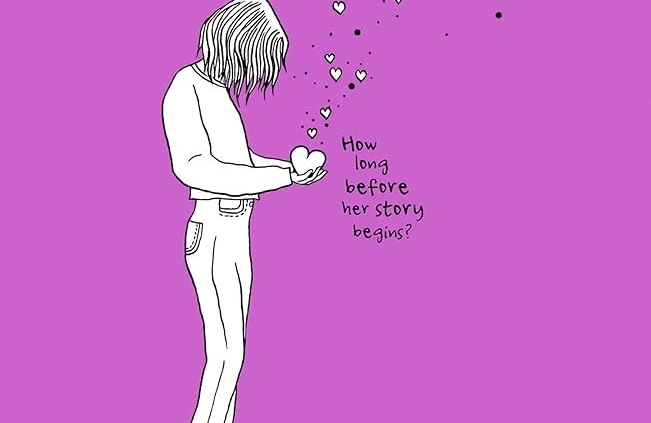
Alice Oseman’s Loveless follows Georgia, a young woman transitioning from high school to college who battles loneliness and questions her sexuality identity. The book focuses not only on Georgia’s growth in coming to terms with her asexuality and aromanticism, but it also manages to reflect the wide range of experiences of members in the LGBTQIA+ community. Loveless is a very important YA novel for our current time and is able to represent LGBTQIA+ young adults realistically, in a way that media doesn’t often get right. These people are not confused or stuck “in a phase,” rather, they know their own feelings better than anyone else. However, society hasn’t made the language for these feelings widely available, making it difficult for queer people to express to others how they feel.
Loveless is written in a way that is accessible, but sometimes that simplicity becomes the story’s downfall. While Oseman does make a point to mention sexualities such as demisexuality and grayromanticism she describes them as “internet” sexualities—ones that are lesser known, or sometimes perceived to be made up. Although Oseman names them, these sexualities are never mentioned again or described in any detail, which I would have loved to see. Oseman writes:
. . . people identified as all sorts of combinations of romantic and sexual – there were gay asexuals, like Sunil, or bisexual aromantics, like Jess, or straight asexuals, pansexual aromantics, and loads more. Some asexual and aromantic people didn’t even like splitting up their attraction into two labels, and some just used the word ‘queer’ to summarise everything. There were words I had to google like ‘demisexual’ and ‘greyromantic’, but even after googling I wasn’t sure exactly what they meant.
While it is important to have this conversation about how truly wide ranges can be within sexual identities, I would’ve liked to have seen more discussion on some of the sexualities mentioned, as they are brushed aside a bit too quickly.
Another area I would have liked Oseman to expand upon surrounds Georgia’s worries about ending up alone in life due to her sexuality. Given the heaviness of this topic, I feel it is resolved too neatly in the text. After coming to terms with her sexual identity, Georgia discovers that she can value platonic love as much as others value romantic love. She realizes that she will never be alone in life when she has her friends, that they are the true loves of her life. While I appreciate this sentiment, I question how realistic it is for Georgia to go from worried to completely fine, and I would have liked to see her grapple even more with the uncertainty of the future. In real life, things are never certain, and I wonder if it would have been more impactful had Georgia’s character been left to wonder if there would always be someone there for her and how she would know that to be true.
I give Loveless four out of five stars. Save for some minor criticisms, I think Loveless ultimately succeeds in its themes: that platonic love is just as important and meaningful as romantic love, that all sexualities are valid and deserve to be legitimized, that understanding sexuality identity is a process and not a straightforward path, that there are no right or wrong experiences for queer people, and that safe spaces have great value. What I think the book succeeds most in is showing readers the importance of own-voices storytelling. Oseman herself is asexual, which allows her to write realistic characters, showcasing all of their goodness and flaws in tandem. With her book, Oseman is actively challenging society and its norms including heteronormativity. I have been thinking much about queerness as a concept recently, so this read came at a perfect time. Like we see in Loveless, I think it’s far braver and more important to live our realities and challenge the constraints of society than to remain complicit in a system that’s not working for us.
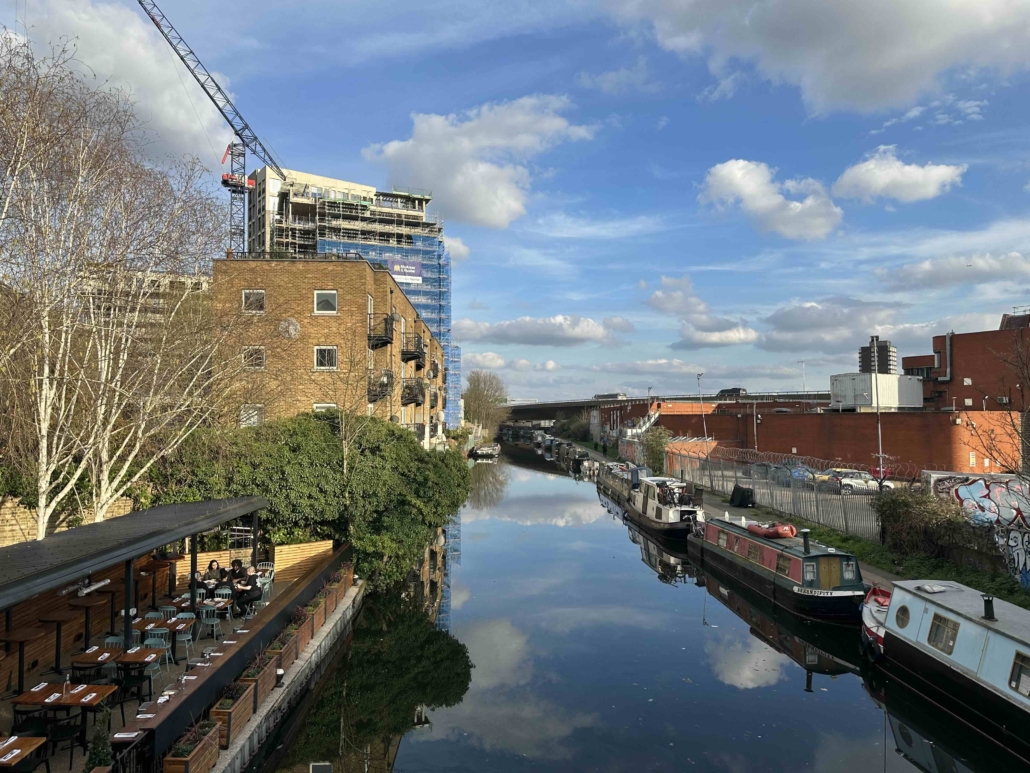
At first sight, North Paddington was devoid of the glamorous architecture stereotyped of London by Westminster, though it still resembled what a majority of London was actually like–a persistent, diverse community nurturing authenticity in a world that disadvantaged them. It reminded me of Camden Town if it was less commercial, a quiet birthplace for art in the shifting suburbs all the way across the city, though still bordering the same canal.
I grew up in the San Francisco Bay Area and could see both similarities and differences to the area of North Paddington. The differences were the most salient because so much of the Bay Area was sleek and modern tech buildings, a characteristic that I’d always disliked. Here, the buildings were similarly more practical than they were beautiful, but they were also more worn down with art able to show its face. Bright blue railings lined the bridge over the canal and the graffitied skatepark was a pop of color among the greenery of Meanwhile Gardens. Parts of San Francisco, the city itself, seemed like this–it had quieter, artsier neighborhoods despite being a center for technological development. It was a combination that the majority of the rest of the Bay was unable to achieve.
I could see it resembling the Pacific Northwest cities in the United States. Parts of Portland, Oregon and Seattle, Washington seemed similar. There was a greater emphasis on nurturing art and nature alongside advancing development, though these cities in the States were bustling with more activity than North Paddington neighborhood appeared to have.
From my limited time here, I managed to gather that the community was kinder to one another, presumably because there was less of a draw for the tourists who were devoid of intent to build lasting relationships in their cursory time in London. I stepped out from work the other day and went to Crispies on the high street to get cheese fries for lunch, and I noticed immediately that the environment was different from what I was used to. Those eating in made sure to clean up after themselves and thank the worker at the till–which may seem like the bare minimum but I had seen the garbage and dishes piling up in my local Ole & Steen cafes and knew that it most definitely wasn’t.
And just the week before, the cashier at Costa took time out of her day to playfully indulge a customer’s toddler. While leaving, I helped a friendly worker with a cart exit through the closed doors. North Paddington was a place abundantly driven by its small, supportive interactions and sincerity in a way that my area in South Kensington was less so, with its transactional hospitality between tourists who could pay to be there and workers who helped them by obligation of their job.
Despite historically rapid changes, North Paddington has impressively remained the same at its core, boiling down to its resilient and close-knit residents. I appreciate the opportunity to have immersed myself in it at least for a little while and during the rest of my internship, I look forward to participating in more of these small interactions as a part of its community.
https://www.paddingtonarts.org.uk/wp-content/uploads/2024/03/Snapchat-839724948-scaled.jpg14402560paddingtonhttp://www.paddingtonarts.org.uk/wp-content/uploads/2022/01/Paddington-Arts-Fade-Logo.pngpaddington2024-03-20 18:01:082024-03-20 20:01:36Carissa’s North Paddington Impressions
We use cookies on our website to give you the most relevant experience. By clicking “Accept All”, you consent to the use of ALL the cookies. See our Cookie Policy here
This website uses cookies to improve your experience while you navigate through the website. Out of these, the cookies that are categorized as necessary are stored on your browser as they are essential for the working of basic functionalities of the website. We also use third-party cookies that help us analyze and understand how you use this website. These cookies will be stored in your browser only with your consent. You also have the option to opt-out of these cookies. But opting out of some of these cookies may affect your browsing experience.
Necessary cookies are absolutely essential for the website to function properly. These cookies ensure basic functionalities and security features of the website, anonymously.
Cookie
Duration
Description
cookielawinfo-checkbox-analytics
11 months
This cookie is set by GDPR Cookie Consent plugin. The cookie is used to store the user consent for the cookies in the category "Analytics".
cookielawinfo-checkbox-functional
11 months
The cookie is set by GDPR cookie consent to record the user consent for the cookies in the category "Functional".
cookielawinfo-checkbox-necessary
11 months
This cookie is set by GDPR Cookie Consent plugin. The cookies is used to store the user consent for the cookies in the category "Necessary".
cookielawinfo-checkbox-others
11 months
This cookie is set by GDPR Cookie Consent plugin. The cookie is used to store the user consent for the cookies in the category "Other.
cookielawinfo-checkbox-performance
11 months
This cookie is set by GDPR Cookie Consent plugin. The cookie is used to store the user consent for the cookies in the category "Performance".
viewed_cookie_policy
11 months
The cookie is set by the GDPR Cookie Consent plugin and is used to store whether or not user has consented to the use of cookies. It does not store any personal data.
Functional cookies help to perform certain functionalities like sharing the content of the website on social media platforms, collect feedbacks, and other third-party features.
Performance cookies are used to understand and analyze the key performance indexes of the website which helps in delivering a better user experience for the visitors.
Analytical cookies are used to understand how visitors interact with the website. These cookies help provide information on metrics the number of visitors, bounce rate, traffic source, etc.
Advertisement cookies are used to provide visitors with relevant ads and marketing campaigns. These cookies track visitors across websites and collect information to provide customized ads.