“The Sun and The Moon: Art Inspired by the Celestial” is an exhibition at the Saatchi Gallery running until the 8th of September. Spanning nine rooms on two floors, the exhibition explores how the two celestial bodies have influenced art across multiple mediums and decades.
Each room focuses on a different aspect of influence. It begins with Dawn, a look into how the Sun and Moon influenced early belief systems. My favorite in this room is Emilie Pugh’s “Helios”. Up close, you can see that Pugh burns paper and puts it in front of gold leaf to get that visual of the Sun.
Moving onto The Rising Sun, the second room focuses on time and seasons. There are several paintings of harvest scenes and sunrises. An interesting piece in this room is Katie Paterson’s “–there lay the Days between–” which is a clock counting every sunrise on Earth since its beginning.
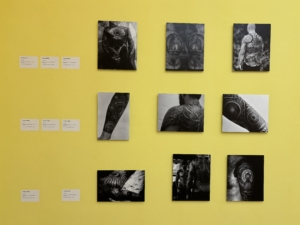
Then, Zenith looks at the Sun when at its peak and its relationship to human bodies. Featured are sun and moon inspired tattoos by Thomas Hooper, a Sussex based artist. Nine black and white photographs of the tattoos hang on the wall. This is just one example of the unique mediums showcased in this exhibition.
Setting Sun has a focus on transformations. There is a section on tarot showing the significance of the Sun and Moon. Jamie Hewlett’s “La Lune” and “Le Soleil” are also featured. These large recreations of tarot cards were originally made for another Saatchi Gallery exhibition back in 2015.
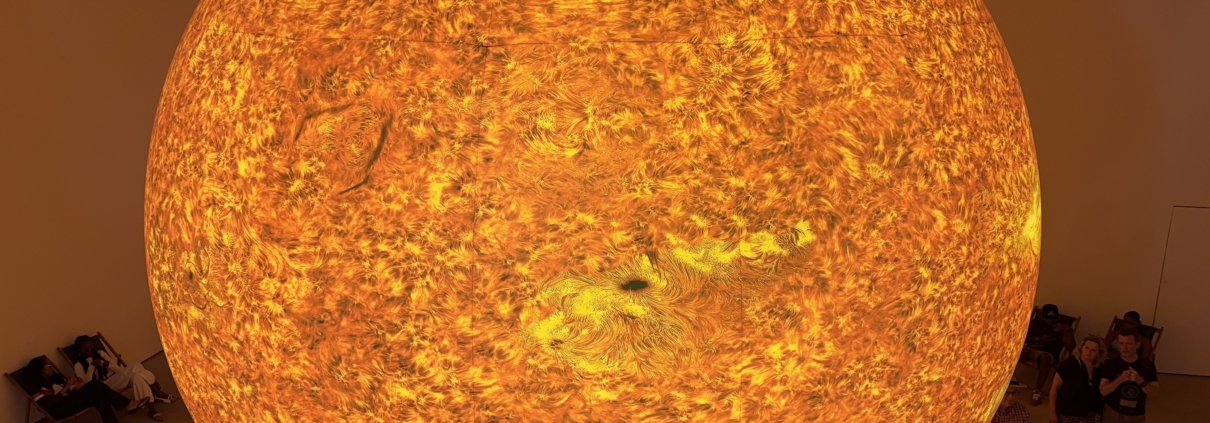
The halfway point is “Helios” by Luke Jerram. Jerram is a British installation artist known for large sculptures and projects. He made a reproduction of the Sun using over 400,000 photographs. The room also includes deck chairs and a soundscape so visitors can take the time to take in the details of the Sun’s surface. This was also where many have taken advantage of the unique photo-op with the Sun.
Moving upstairs is Evening which focuses on the Moon. Suspended in the center of the room is Saad Qureshi’s split moon. I enjoyed Fumie Onuki’s “2025_18″ which used Japanese paper, Nepali paper, and watercolor to show the moon at different points in the sky.
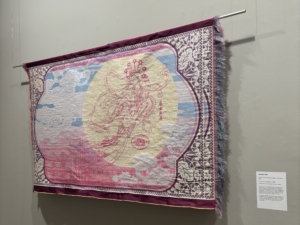
Walking on the Moon veers from the ‘time of day’ theme, taking a look at the cultural impact of space exploration. Showcased in this room are comics and movie posters inspired by the Apollo missions. My personal favorite here was Marcos Kueh’s “Woven Banner: The Virgin’s Voyage – to the Moon” which is based on Chang’e, the goddess of the moon in Chinese mythology. The wide range of pieces in this room reflects the diversity of the entire exhibition.
Next is Midnight which explores the Moon’s influence on folklore and magic. This room features paintings of people worshipping the moon. I thought it was unique that they also have sketches of moon or night-inspired costumes and set designs for different ballets, one being the Royal Ballet’s “Swan Lake”.
The exhibition ends with the Darkest Hours, an immersive installation by teamLab. Visitors are invited into a dark room with hanging lights that create the illusion of light and dark spheres. The lights dim and brighten to the beat of a song. As a conclusion to the exhibition, it allows visitors to think about how they interpret light and therefore the Sun and Moon.
I enjoyed my visit to “The Sun and The Moon” exhibition. I thought the rooms were well put together thematically. I also loved that there were a range of pieces on display from historical artifacts to modern installations. Standard tickets to the exhibition are £20 and I think it is entirely worth it. Visit the Saatchi Gallery website for more information.
https://www.paddingtonarts.org.uk/wp-content/uploads/2026/07/IMG_8980-scaled.jpg19202560paddingtonhttp://www.paddingtonarts.org.uk/wp-content/uploads/2022/01/Paddington-Arts-Fade-Logo.pngpaddington2026-07-31 13:18:372026-07-31 13:18:37The Sun and The Moon at the Saatchi Gallery
I saw the award-winning musical Hadestown at the Lyric Theatre on Saturday, July 11th.
I bought my tickets about five days prior for just £39. There was plenty of availability at a range of prices and views. The show is also running until June 2027.
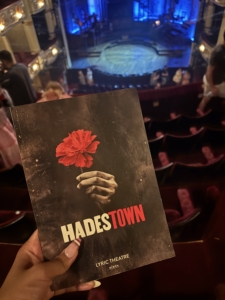
I arrived right when the doors opened, 45 minutes before showtime. The queue moved fairly quickly and I was inside the theatre within 10 minutes. I immediately got into another queue to purchase a program from the merchandise stand. There were quite a few other merch items from t-shirts to a vinyl of a live recorded performance.
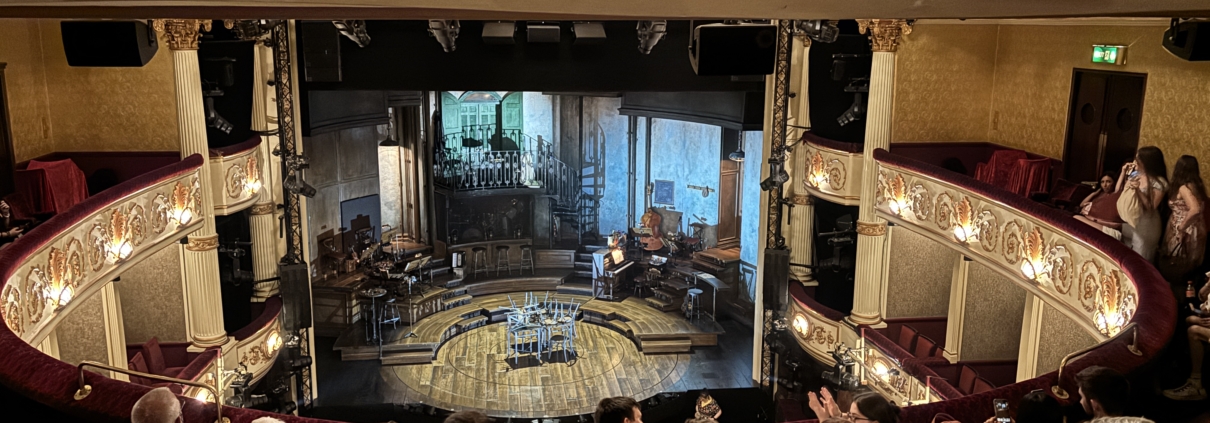
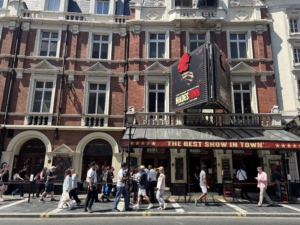
The Lyric Theatre is located on the busy Shaftesbury Street, near a number of other theaters. Inside, the walls and ceilings are decorated with red velvet, gold accents, and chandeliers. The theatre only seats 938 people so the show felt pretty intimate.
I sat in row F of the Grand Circle section. My seat was in the middle which gave me a great view of the entire stage. However, just a few seats to the left and right of me had extremely obstructed views with poles blocking over half of the stage. It surprised me that the theatre sells those seats at all.
I spoke to the couple sitting next to me who also luckily missed the obstructed view by a few seats. They had not known much about the musical but just wanted to see a West End show and came across Hadestown. I got to give them a little synopsis of the show before it started.
Photography by Brinkhoff Moegenburg
Hadestown follows the relationship between Hades and Persephone as well as Orpheus and Eurydice. Eurydice voluntarily goes to the underworld because of the harsh weather on the world above that occurs in Persephone’s absence. Orpheus then sets off to get Eurydice back, but Hades won’t let them go that easily. Hermes the messenger god acts as a narrator.
It was first performed in London back in 2018 right before going on Broadway in 2019. Since then, it has won the Tony award for Best Musical and the Grammy award for Best Musical Theater Album. This current West End run started back in February of 2024.
I had never seen the show in full before, but I’ve listened to the soundtrack many times. When it came to the set design, lighting, and costumes though, I truly had no idea what to expect.
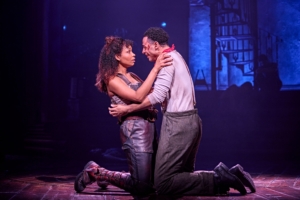
Photography by Brinkhoff Moegenburg
The set was almost like a jazz bar which makes sense with the music. The musicians were on both sides of the stage on platforms that created walkways between them and the balcony in the back center. Throughout the show, the worker ensemble would move the tables and chairs around center stage to create new scenes. Then, when Eurydice goes to Hadestown, the sides of the stage where the musicians are moved out, leaving more room in the center and walkways. This also allowed the rotating stage floor in the center to come into greater play.
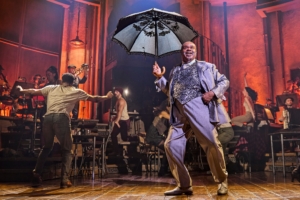
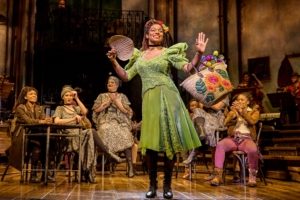
The main cast for this day was Marley Fenton as Orpheus, Bethany Antonia as Eurydice, Juan Jackson as Hades, Clive Rowe as Hermes, and Rachel Adedeji as Persephone. Each of their performances were amazing, but Persephone and her voice truly stood out to me. Adedeji also played a great drunk, which was both entertaining and showed part of why Persephone chooses to spend half the year in the underworld.
Photography by Brinkhoff Moegenburg
During the 20 minute interval, I spoke with a grandmother who came to see the show with her granddaughter. They came about two hours out of London just to see the show. The granddaughter was a huge fan of Hadestown while the grandmother was there to spend time with her. So far, they said their favorite part of the show was the Fates. The Fates act as a conscience, pressuring Eurydice, Orpheus, and even Hades. The granddaughter talked about their harmonies. I also liked the height difference between this cast of the Fates because it made for some dynamic formations and choreography.
Towards the end of the musical, is the recently viral “Wait for Me (Reprise)” which Antonia portrayed Eurydice’s verse more as encouragement than desperation and I liked that. I thought Antonia and Fenton’s characterization of Eurydice and Orpheus, respectively, made the ending even more devastating.
After seeing the full show live, I have come to appreciate the musical even more. The costumes and set made the story come to life. On top of that, this cast was phenomenal and so I raise my cup to them.
Hadestown will be touring the United Kingdom and Ireland in 2027 so if you’re unable to catch them at the Lyric Theatre, check out the tour dates here.
https://www.paddingtonarts.org.uk/wp-content/uploads/2026/07/IMG_7269-scaled.jpg19202560paddingtonhttp://www.paddingtonarts.org.uk/wp-content/uploads/2022/01/Paddington-Arts-Fade-Logo.pngpaddington2026-07-17 10:55:492026-07-31 11:34:48Hadestown at the Lyric Theatre
For the summer of 2026, Shakespeare’s comedy play A Midsummer Night’s Dream has returned to the Globe Theatre.
I attended the 7:30pm show on Tuesday, July 7th. I was given free tickets from CIEE, however, prices typically range from £5 for standing to £88 for seating.
I had never read or seen the play in full before, but I did know of the premise from excerpts in movies and on social media. In summary, there are several intertwined storylines: four young Athenians lost in the woods, a feuding fairy king and queen, and amateur actors rehearsing a play.
Though I arrived just after 7pm, I was able to stand at the very front and center. The show started a little bit early with the cast bringing up audience members to do auditions for the play that’s within the actual play. We learned a song, some got to dance, and others performed a short monologue. Shortly after, the show began.
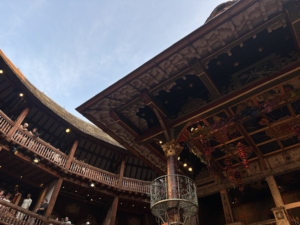
The stage was the first thing I was able to take in. The venue itself is an open-air 360° auditorium, but it was still intimate as it only holds 1,570 audience members. For this production, the stage had four runways where the actors often entered from as well as stairs in the front center. This made the audience feel even more immersed in the story.
Before attending, I wasn’t aware that the show was extremely interactive and not just during the pre-show auditions. There were shoutouts to different audience members when the amateur play’s casting was called. The actors walked through and stood in the yard many times. Audience members were even chosen to actually be in the play, wedding ceremony, and help Puck put the Athenians to sleep.
Photography by Helen Murray
Though I unfortunately was not chosen to go up onto the stage, I still felt a part of the show. Being in the front, I was ‘the wall’ in the play and got to link arms with one of the actors. There were several times when the actors spoke their lines directly to me with some intense eye contact. I even got spit on, by accident of course, but I figured that would happen at some point.
A fellow CIEE intern, Josie Jukita also appreciated the ability to participate. Jukita said, “My favorite part was how interactive it was, the fact that so much of the audience was able to get involved. It was well-integrated into the show and made the experience very memorable.”
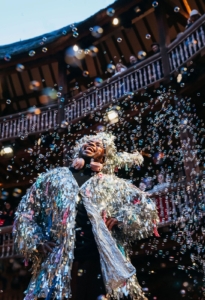
The set design, costumes, and props matched the play’s eccentricity. The rainbow flowers and other decor ‘magically’ appear during the show as the fairies come out at night. The colorful and atypical costumes by Fly Davis also brought the play’s whimsy to life. Puck the fairy seemed to be wearing a greenscreen suit and donkey Bottom was more like a piñata. The props were equally unique as Puck’s magic was shown with bubbles. All three aspects complimented each other for a colorfully modern take, which I think made it more digestible for the average viewer.
Photography by Helen Murray
Romaya Weaver who played Helena was my absolute favorite. Her faces were priceless and her raspy voice, whether intentional or not, fit the role well.
My roommate and fellow CIEE intern, Nowal Farah also thought Helena stood out. “I liked the storyline where the girl [Helena] was in love with the guy [Demetrius] that wasn’t interested,” said Farah. “I thought she was very dramatic and I enjoyed her performance.”
Though the entire cast was brilliant, as most took on two roles as well as sang, danced, and acted. In fact, I was pleasantly surprised by the amount of singing and dancing throughout. The musicians were tucked up in the stage’s balcony but they truly brought the performance to life. Mel Lowe who played Lysander had a beautiful voice. At one point, she snuck in the “Defying Gravity” run. There were more shoutouts to other musicals with the character Bottom wearing Hamilton and Cats t-shirts during the play rehearsals.
Photography by Helen Murray
Overall, seeing a Shakespeare play in a recreation of Shakespeare’s iconic playhouse was an experience I will never forget. I thoroughly enjoyed it, especially with it being my first interactive performance.
Visit the Shakespeare’s Globe website to get tickets to other performances.
https://www.paddingtonarts.org.uk/wp-content/uploads/2026/07/IMG_7080-2-scaled.jpg16112560paddingtonhttp://www.paddingtonarts.org.uk/wp-content/uploads/2022/01/Paddington-Arts-Fade-Logo.pngpaddington2026-07-17 10:43:172026-07-31 11:34:38A Midsummer Night’s Dream at Shakespeare’s Globe Theatre
As a self-proclaimed matcha enthusiast, upon landing in the UK, I was immediately curious to see how the more recent matcha craze hit London and how it compares to my personal taste. Back in Seattle, Washington, my favorite matcha spots are Nana’s Green Tea, Grean Matcha and Phê. However, I most often make my own matcha at home with powder that my roommate bought in Japan. I like my matcha lattes best with oat milk and maple syrup as a sweetener. Some people claim matcha tastes like grass, but I think you just have to find the right place for it. So, I went on a mission to try matcha from different places around London in search of a new favorite.
The very first matcha I had in London was from Costa Coffee, the largest coffee chain in the UK. I ordered a medium iced matcha latte with vanilla syrup because the barista asked if I wanted to add any sweetener. I couldn’t see how it was made behind the counter, but it came out pretty quickly. The color was a pale green which is often telling of a not-so-good matcha. Still, I gave it a try. It mostly tasted like vanilla which may be my fault for getting the added syrup. However, if I hadn’t, then I imagine it would have been like drinking a glass of milk.
I had high expectations going into Blank Street because a friend of mine recently visited London and absolutely raved about this place, suggesting I give it a try. It actually first opened in New York, but I haven’t been before. Of the many locations across London, I stopped by the one in Notting Hill Gate. I ordered a classic iced matcha latte. The vibrant color was deceiving because when I gave it a sip, the matcha taste was very subtle. It wasn’t a bad matcha per se, just not what I was looking forward to based on things I’ve heard. However, I will go back to try the blueberry and white chocolate matchas with lower expectations.
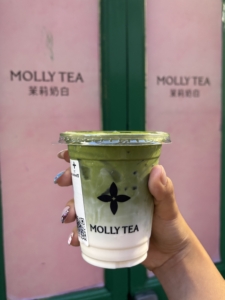
Molly Tea in Chinatown was my next stop. As a Chinese tea chain specializing in jasmine tea, they offer two kinds of matchas. I tried the premium jasmine matcha with a regular sweetness level. It was fairly crowded in the tiny shop, but my drink was ready within five minutes. The color and texture looked immediately promising. I personally enjoy jasmine tea and didn’t mind that this drink’s flavor profile leaned more to jasmine than matcha. It was a little sweeter than I was expecting so I should have gotten 70% sweetness instead of regular. Still, it was a delicious matcha.
Then, I went to Matchado in Bloomsbury but they have four different locations. On top of the variety of drink options, Matchado offers many matcha flavored sweets like brownies and Japanese pancakes. I ordered a regular iced matcha latte with brown sugar syrup. It was ready almost immediately, so I’m assuming a matcha concentrate was pre-made. Still, it looked like good quality matcha. The brown sugar part was not overpowering as I could still taste the umami of the matcha.
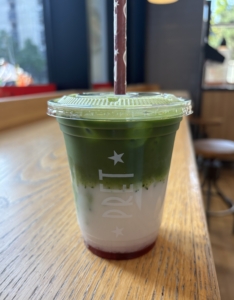
On my first day in London, I heard someone say that Pret a Manger is the “Starbucks of the UK” so I had to give it a try. I wanted a guava iced matcha latte because I was intrigued by the flavor combination, however, the location I went to was out of guava. I settled for an iced blueberry matcha latte which comes with coconut milk. The blueberry syrup was quite nice and not too sweet, but it was somehow still overpowering. I couldn’t taste even a hint of matcha. I tried drinking from the top or mixing it better, but it was all blueberry.
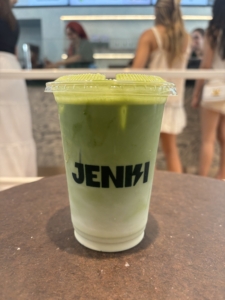
Next, I visited Jenki in Spitalfields. They emphasize how their matcha is sourced from Japan and whisked to order, so I was looking forward to both the taste and texture. I tried the iced matcha latte with maple syrup which would be the closest to how I make it myself. They do in fact whisk it to order and right in front of you, but they had an electric attachment to speed up the process. Though I got maple syrup, the matcha was still very bitter. I prefer a balance of sweet and umami so having paid the extra pound for syrup, I feel like it could have been better.
The last place I tried for this list is Tsujiri, a matcha dessert and tea house. I visited the Camden Market location and ordered a sweetened iced matcha latte. It was prepared quickly and the worker mixed it for me so I didn’t get to see the color of the matcha alone. Still, it tasted great. There was that balance of sweet and umami that I prefer. It also had a creamy texture, better than the rest of the matchas on this list. I definitely want to go back to try their matcha sundaes.
Overall, the matcha scene in London is not all that different from what I’m used to in the states. There are some exceptional matcha places, some just ‘alright’ matcha, and some coffee shops with inconsistent matcha. I would also say the pricing is comparable to Los Angeles and Seattle with a few places here being slightly cheaper. My favorites from this list are by far Matchado and Tsuijiri. I would still try all of these places again as sometimes the quality depends on the location and barista. I suggest you give these places a visit too to see how you like the matcha for yourself.
https://www.paddingtonarts.org.uk/wp-content/uploads/2026/07/IMG_5678-scaled.jpg16832560paddingtonhttp://www.paddingtonarts.org.uk/wp-content/uploads/2022/01/Paddington-Arts-Fade-Logo.pngpaddington2026-07-02 13:38:022026-07-31 11:33:28Tasting Matcha Across London
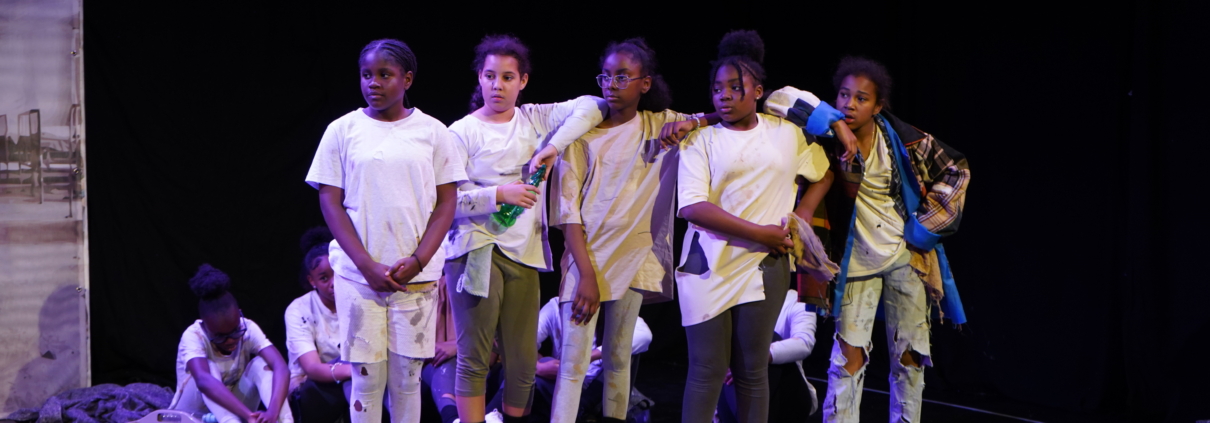
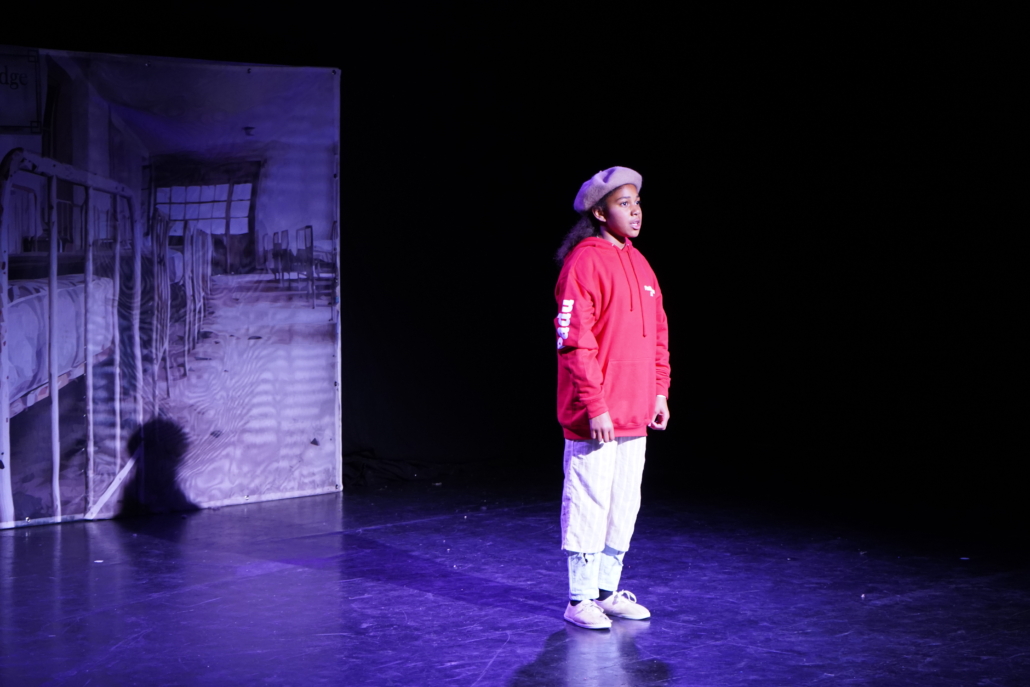
The opening night of Paddington Arts’ production of the musical Annie was a celebration of what Paddington Arts has meant for so many in this community. Parents, many of whom had been through the program as children, greeted each other with warm smiles and gathered under the comfort of familiarity to watch their kids perform. “It’s a sense of belonging,” said Melissa, who joined the program when she was 6 and now helps teach, “When you come here you feel a part of something, and I think that’s really important for young people…It just feels like home.”
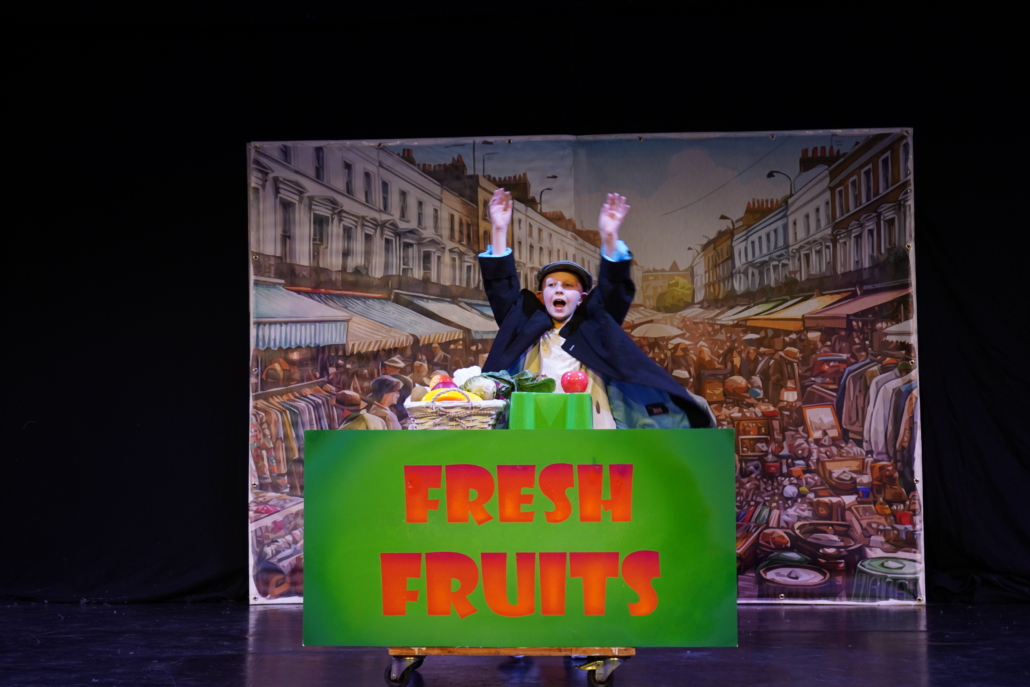
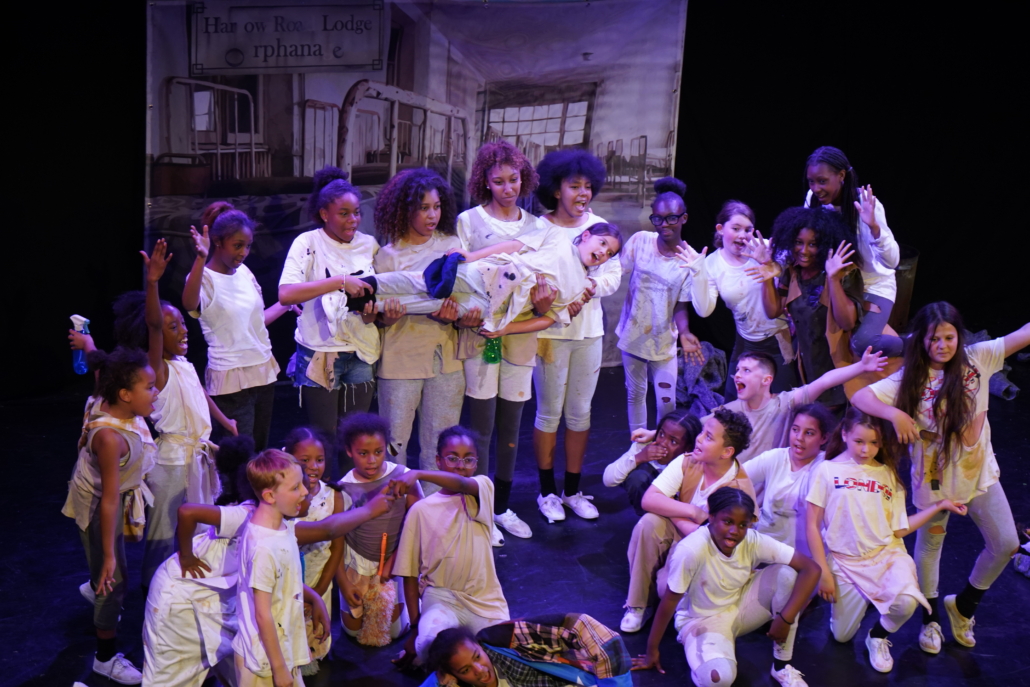
The play is loosely based on the original plot of Annie, but the script is new and a lot of the story has changed as well. It features explosive dance routines and musical numbers ranging from Drill remixes of It’s a Hard Knock Life to Michael Jackson’s Smooth Criminal. The story starts out with Annie in the orphanage, longing to find her parents one day. She escapes to look for them but eventually returns back to the orphanage and hatches a plan to get the abusive head, Ms. Hannigan, arrested. The plan ends up working and the orphanage is reformed and renamed as Paddington Arts.
The circumstances were made up, but the theme of young kids searching for a home rang true to what Paddington Arts has provided for many young children in this area whose families wouldn’t have been able to afford other programs. “People talk about young people just hanging on the corners smoking and what not. They don’t have places like this,” Steve Roberts said, one of the staff members at Paddington Arts, “Do you know how many kids are out there that have nowhere to go, no interaction with parents?…Young people need places like this.”
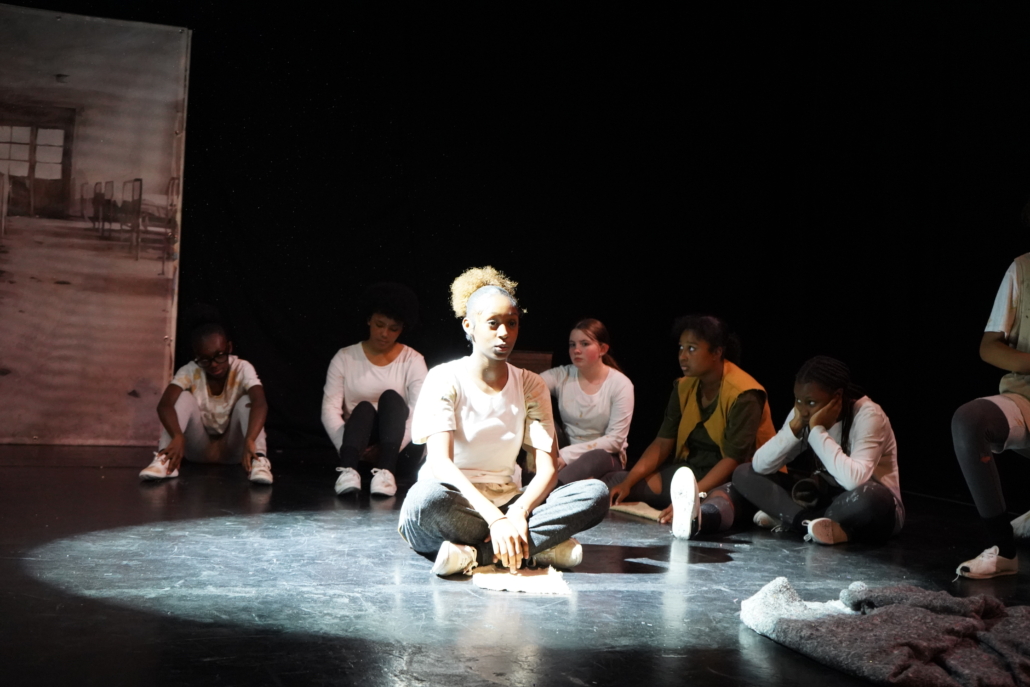
What was really special about this production was that it brought together kids across all age ranges and included children with hidden disabilities like autism and ADHD, sometimes fairly severe. “It’s hard work. This is one of the hardest projects I’ve done with Paddington Arts,” Eldora said, the script writer and director of the play. “I don’t think I could stand here and tell you everything that we’ve learned. It’s a lot.”
Eldora ran through story after story of hurdles that the team had to overcome in order to make the play happen. One kid had an emotional breakdown when he wasn’t able to come in first for rehearsal. Another kid took three weeks to be comfortable sitting behind the curtain and even longer to get comfortable without her wool hat that she wears every day. She now has one of the bigger roles in the play. “Month number 1 and 2 it was like we’re never gonna pull this off,” Eldora said. “The journey we’ve been on to get to this point, it’s amazing.”
While the older kids were hesitant at first to do a play with the younger ones, many of whom had disabilities and took much longer to get the hang of simple lines and directions, they’ve now formed a real bond with each other. Everybody involved with the play expressed how heart-warming it’s been to see the older ones embrace the younger ones and support them when they need help. “These young people have broken barriers, formed bonds, and where differences were not accepted, they have been celebrated,” Eldora said in her opening speech, “It was incredible to see how mainstream youth and those with hidden disabilities supported each other, learned from one another, and grew together.”
For some with disabilities, Paddington Arts is the only place they have to work at something and be able to express themselves in front of others. One father pulled Eldora aside and told her, wiping away tears, how much of an impact this play has had on his child’s ability to express himself. Another parent told her “I can’t believe how extroverted my child has become. He’s like an entirely new person.”
As the play went on, the invisible wall between acting and reality became thinner and thinner. Here were these young kids acting out a play about finding a home amongst each other amidst constant turmoil in their lives, and here they were at Paddington Arts, finding that very home.
“The orphanage still stands today under the new name of Paddington Arts,” Annie announced at the end, as the fictional world began to blend in with reality. After applause and bows, Asia, the actress who played Annie, whose two younger siblings and mother have all been a part of Paddington Arts, comes out on stage to sing the theme one last time.
Looking into the audience, with a few teary eyed parents and a stillness throughout the room, she sang the song’s hopeful lyrics one final time: “The sun’ll come out tomorrow. So you gotta hang on till tomorrow, come what may. Tomorrow, tomorrow, I love ya tomorrow. You’re always a day away.”
https://www.paddingtonarts.org.uk/wp-content/uploads/2024/07/DSC00890-scaled.jpg17072560Steve Shawhttp://www.paddingtonarts.org.uk/wp-content/uploads/2022/01/Paddington-Arts-Fade-Logo.pngSteve Shaw2024-07-12 14:25:532024-07-12 15:30:42Tomorrow’s Hope: Paddington Arts Makes Annie Their Own
Amazon Prime Video’s newest hit is Fallout, an adaptation of the popular post-apocalyptic video game series. Joining the ranks of hit adaptations such as HBO’s The Last of Us and Netflix’s Arcane, Fallout was lovingly crafted by fans as filmmakers, creating an absorbing world that stays true to the aesthetic of the games while expanding on the lore in its own self-enclosed, well-woven story that culminates in a rewarding finale.
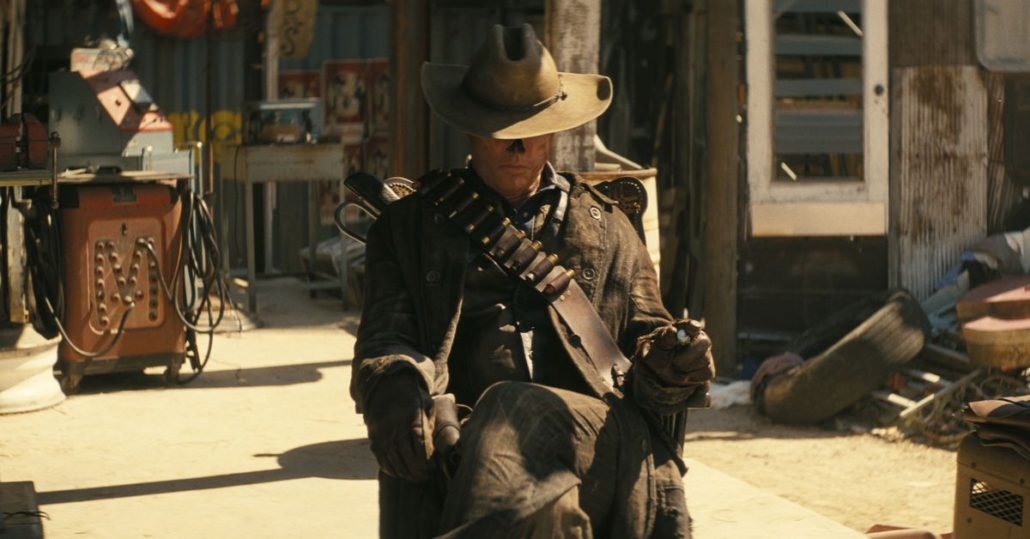
Delving into the plot, Fallout revolves around the storylines of three characters. Lucy (Ella Purnell) is a positive, all-American vault dweller who exists with the sole belief that her purpose is to help repopulate the Earth following nuclear disaster. Maximus (Aaron Moten) is an aspiring member of the Brotherhood of Steel, a military organization that accumulates post-War technology, after they rescued him from the ruins of a bombing when he was a child. And The Ghoul (Walton Goggins) is ravaged by radiation and has survived as a ruthless bounty hunter in the wasteland, stifling his shrouded past.
Credit: Variety
Set in Los Angeles, the series takes place two hundred years after The Great War, a global thermonuclear war between China and the United States in 2077. It’s retrofuturistic, mashing the 1950s aesthetic from the peak of America’s fear of the Cold War and Communism with the destruction of nuclear fallout, which is especially enhanced by a nostalgic soundtrack. Interspersed with bleak, black humor situations and dialogue; dynamic, gory action sequences; and characters all across the spectrum of morality, the show’s atmosphere is easy to like.
Following a marriage between members of different vaults gone wrong, Lucy ventures out into the wasteland in pursuit of her father, Hank (Kyle MacLachlan) who had been kidnapped by the leader of raiders Moldaver (Sarita Choudhury). Out there, every faction including the Brotherhood of Steel and independent forces like The Ghoul are tracking a scientist who supposedly has the key to controlling the future of the wasteland, and it’s something that Lucy pursues so she can bargain with Moldaver for her father. In her absence, her brother Norm (Moises Arias) begins to uncover the sinister origins of Vault-Tec, the company behind the vaults that they live in, and he starts questioning the legitimacy of the entire life that they lived.
Credit: Polygon
Throughout the series, Lucy is an extremely strong protagonist whose naivete and positivity becomes exposed to the wasteland. Instead of breaking her, she adapts to its brutality and can always do what’s needed to stand up for herself yet ultimately remains true to her morals. In contrast, Maximus isn’t the easiest to like, but it’s understandable to see why he’s the way he is, as he was a child drawn directly into a military organization, thus retaining some childish mentality. The Ghoul is among the most interesting of characters, the villain but not completely, and it’s investing as we unravel his past and when we catch a glimpse of humanity behind his ruthlessness. And CX404, the dog companion in a role consistent with the video games, undoubtedly brightens every scene she’s in.
Though a blasted environment of irradiated sand, the wasteland in Fallout feels well-lived. The desert is full of random encounters that feel like the games with a mixture of surviving loners or people loyal to various factions, all with an equally lacking sense of trustworthiness. As Lucy gets to know the wasteland, she gets to know its people, and it’s jarring to think of how their long lives can be so different from her limited perception of society and the world.
Credit: Polygon
Apocalyptic media always operates as insightful commentary on the lengths that humanity would go to survive. Of note, what people are driven to do–because everyone loses their humanity when their other option is dying–only pales in comparison to those at the top of the food chain with their vantage of power. Right through the finale, Fallout operates as a keen critique on capitalism and lends suspicion to any promise of utopia offered in the midst of devastation.
Ultimately, Fallout is among the ranks of the best video game adaptations and is a worthwhile series to invest time in. Riddled with call-backs to the games, the series stays true to its tone, accompanied by likable characters and a tense plot that lends itself toward a second season with leagues of lore to keep building on in the future. This journey across the post-apocalypse is among the must-watch releases of 2024 and its success speaks to the possibility of other sci-fi/fantasy adaptations such as Bethesda’s Elder Scrolls series and even the popular online push for the Mass Effect trilogy to find further success in television.
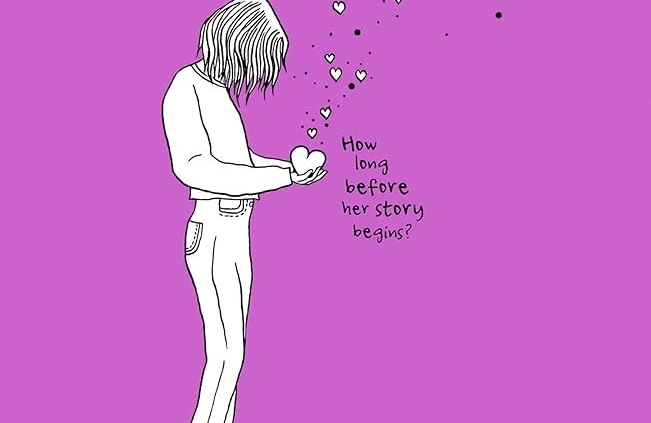
Alice Oseman’s Loveless follows Georgia, a young woman transitioning from high school to college who battles loneliness and questions her sexuality identity. The book focuses not only on Georgia’s growth in coming to terms with her asexuality and aromanticism, but it also manages to reflect the wide range of experiences of members in the LGBTQIA+ community. Loveless is a very important YA novel for our current time and is able to represent LGBTQIA+ young adults realistically, in a way that media doesn’t often get right. These people are not confused or stuck “in a phase,” rather, they know their own feelings better than anyone else. However, society hasn’t made the language for these feelings widely available, making it difficult for queer people to express to others how they feel.
Loveless is written in a way that is accessible, but sometimes that simplicity becomes the story’s downfall. While Oseman does make a point to mention sexualities such as demisexuality and grayromanticism she describes them as “internet” sexualities—ones that are lesser known, or sometimes perceived to be made up. Although Oseman names them, these sexualities are never mentioned again or described in any detail, which I would have loved to see. Oseman writes:
. . . people identified as all sorts of combinations of romantic and sexual – there were gay asexuals, like Sunil, or bisexual aromantics, like Jess, or straight asexuals, pansexual aromantics, and loads more. Some asexual and aromantic people didn’t even like splitting up their attraction into two labels, and some just used the word ‘queer’ to summarise everything. There were words I had to google like ‘demisexual’ and ‘greyromantic’, but even after googling I wasn’t sure exactly what they meant.
While it is important to have this conversation about how truly wide ranges can be within sexual identities, I would’ve liked to have seen more discussion on some of the sexualities mentioned, as they are brushed aside a bit too quickly.
Another area I would have liked Oseman to expand upon surrounds Georgia’s worries about ending up alone in life due to her sexuality. Given the heaviness of this topic, I feel it is resolved too neatly in the text. After coming to terms with her sexual identity, Georgia discovers that she can value platonic love as much as others value romantic love. She realizes that she will never be alone in life when she has her friends, that they are the true loves of her life. While I appreciate this sentiment, I question how realistic it is for Georgia to go from worried to completely fine, and I would have liked to see her grapple even more with the uncertainty of the future. In real life, things are never certain, and I wonder if it would have been more impactful had Georgia’s character been left to wonder if there would always be someone there for her and how she would know that to be true.
I give Loveless four out of five stars. Save for some minor criticisms, I think Loveless ultimately succeeds in its themes: that platonic love is just as important and meaningful as romantic love, that all sexualities are valid and deserve to be legitimized, that understanding sexuality identity is a process and not a straightforward path, that there are no right or wrong experiences for queer people, and that safe spaces have great value. What I think the book succeeds most in is showing readers the importance of own-voices storytelling. Oseman herself is asexual, which allows her to write realistic characters, showcasing all of their goodness and flaws in tandem. With her book, Oseman is actively challenging society and its norms including heteronormativity. I have been thinking much about queerness as a concept recently, so this read came at a perfect time. Like we see in Loveless, I think it’s far braver and more important to live our realities and challenge the constraints of society than to remain complicit in a system that’s not working for us.
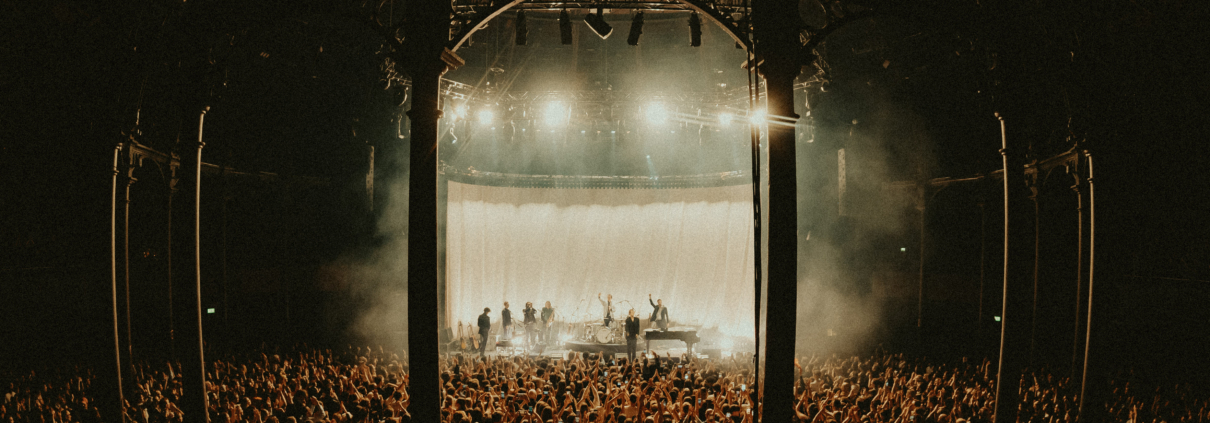
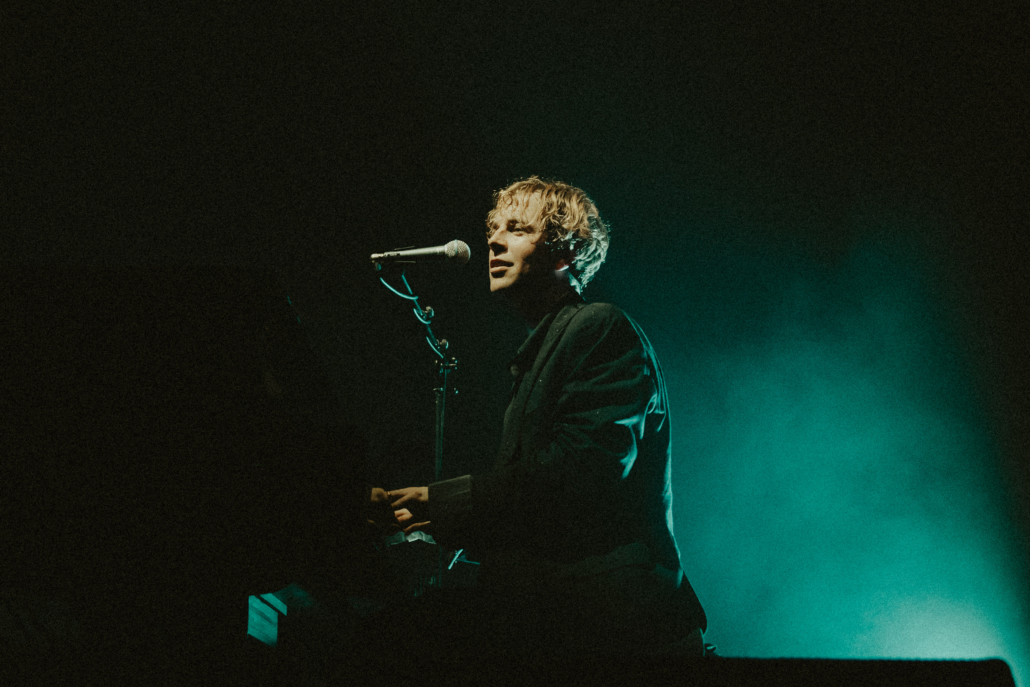
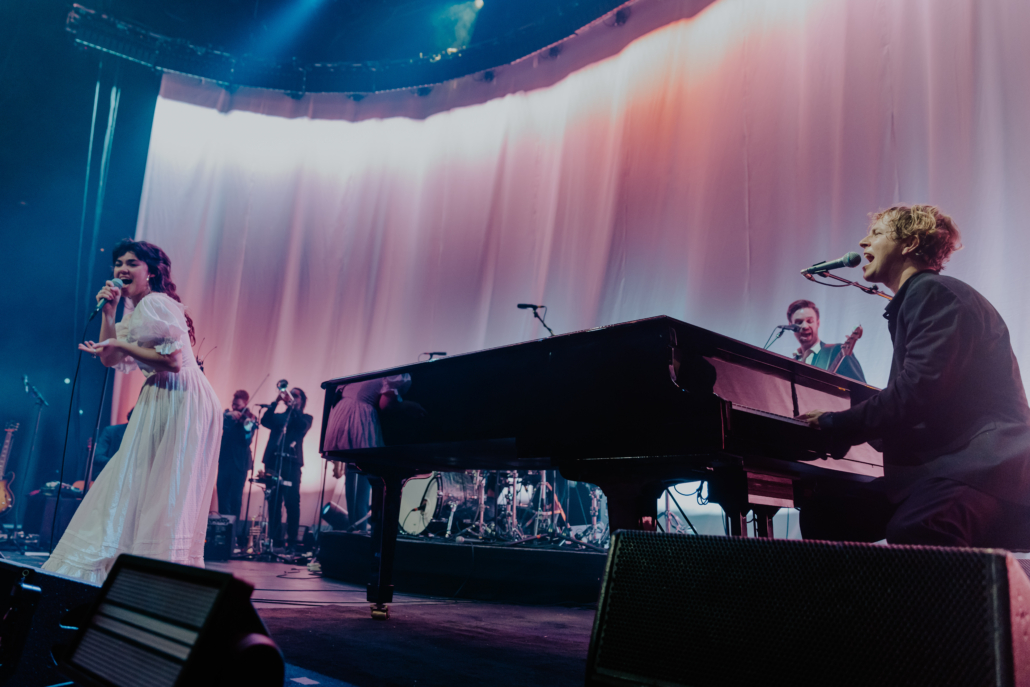
On March 15, Tom Odell had a victorious homecoming at the first of two sold-out shows at the Roundhouse in London while on tour for his newest album Black Friday. Accompanied by his backing band, his soulful vocals pulled the audience from triumphant highs to melancholic lows and back up again, multiple times over with apparent effortlessness.
To kick off the night, the sole opening act Sofia Isella was just nineteen but had the stage presence of a performer who had been in the industry for over a decade. Her performance was haunting and magnetic, successfully engaging the audience in ways that openers often fail to with a combination of breathy whispers, full-bodied vocals and casual chats. Taking advantage of her multi-instrumental background, Isella swayed in the spotlight while providing her own violin accompaniment to the last song on her setlist “I Looked the Future in the Eyes, It’s Mine.”
When Tom Odell finally took the stage, one of the most immediately striking characteristics was the show’s visuals. It reflected the cinematic simplicity prevalent in his album art and music videos, playing well with lighting, colors and shadows. From a spotlight carving him an isolated silhouette at his piano to his band’s shadows shifting across a piercing red backdrop, the lighting designers made the show visually engaging while staying true to Odell’s grounded, minimalist aesthetic.
Credit: Ciara McMullan (@ciaramcmullanmedia)
The moment that the first lyric rang through the air, a somber opening to “Somebody Else,” cheers immediately melted into a reverent silence at the raw emotionality of Odell’s live vocals thundering through the Roundhouse. The air of quiet awe was consistent with many of the ballads throughout the set. That was not to say that audience engagement was dissuaded at all, however, as many were happy to join their voices to the upbeat and popular songs. On the more spirited end, Odell directly employed crowd participation to call back parts of the anthemic track “Hold Me,” and there was a point where he amped the energy all the way up by clambering on top of his piano to sing.
Backdropping Odell’s vocal and piano performance was a whole host of different instruments, from the conventional guitar, bass and drums to the more classical violin, trumpet and saxophone that lent a jazzier edge less typical of indie rock singer-songwriters. The backing band contributed to layered compositions that made the emotional lows more heart-wrenching and emotional highs even more buoyant.
Credit: Ciara McMullan (@ciaramcmullanmedia)
Between songs, Odell included a love letter to the host city. Introducing “Long Way Down,” the title track from his 2013 album, he reminisced that it was the first song he wrote when he moved to London at around twenty years-old–over a decade ago, back when his present success was just hypothetical. He called out London as the best city which met an eruption of biased, infectious cheering.
Further into the set, homage was also paid to Elton John whom Odell performed with in the past. For a nostalgic duet of “Tiny Dancer,” Abigail Morris, the singer of indie group The Last Dinner Party, was invited to the stage. It was well-received and many show-goers echoed the pair’s performance of the classic with their own attachment to the song.
Credit: Ciara McMullan (@ciaramcmullanmedia)
Tom Odell wrapped up the night with an ode to his expansive discography, leaving the audience with some of his newest music including the TikTok viral “Black Friday” but creating a final, bittersweet conclusion with 2013’s “Another Love,” his most popular song to date. A testament to the universality of his songwriting, I was one among hundreds who couldn’t help but relate to the utterly human topics confronted so artistically by the night’s performance.
https://www.paddingtonarts.org.uk/wp-content/uploads/2024/03/L07A8810-scaled.jpg17062560paddingtonhttp://www.paddingtonarts.org.uk/wp-content/uploads/2022/01/Paddington-Arts-Fade-Logo.pngpaddington2024-03-20 18:30:512024-03-21 12:45:53Show Review: Tom Odell at the Roundhouse, London
From a star-studded cast flaunting futuristic fashion at premieres across the globe to reviews deeming it the best sci-fi spectacle seen for decades, millions could not help being drawn to the hype generated by the release of Denis Villeneuve’s Dune: Part Two, even trailing at the back-end of a five-month delay.
Dune: Part One, the film’s predecessor, released during my freshman year of college and I orchestrated a large group to view it in theaters at the time. Before that, I read the first three books and in high school, I presented on Villeneuve’s strong filmography from Incendies onwards. On top of all that, Frank Herbert’s Dune was rooted deep in my interests, a hero’s journey story that aged incredibly well–turning out to not actually be about a hero at all–and made for a piercingly relevant story about environmentalism, colonialism, and religious fanaticism. It was guided in adaptation by the precise, visionary hand of Villeneuve and Part Two culminated into a different take on the novel, ultimately worthy of the source material it represented.
In its prequel, stewardship of the planet Arrakis was given by the emperor to House Atreides, pulled from House Harkonnen’s control. Inhabited by the indigenous Fremen, the planet was also the source of the valuable substance spice. The transfer of ownership was a setup, and Paul’s father Leto sought to ally with the Fremen but died in a collaborative siege from House Harkonnen and the emperor’s Sardaukar. Meanwhile, Paul, wracked with visions of the future mounting in frequency, escaped into the desert and met up with the Fremen while accompanied by his mother Jessica, a Bene Gesserit sister harboring tools of manipulation. Historically, the sisterhood purposefully crossed bloodlines to breed a Kwisatz Haderach, a powerful man who could see into the future as well as the past, and it became believed that the Kwisatz Haderach was Paul–a generation too early and out of their control.
Credit: IMDb
Dune: Part Two kicks off with Paul learning the ways of the Fremen as his relationship blossoms with Chani, the girl in his visions. The Fremen take Jessica to be their Reverend Mother and her empathy drains away as her mind accesses generations of knowledge by ingesting the Water of Life. The process impacts her pregnancy and her coming daughter Alia is believed to be an abomination. Following the defeat of the Atreides, the Harkonnens reclaim control of spice production but are often disrupted by Fremen guerrilla tactics under Paul’s direction. Encouraged to go south and cement himself as a messiah among fanatic tribes, Paul resists because he foresees a holy war. Simultaneously, a threat from the Harkonnens grows in the form of the psychotic Feyd-Rautha. In order to survive and win, Paul travels south and fully becomes the Kwisatz Haderach, finally bringing about the holy war and bending the emperor to his will, to Chani’s immense disapproval.
Credit: Cosmopolitan
Before viewing the film, a big aspect drawing personal skepticism was the two-part split. In retrospect, it turns out I had nothing to worry about. The time jump integrates well and fleshes out characters in a way that the novel lacked. Paul and Chani’s relationship development is more organic, and it’s emotionally investing to watch Chani’s trust in Paul fragment as he descends the path of his dark destiny. Similarly, it is intriguing to be closer to Paul in both good and bad–his victories while learning the ways of the Fremen and his struggles in the face of his bloodstained destiny. The context also benefits Jessica’s portrayal, and her transition from a mother caring for her son into the passionless, purposeful Reverend Mother is completely chilling.
Consistent with adaptation, Dune: Part Two is no stranger to differences from the source material. One of note is the presence of Paul’s sister Alia. Villeneuve saw the cheesiness in David Lynch’s 1984 adaptation, a toddler channelling generations of knowledge, and instead keeps her in the womb in telepathic communication with Jessica. The change contributes to Jessica’s eerie powers and the air of mystery benefits Alia, making viewers wonder what kind of abomination she would be when she’s finally born without having to directly portray it at all.
Credit: Radio Times
Another difference is the integration of Paul’s nemesis Feyd-Rautha halfway into this installment. There’s a lot of risk with a late introduction, especially regarding believability, but it is remarkably in-character for the cunning Feyd to exist in the shadows of his intense and fumbling brother, Rabban. It’s a little jarring to get his entire origin story in the middle of the film, a long sequence completely separate from the aesthetics of Arrakis, and I wonder if it had been viable to integrate him earlier while still maintaining his relevance.
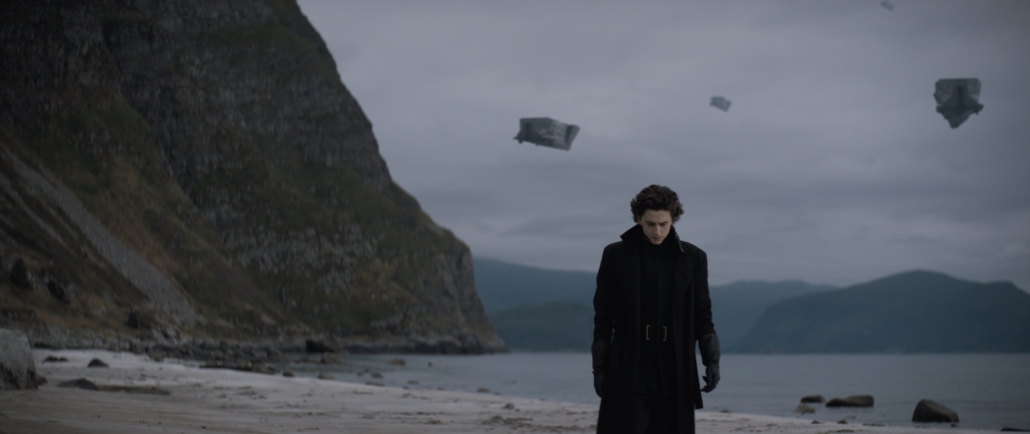
On the technical side, Dune: Part Two does a phenomenal job capturing both intimacy as well as scale, courtesy of constant collaborators Greig Fraser and Hans Zimmer. Over his past filmography, Villeneuve established and perfected an aesthetic of grand minimalism in science-fiction, particularly with the worlds of Blade Runner 2049 and Arrival, and the same purpose is evident in each shot of this film, from the massive arena under the black sun of Giedi Prime to the silhouettes of Paul and Chani on Arrakis, their gazes turned toward an ocean of sand. Zimmer’s sweeping score proves to be similarly versatile, backdropping raging wars to the softness of human connection, with everything catered to in between.
Credit: IMDb
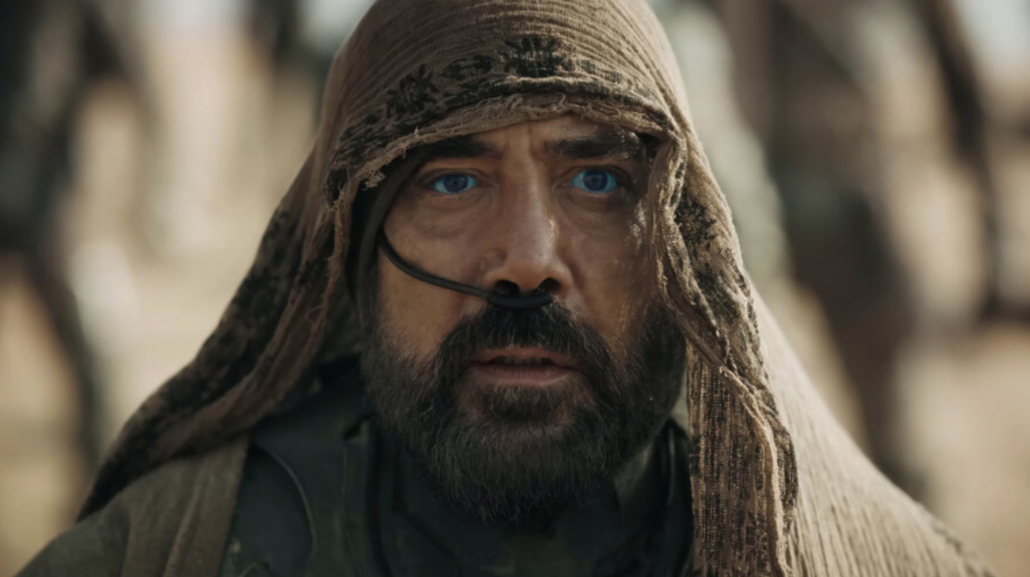
Significant themes are explored throughout including a heavy critique of religious fanaticism. The prophecies that the Fremen believe in are faked, planted by the Bene Gesserit to ensure the safety of the Kwisatz Haderach and themselves everywhere, and it’s one of their many tools for manipulation. At first condoned, it’s taken advantage of by Paul and Jessica when they trade priorities–intimate relationships for colossal plots–as their minds expand into omniscience, drifting away from humanity. Because viewers are given more time to know the Fremen culture, we know exactly what’s at risk when they throw everything aside to worship Paul–specifically referencing the shot of burning corpses, a harsh contrast to the careful conservation of the bodies’ water at the beginning of the film.
On top of that, because of Paul’s inherited atomics as a Duke of one of the Great Houses in the Imperium, the means to officially overthrow oppressors would never have been in the hands of the Fremen originally. It would always require the loyalty of an outsider intermediary. It begs the question–could the Fremen have been given the resources that they lacked without the core of their people changing so completely or is the power dynamic between the privileged and underprivileged something that can never be fixed?
Credit: Escapist Magazine
As well, the link between colonialism and environmentalism is clear in Paul’s vision of his grown sister Alia walking in the future of Arrakis–dunes leading to an ocean. Contrasting the Fremen’s respectful co-existence with the environment, using the sandworms for transportation and echoing the sounds of nature in their walk, the colonists seek to change it to suit themselves and give it the ocean reminiscent of their homeworld. This is a vignette of history that has been repeated time and time again, with those harnessing the environment constantly prevailing over the indigenous communities that existed in-tune with it for centuries.
Ultimately, this is a film about warring familial pride and the lengths that one would go to preserve theirs, regardless of those caught between. In the film, Paul puts it well: to beat the Harkonnens, the Atreides must become them. The Atreides truly are no better, exploiting the Fremen for their own gains and genetically, they are exactly the same through Jessica’s bloodline. Even though he struggles with it at first, Paul’s decision is wholly selfish; he sees what he would become and opts for the dark path on account of the survival of his House and revenge for his father, rather than facing a moral death–even while knowing that his survival would barely give the Fremen more agency than the Harkonnens would.
Credit: Comic Book Movie
The ending with Chani alone, abandoning Paul and making her way back into the desert, poses as a cliffhanger alluding to the final act of the trilogy, the adaptation of Dune: Messiah. Chani is refreshingly given more agency to disagree with Paul’s decisions–which culminates when Paul chooses Princess Irulan’s hand in marriage for a political alliance, sentencing Chani to a future as a concubine, a harsh backhand since Paul originally stated his desire to be equal to her. It is interesting to consider how their relationship will be repaired in the time jump to Herbert’s second novel, and evidently, its portrayal will be in more than capable hands.
With a MAX show about the Bene Gesserit also in development, the franchise is already taking root as some of the most impactful on-screen science fiction in recent history. It epitomizes what the genre has always done best–create a speculative universe through which strikingly real flaws of society and humanity can be deliberated. More engaging than the prior installment, Dune: Part Two only furthers this mentality with every planted seed fully brought to fruition and resulting in the beginning of one of the most consistent cinematic universes yet.
https://www.paddingtonarts.org.uk/wp-content/uploads/2024/03/dune-part-two-17-new-trailer-stills_q92r.png6101267paddingtonhttp://www.paddingtonarts.org.uk/wp-content/uploads/2022/01/Paddington-Arts-Fade-Logo.pngpaddington2024-03-20 16:14:212024-03-20 16:22:13Dune: Part Two Analysis and Review
We use cookies on our website to give you the most relevant experience. By clicking “Accept All”, you consent to the use of ALL the cookies. See our Cookie Policy here
This website uses cookies to improve your experience while you navigate through the website. Out of these, the cookies that are categorized as necessary are stored on your browser as they are essential for the working of basic functionalities of the website. We also use third-party cookies that help us analyze and understand how you use this website. These cookies will be stored in your browser only with your consent. You also have the option to opt-out of these cookies. But opting out of some of these cookies may affect your browsing experience.
Necessary cookies are absolutely essential for the website to function properly. These cookies ensure basic functionalities and security features of the website, anonymously.
Cookie
Duration
Description
cookielawinfo-checkbox-analytics
11 months
This cookie is set by GDPR Cookie Consent plugin. The cookie is used to store the user consent for the cookies in the category "Analytics".
cookielawinfo-checkbox-functional
11 months
The cookie is set by GDPR cookie consent to record the user consent for the cookies in the category "Functional".
cookielawinfo-checkbox-necessary
11 months
This cookie is set by GDPR Cookie Consent plugin. The cookies is used to store the user consent for the cookies in the category "Necessary".
cookielawinfo-checkbox-others
11 months
This cookie is set by GDPR Cookie Consent plugin. The cookie is used to store the user consent for the cookies in the category "Other.
cookielawinfo-checkbox-performance
11 months
This cookie is set by GDPR Cookie Consent plugin. The cookie is used to store the user consent for the cookies in the category "Performance".
viewed_cookie_policy
11 months
The cookie is set by the GDPR Cookie Consent plugin and is used to store whether or not user has consented to the use of cookies. It does not store any personal data.
Functional cookies help to perform certain functionalities like sharing the content of the website on social media platforms, collect feedbacks, and other third-party features.
Performance cookies are used to understand and analyze the key performance indexes of the website which helps in delivering a better user experience for the visitors.
Analytical cookies are used to understand how visitors interact with the website. These cookies help provide information on metrics the number of visitors, bounce rate, traffic source, etc.
Advertisement cookies are used to provide visitors with relevant ads and marketing campaigns. These cookies track visitors across websites and collect information to provide customized ads.







 The very first matcha I had in London was from
 hinatown was my next stop. As a Chinese tea chain specializing in jasmine tea, they offer two kinds of matchas. I tried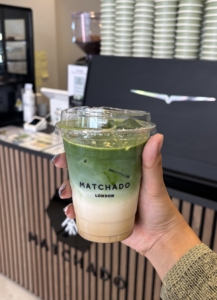
 The last place I tried for this list is