The English National Ballet’s The Sleeping Beauty
By Leah Gabriella Cardenas
On June 25-28, at the Royal Albert Hall, the English National Ballet performed Kenneth MacMillan’s The Sleeping Beauty.
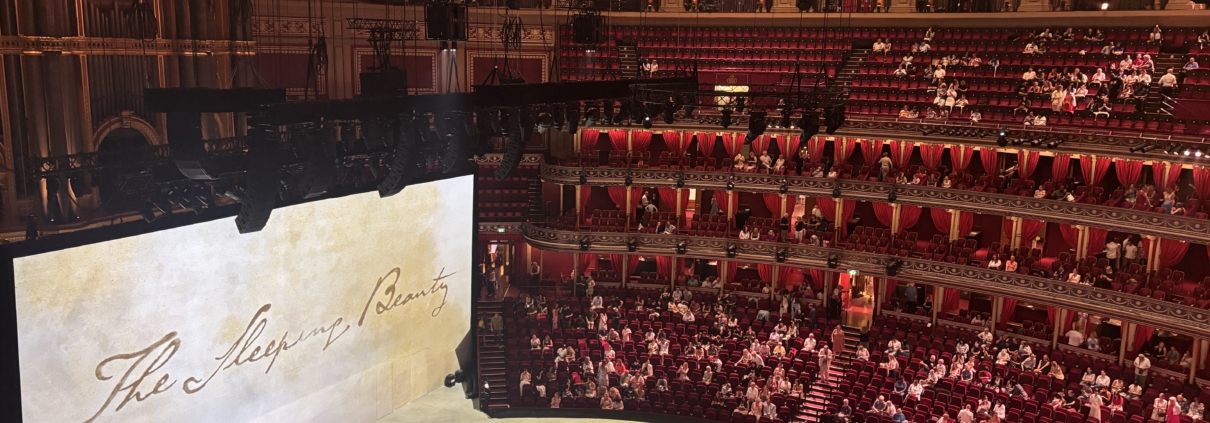
I went to the 7pm show on Sunday, the last show of this run. My seat was in Rausing Circle R row 5. I purchased my tickets a week before for a slight discount on TodayTix. However, when I got to my seats, I realized we had an obstructed view that was not noted on the website. Because of the shape of the stage and the way the seating section curves, we could not see part of stage right.
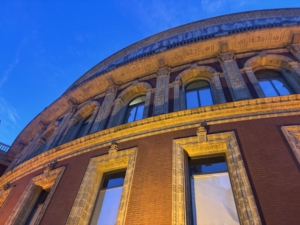 Still, the Royal Albert Hall was absolutely breathtaking both inside and out. The mostly red interior and the arches above the Rausing Circle section conveyed the venue’s grandness. Hanging from the ceiling were acoustic diffusers that look like mushrooms, adding to the fairytale whimsy of the ballet. Outside, the dome-shaped roof and detailed facade looked especially gorgeous as the sun was setting.
On top of it being in an iconic venue, I was excited to see a performance here in London because I grew up doing ballet. Aside from The Nutcracker, I’ve only seen one other ballet by a professional company and that was American Ballet Theatre’s The Sleeping Beauty when I was nine years old. Then at 13, I learned the Aurora Act 3 wedding variation. Being familiar with this particular ballet, I was interested in seeing the English National Ballet’s take on it.
The Sleeping Beauty was originally choreographed by Marius Petipa to music by Pyotr Ilyich Tchaikovsky. After debuting in 1890 at the Mariinsky Theatre in St. Petersburg, it took several decades before the ballet became recognized and praised outside of Russia. Now, it is one of the most famous ballets of all time known for its classic choreography and musicality.
Photography by ASH
The storyline differs from the version that many are familiar with. In the ballet, baby Princess Aurora is cursed by the evil fairy Carabosse to prick her finger and die on her sixteenth birthday. However, the Lilac Fairy changes the curse so that Aurora will sleep for 100 years and then be awoken by a kiss. Act 1 is Aurora’s sixteenth birthday where she pricks her finger. In Act 2, we meet Prince Désiré who then wakes Aurora. Lastly, Act 3 is their royal wedding.
The English National Ballet performed Kenneth MacMillan’s version which was first done in 1986 by the American Ballet Theatre. It is shorter than the original version with only two acts. I found that the pacing was tighter as well, making it feel like it went by even faster. As for the choreography itself, I only really noticed a few differences though I’m no expert on the original. I do know that much of the hunting and court scenes were cut. I’m just glad that the Bluebird and Princess Florine were kept as their pas de deux is one of my favorite parts.
Photography by ASH
As for the music, it was performed by the English National Ballet Philharmonic. Their partnership with the dancers was evident as musicality is important to this ballet and it did not disappoint that night. I was sad that we couldn’t see the orchestra at all during the performance given the way the Royal Albert Hall is set up, but after bows they were shown on the screen.
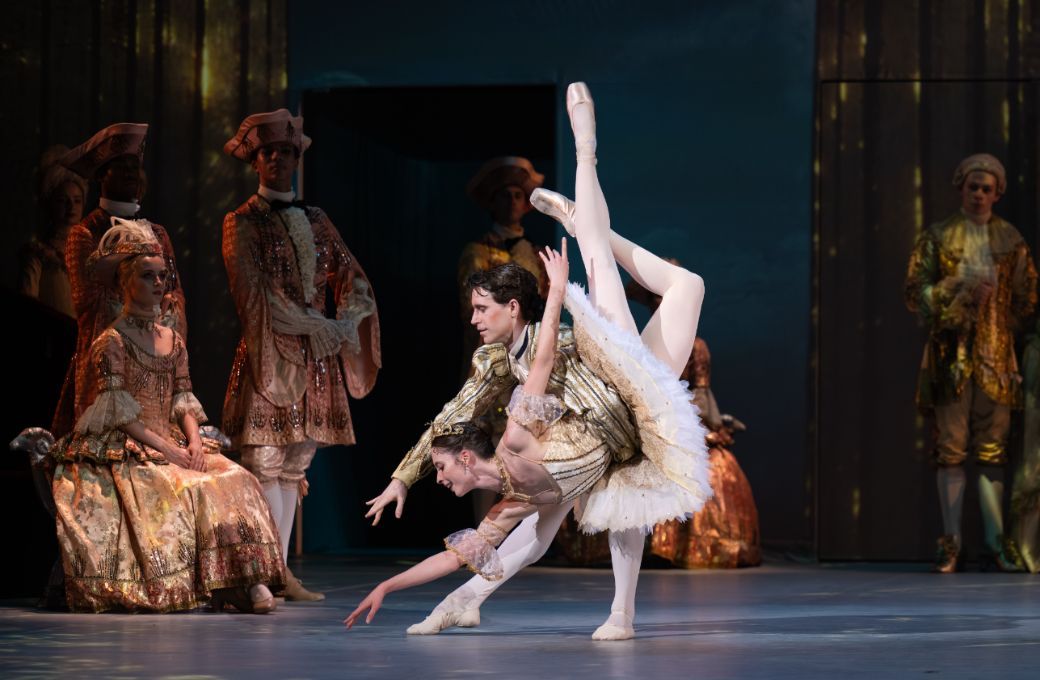
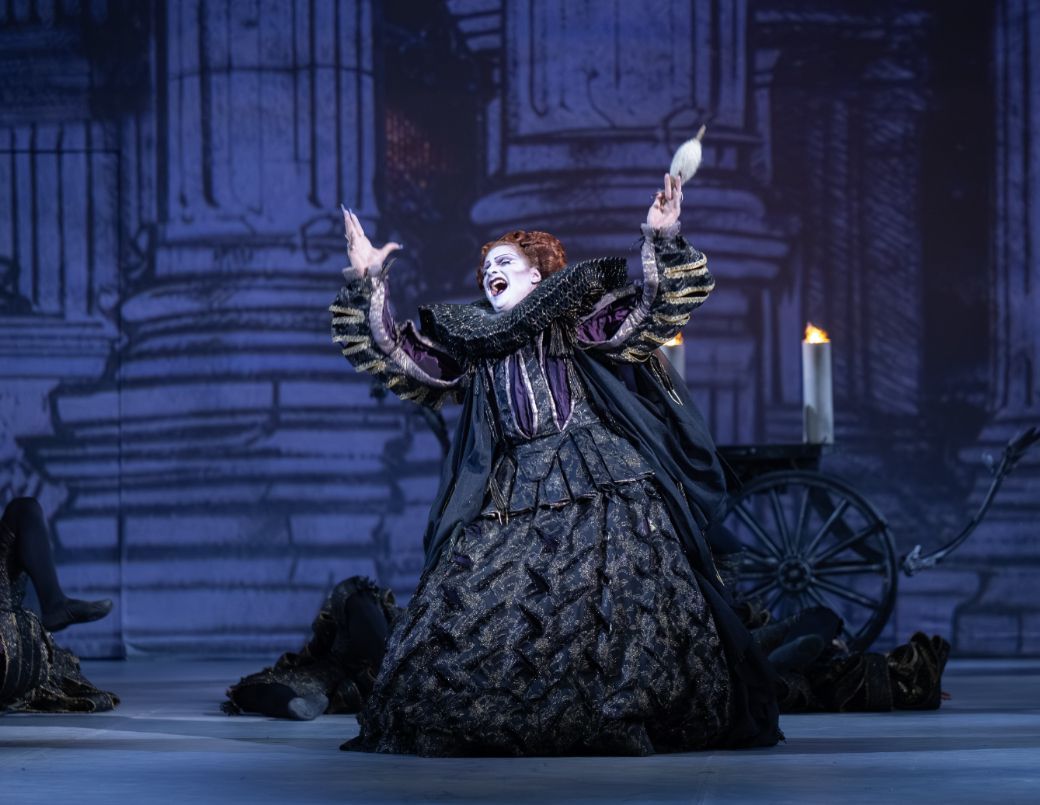
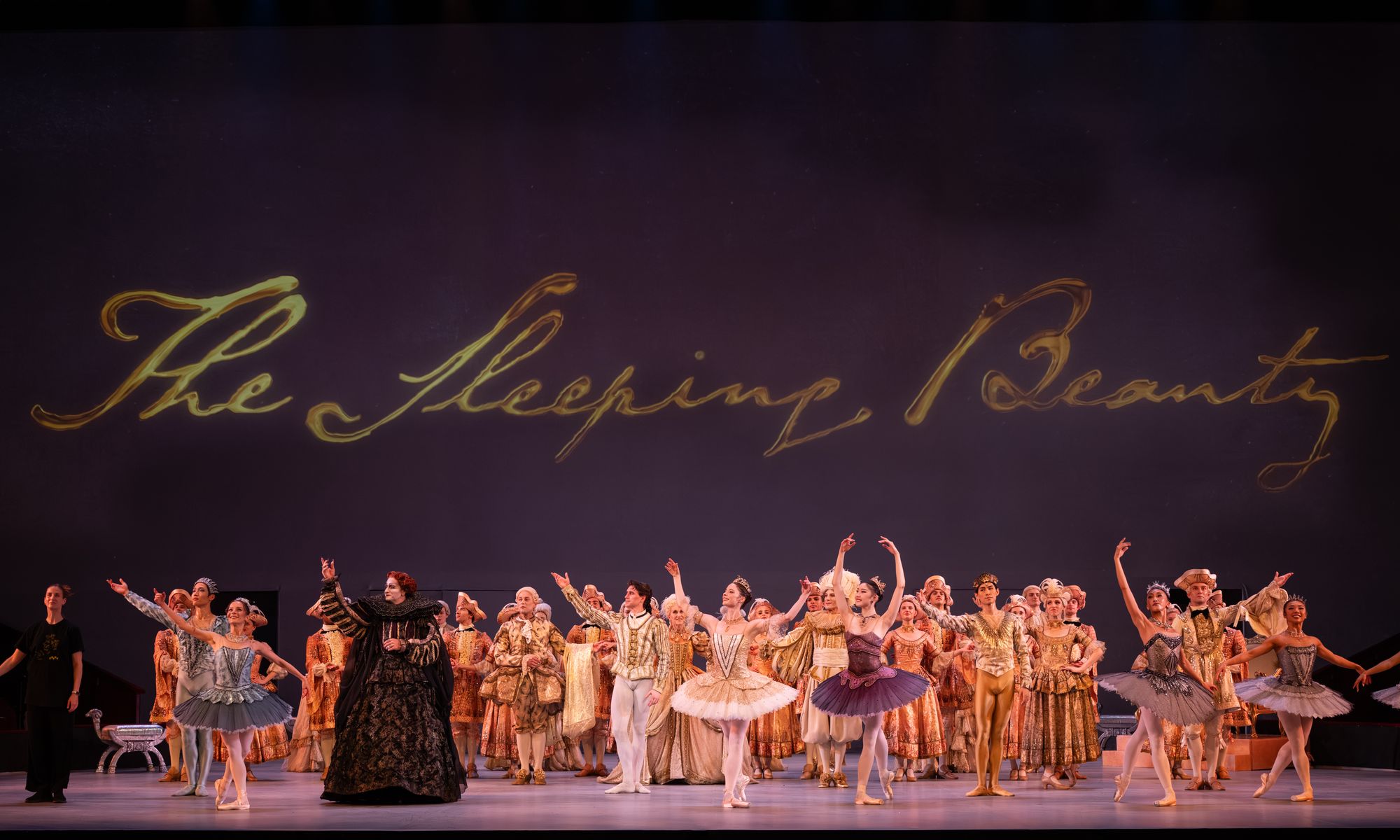
Costumes, props and set design also make up a big part of a ballet’s storytelling. Some of the costumes were the originals by Nicholas Georgiadis, while others were recreations. They were all gorgeous, though my favorites were the Lilac Fairy attendants and Aurora’s wedding dress. As for the set design, it was unique because they were in the Royal Albert Hall. The floor and digital backdrop had illustrations by Charlotte MacMillan, Kenneth MacMillan’s daughter. It would change with the action of each scene, bringing the set to life. Because of this, the dancers actually came down the steps of the stall sections closest to the stage and from doors that opened in the backdrop. The props were also only seating or handheld items. I thought it was effective in storytelling, however, sometimes the stage felt empty.
Photography by ASH
My favorite part of the entire ballet was Aurora’s wedding variation as it always has been. Maybe I’m partial to it because I remember the choreography, but the music itself is iconic. Sangeun Lee danced Aurora so beautifully and made everything look effortless. Her partnership with Gareth Haw, Prince Désiré, also advanced the story. It did not feel weird to me that we see them meet and get married in the same act because the dancers portrayed their connection well.
As for the Lilac Fairy and Carabosse, I appreciated their interactions. The contrast was obvious between Anri Sugiura’s gentleness and Fabian Reimair’s dramatics, making for good entertainment. However, the confrontation before Prince Désiré wakes Aurora felt a little underwhelming as I wasn’t always convinced that the Lilac Fairy could defeat Carabosse.
Overall, I thoroughly enjoyed the English National Ballet’s production of The Sleeping Beauty. The dancers, musicians, costumes, and set all worked gracefully in telling the story I know so well. I even teared up during the bows because as a former dancer I recognized their passion and realized I missed that feeling of performing on stage. And I like to say that a great performance is one that can make you feel something. I would definitely see the English National Ballet perform again.