

Dune: Part Two Analysis and Review
By Carissa Leong, intern
From a star-studded cast flaunting futuristic fashion at premieres across the globe to reviews deeming it the best sci-fi spectacle seen for decades, millions could not help being drawn to the hype generated by the release of Denis Villeneuve’s Dune: Part Two, even trailing at the back-end of a five-month delay.
Dune: Part One, the film’s predecessor, released during my freshman year of college and I orchestrated a large group to view it in theaters at the time. Before that, I read the first three books and in high school, I presented on Villeneuve’s strong filmography from Incendies onwards. On top of all that, Frank Herbert’s Dune was rooted deep in my interests, a hero’s journey story that aged incredibly well–turning out to not actually be about a hero at all–and made for a piercingly relevant story about environmentalism, colonialism, and religious fanaticism. It was guided in adaptation by the precise, visionary hand of Villeneuve and Part Two culminated into a different take on the novel, ultimately worthy of the source material it represented.
In its prequel, stewardship of the planet Arrakis was given by the emperor to House Atreides, pulled from House Harkonnen’s control. Inhabited by the indigenous Fremen, the planet was also the source of the valuable substance spice. The transfer of ownership was a setup, and Paul’s father Leto sought to ally with the Fremen but died in a collaborative siege from House Harkonnen and the emperor’s Sardaukar. Meanwhile, Paul, wracked with visions of the future mounting in frequency, escaped into the desert and met up with the Fremen while accompanied by his mother Jessica, a Bene Gesserit sister harboring tools of manipulation. Historically, the sisterhood purposefully crossed bloodlines to breed a Kwisatz Haderach, a powerful man who could see into the future as well as the past, and it became believed that the Kwisatz Haderach was Paul–a generation too early and out of their control.
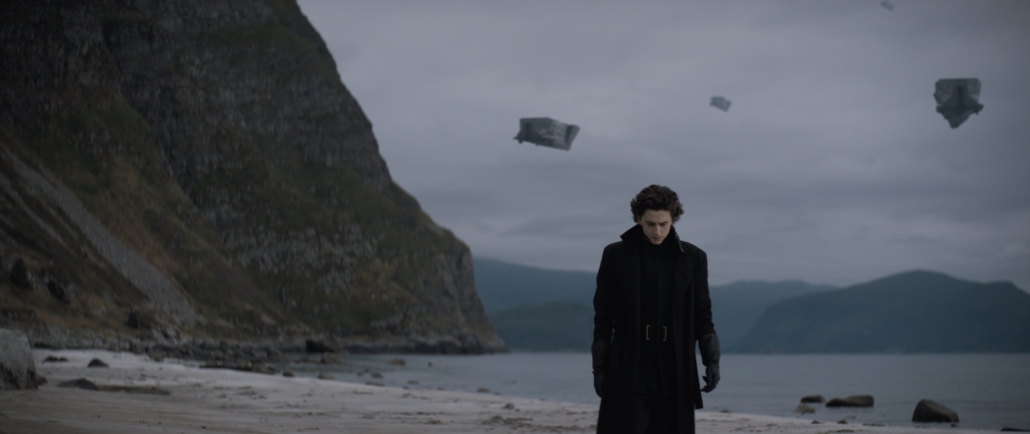
Dune: Part Two kicks off with Paul learning the ways of the Fremen as his relationship blossoms with Chani, the girl in his visions. The Fremen take Jessica to be their Reverend Mother and her empathy drains away as her mind accesses generations of knowledge by ingesting the Water of Life. The process impacts her pregnancy and her coming daughter Alia is believed to be an abomination. Following the defeat of the Atreides, the Harkonnens reclaim control of spice production but are often disrupted by Fremen guerrilla tactics under Paul’s direction. Encouraged to go south and cement himself as a messiah among fanatic tribes, Paul resists because he foresees a holy war. Simultaneously, a threat from the Harkonnens grows in the form of the psychotic Feyd-Rautha. In order to survive and win, Paul travels south and fully becomes the Kwisatz Haderach, finally bringing about the holy war and bending the emperor to his will, to Chani’s immense disapproval.

Before viewing the film, a big aspect drawing personal skepticism was the two-part split. In retrospect, it turns out I had nothing to worry about. The time jump integrates well and fleshes out characters in a way that the novel lacked. Paul and Chani’s relationship development is more organic, and it’s emotionally investing to watch Chani’s trust in Paul fragment as he descends the path of his dark destiny. Similarly, it is intriguing to be closer to Paul in both good and bad–his victories while learning the ways of the Fremen and his struggles in the face of his bloodstained destiny. The context also benefits Jessica’s portrayal, and her transition from a mother caring for her son into the passionless, purposeful Reverend Mother is completely chilling.
Consistent with adaptation, Dune: Part Two is no stranger to differences from the source material. One of note is the presence of Paul’s sister Alia. Villeneuve saw the cheesiness in David Lynch’s 1984 adaptation, a toddler channelling generations of knowledge, and instead keeps her in the womb in telepathic communication with Jessica. The change contributes to Jessica’s eerie powers and the air of mystery benefits Alia, making viewers wonder what kind of abomination she would be when she’s finally born without having to directly portray it at all.

Another difference is the integration of Paul’s nemesis Feyd-Rautha halfway into this installment. There’s a lot of risk with a late introduction, especially regarding believability, but it is remarkably in-character for the cunning Feyd to exist in the shadows of his intense and fumbling brother, Rabban. It’s a little jarring to get his entire origin story in the middle of the film, a long sequence completely separate from the aesthetics of Arrakis, and I wonder if it had been viable to integrate him earlier while still maintaining his relevance.
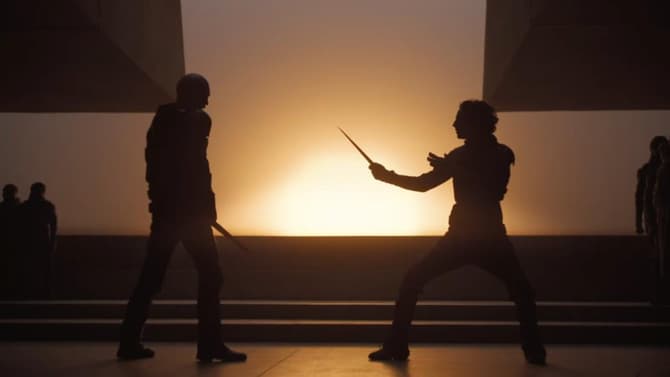
On the technical side, Dune: Part Two does a phenomenal job capturing both intimacy as well as scale, courtesy of constant collaborators Greig Fraser and Hans Zimmer. Over his past filmography, Villeneuve established and perfected an aesthetic of grand minimalism in science-fiction, particularly with the worlds of Blade Runner 2049 and Arrival, and the same purpose is evident in each shot of this film, from the massive arena under the black sun of Giedi Prime to the silhouettes of Paul and Chani on Arrakis, their gazes turned toward an ocean of sand. Zimmer’s sweeping score proves to be similarly versatile, backdropping raging wars to the softness of human connection, with everything catered to in between.
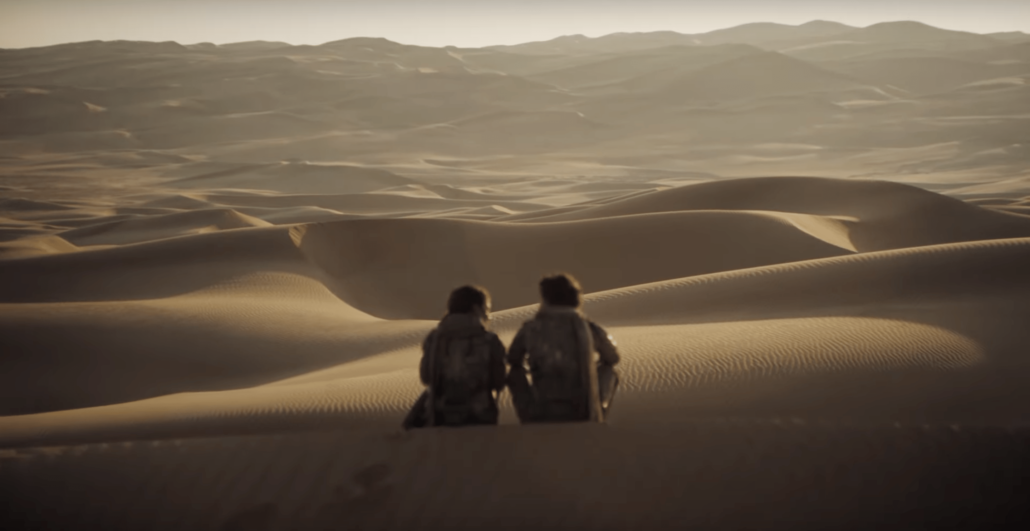
Significant themes are explored throughout including a heavy critique of religious fanaticism. The prophecies that the Fremen believe in are faked, planted by the Bene Gesserit to ensure the safety of the Kwisatz Haderach and themselves everywhere, and it’s one of their many tools for manipulation. At first condoned, it’s taken advantage of by Paul and Jessica when they trade priorities–intimate relationships for colossal plots–as their minds expand into omniscience, drifting away from humanity. Because viewers are given more time to know the Fremen culture, we know exactly what’s at risk when they throw everything aside to worship Paul–specifically referencing the shot of burning corpses, a harsh contrast to the careful conservation of the bodies’ water at the beginning of the film.
On top of that, because of Paul’s inherited atomics as a Duke of one of the Great Houses in the Imperium, the means to officially overthrow oppressors would never have been in the hands of the Fremen originally. It would always require the loyalty of an outsider intermediary. It begs the question–could the Fremen have been given the resources that they lacked without the core of their people changing so completely or is the power dynamic between the privileged and underprivileged something that can never be fixed?
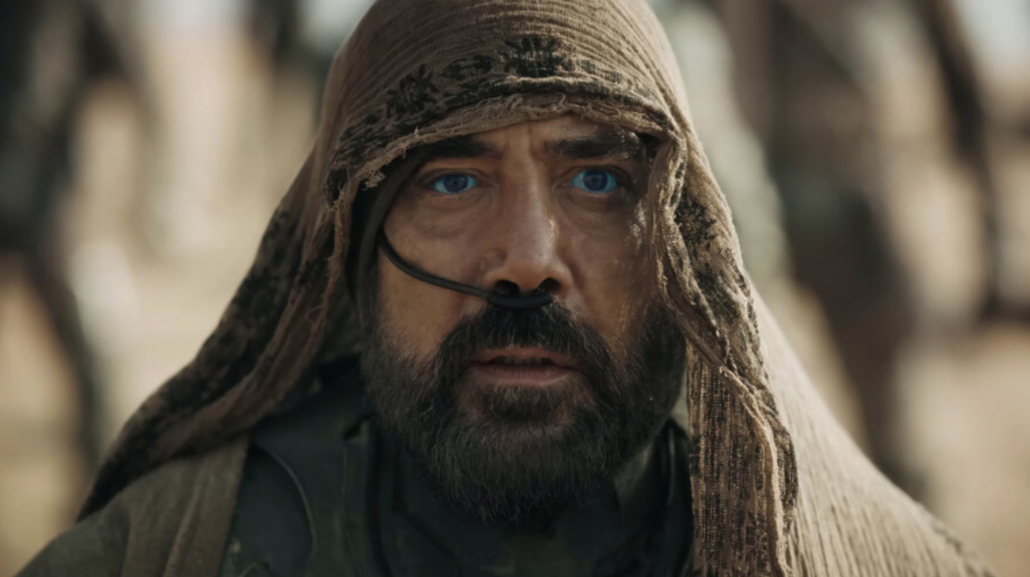
As well, the link between colonialism and environmentalism is clear in Paul’s vision of his grown sister Alia walking in the future of Arrakis–dunes leading to an ocean. Contrasting the Fremen’s respectful co-existence with the environment, using the sandworms for transportation and echoing the sounds of nature in their walk, the colonists seek to change it to suit themselves and give it the ocean reminiscent of their homeworld. This is a vignette of history that has been repeated time and time again, with those harnessing the environment constantly prevailing over the indigenous communities that existed in-tune with it for centuries.
Ultimately, this is a film about warring familial pride and the lengths that one would go to preserve theirs, regardless of those caught between. In the film, Paul puts it well: to beat the Harkonnens, the Atreides must become them. The Atreides truly are no better, exploiting the Fremen for their own gains and genetically, they are exactly the same through Jessica’s bloodline. Even though he struggles with it at first, Paul’s decision is wholly selfish; he sees what he would become and opts for the dark path on account of the survival of his House and revenge for his father, rather than facing a moral death–even while knowing that his survival would barely give the Fremen more agency than the Harkonnens would.
The ending with Chani alone, abandoning Paul and making her way back into the desert, poses as a cliffhanger alluding to the final act of the trilogy, the adaptation of Dune: Messiah. Chani is refreshingly given more agency to disagree with Paul’s decisions–which culminates when Paul chooses Princess Irulan’s hand in marriage for a political alliance, sentencing Chani to a future as a concubine, a harsh backhand since Paul originally stated his desire to be equal to her. It is interesting to consider how their relationship will be repaired in the time jump to Herbert’s second novel, and evidently, its portrayal will be in more than capable hands.
With a MAX show about the Bene Gesserit also in development, the franchise is already taking root as some of the most impactful on-screen science fiction in recent history. It epitomizes what the genre has always done best–create a speculative universe through which strikingly real flaws of society and humanity can be deliberated. More engaging than the prior installment, Dune: Part Two only furthers this mentality with every planted seed fully brought to fruition and resulting in the beginning of one of the most consistent cinematic universes yet.

