
Book Review: Loveless
By Macy Ellis
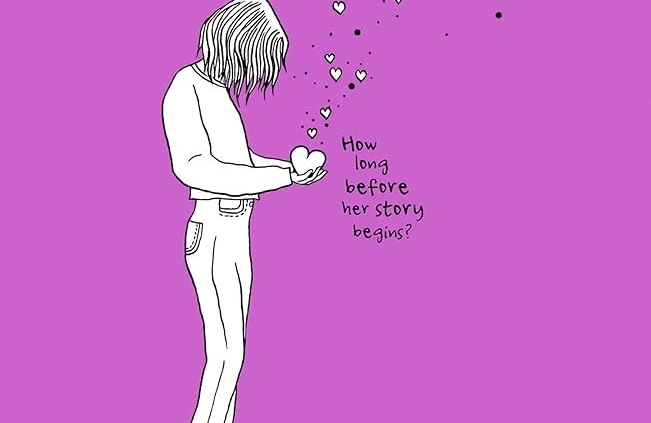
Alice Oseman’s Loveless follows Georgia, a young woman transitioning from high school to college who battles loneliness and questions her sexuality identity. The book focuses not only on Georgia’s growth in coming to terms with her asexuality and aromanticism, but it also manages to reflect the wide range of experiences of members in the LGBTQIA+ community. Loveless is a very important YA novel for our current time and is able to represent LGBTQIA+ young adults realistically, in a way that media doesn’t often get right. These people are not confused or stuck “in a phase,” rather, they know their own feelings better than anyone else. However, society hasn’t made the language for these feelings widely available, making it difficult for queer people to express to others how they feel.
Loveless is written in a way that is accessible, but sometimes that simplicity becomes the story’s downfall. While Oseman does make a point to mention sexualities such as demisexuality and grayromanticism she describes them as “internet” sexualities—ones that are lesser known, or sometimes perceived to be made up. Although Oseman names them, these sexualities are never mentioned again or described in any detail, which I would have loved to see. Oseman writes:
. . . people identified as all sorts of combinations of romantic and sexual – there were gay asexuals, like Sunil, or bisexual aromantics, like Jess, or straight asexuals, pansexual aromantics, and loads more. Some asexual and aromantic people didn’t even like splitting up their attraction into two labels, and some just used the word ‘queer’ to summarise everything. There were words I had to google like ‘demisexual’ and ‘greyromantic’, but even after googling I wasn’t sure exactly what they meant.
While it is important to have this conversation about how truly wide ranges can be within sexual identities, I would’ve liked to have seen more discussion on some of the sexualities mentioned, as they are brushed aside a bit too quickly.
Another area I would have liked Oseman to expand upon surrounds Georgia’s worries about ending up alone in life due to her sexuality. Given the heaviness of this topic, I feel it is resolved too neatly in the text. After coming to terms with her sexual identity, Georgia discovers that she can value platonic love as much as others value romantic love. She realizes that she will never be alone in life when she has her friends, that they are the true loves of her life. While I appreciate this sentiment, I question how realistic it is for Georgia to go from worried to completely fine, and I would have liked to see her grapple even more with the uncertainty of the future. In real life, things are never certain, and I wonder if it would have been more impactful had Georgia’s character been left to wonder if there would always be someone there for her and how she would know that to be true.
I give Loveless four out of five stars. Save for some minor criticisms, I think Loveless ultimately succeeds in its themes: that platonic love is just as important and meaningful as romantic love, that all sexualities are valid and deserve to be legitimized, that understanding sexuality identity is a process and not a straightforward path, that there are no right or wrong experiences for queer people, and that safe spaces have great value. What I think the book succeeds most in is showing readers the importance of own-voices storytelling. Oseman herself is asexual, which allows her to write realistic characters, showcasing all of their goodness and flaws in tandem. With her book, Oseman is actively challenging society and its norms including heteronormativity. I have been thinking much about queerness as a concept recently, so this read came at a perfect time. Like we see in Loveless, I think it’s far braver and more important to live our realities and challenge the constraints of society than to remain complicit in a system that’s not working for us.

