
The Value of the Arts within a City’s Culture
By: Natalie Kreider
When I first arrived in London, I didn’t know what to expect from its art scene, except for the research I had done online and on social media. However, as a lover of the arts, that doesn’t nearly depict what I have discovered in the two months I have been here. From those unexpected artistic encounters to the start of my time here at Paddington Arts and exploring London’s many neighborhoods, I’ve come to recognize the value of the arts within a city’s culture.
Almost every week, I’ve found myself walking into London’s many free art museums, where I could stay for hours, which I have. However, I was not expecting to witness it so often in everyday life. Specifically, what’s enthralling is the deliberate nature of a crafted piece in the streets, but it’s placed in an unconventional setting. One sunny morning, while walking from the Westbourne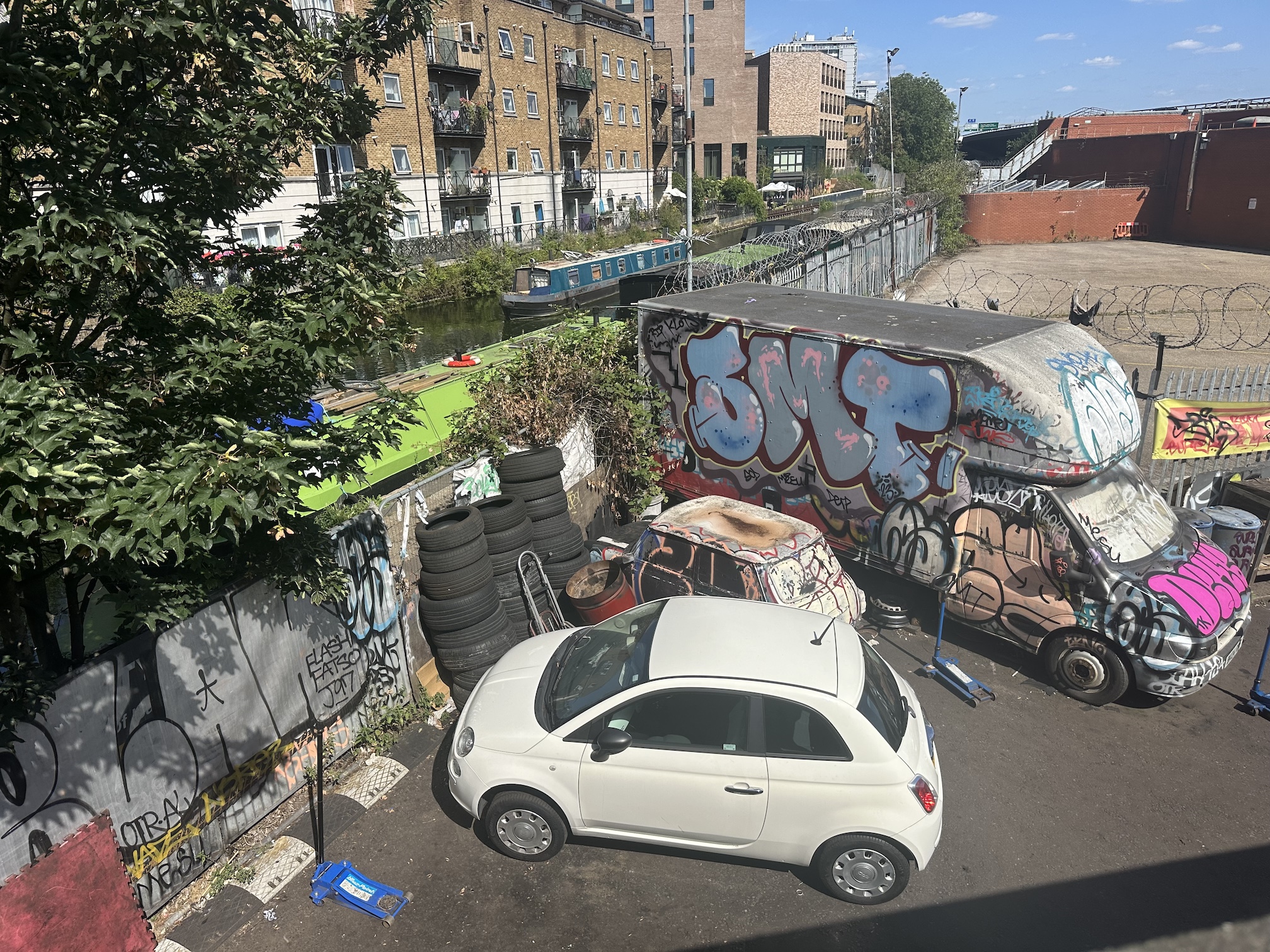 Park Tube station to Paddington Arts, I slightly tilted my head and noticed the graffiti on some old cars in a small junkyard by the canal. The beauty behind this discovery was not just the art itself, but how one has to pay attention to the little details to discover this artistry.
As a study abroad student on a limited budget, not all the art that London has to offer is accessible to me. Starting my internship at Paddington Arts, a youth arts nonprofit that makes art an attainable, creative, and explorative outlet for all, has put into perspective what it means for art to be accessible. This organization provides young people, especially those from marginalized backgrounds, with the space to rewrite the narrative and share the untold stories of the arts. It also gives them the chance to express themselves and grow in ways that they probably never thought were possible. In the short time I’ve been here, it’s become clear that spaces like this are essential in providing art for all in this city and influence artistic culture.
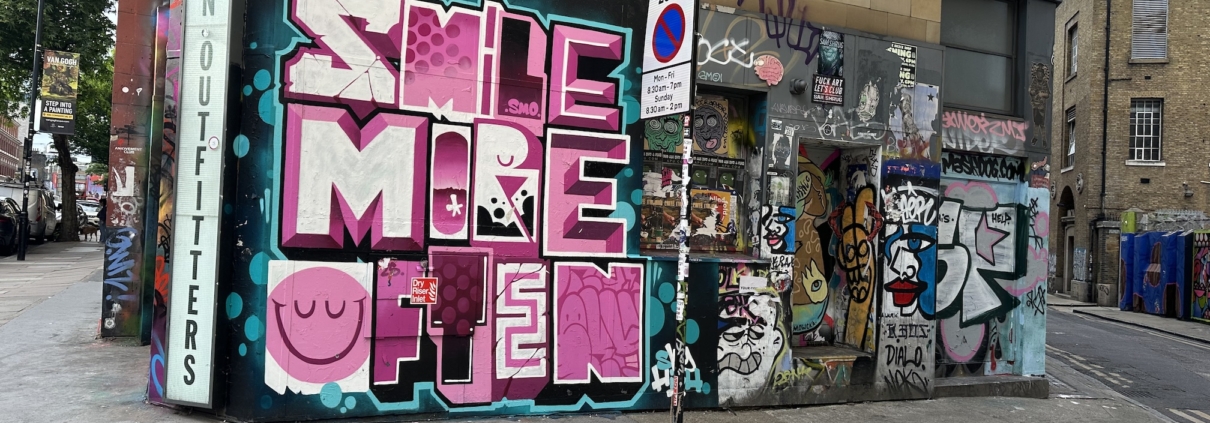
 From the street art in Shoreditch to the musical theater posters displayed throughout the Tube stations, London’s art reflects the character of its people and what matters to them. As I’ve wandered throughout the different neighborhoods, I’ve come to recognize that the art depends on where you are in the city. In the artfully subversive East End neighborhoods of Shoreditch and Camden, the walls are adorned with graffiti and murals, some of which are political, while others are purely self-expressive. In other parts of the city, there’s a more subtle hint of art. Throughout the West End neighborhoods of Soho and Covent Garden, a more polished, theatrical environment emerges, mirroring its historical prestige, where the city is reflected in its baroque theater façades, curated gallery exhibitions, and illuminated posters for its many musicals. This contrast between the neighborhoods exemplifies how London’s art reflects the diversified identity and values of its people.
Over my past two months in London, I’ve become more aware that the means of art is not just for pure observation but something you experience, navigate, and learn from. It’s the subtle little details that I didn’t plan to discover, such as the hidden graffiti-covered car by a canal, that made me view the city through a broader artistic lens. This change in perspective has further expanded once I started my internship at Paddington Arts, where I’ve witnessed the significance of making creative expression accessible. Providing young people with the opportunity to express themselves through art, especially for those who are often overlooked, reinforces the value that art plays in contributing to London’s cultural identity. These experiences began to connect as I continued exploring London’s neighborhoods, where I’ve recognized how their distinctive artistic styles reveal a great deal about who they are and what they are about. In the weeks I’ve been in London, I’ve witnessed how the arts shape identity, create space for expression, and reflect the voices of its communities.

