

By George Clyde
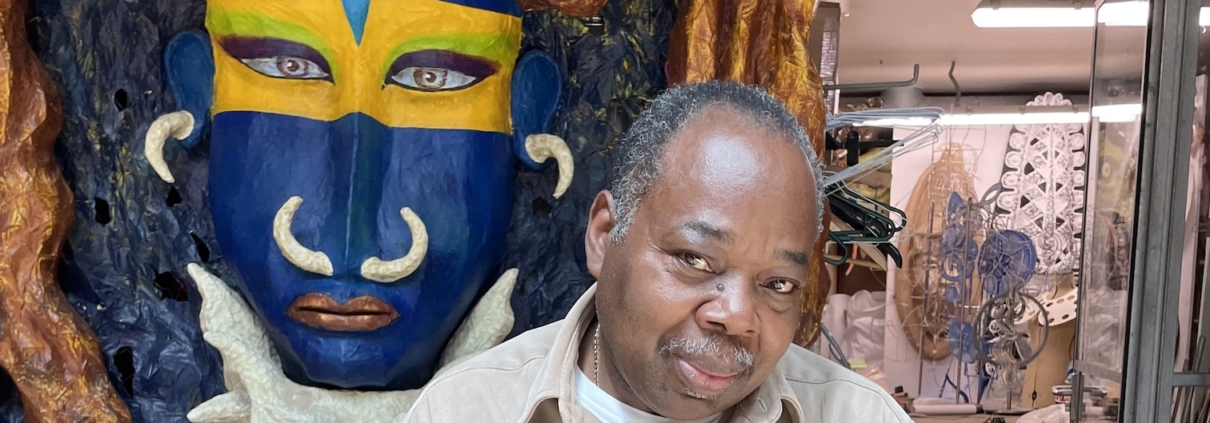
As part of my internship experience with Paddington Arts, I got a chance to interview local artist, Carl Gabriel. Carl immigrated from Trinidad to London when he was around 8 years old. He attended university for engineering, before changing paths and using his technical abilities to become an expert wire-bending sculptor and a prominent figure in the carnival arts scene.
When I began to prepare for the interview, I decided that I wanted to shift the focus away from the actual technicalities of his art, which his past interviews online had centered around, and tell his story as a person. Through his own personal journey, I hoped to find something deeper about immigration or activism in the arts or access some new perspective about the ideas and people that make carnival what it is.
When I started off the interview though, Carl immediately pushed me away from touching on his life story. “Let’s keep it to carnival,” he said. Attempting to switch my focus up on the spot, what I came away with was an interesting interview, with some good insights and brief personal moments, but it was scattered and it lacked a center. My takeaway, as I continue to learn and grow as a journalist, is that rather than forcing the interview away from his identity as an artist, I should have explored him through that route.
An interview is always a push and pull between the interviewer and interviewee in terms of which direction it takes, and I don’t think I quite got that balance right. Moving him away from the technicalities may have been a good move, but I feel that I moved him away from his art as a whole. By asking him about what the different pieces meant to him and getting him to tell those stories, I may have gleaned something of his relationship with his art and the ideas and beliefs that drive him as a person both in his art and outside of it. It didn’t help that the second part of the interview, where he took me around and did begin to talk about some of his individual pieces, was cut off by the camera running out of storage. I also wish that I got some stories about his time working with the other carnival pioneers. I think that would have shed some more light on what the experience of carnival was like from the inside.

What I did really like about the interview was that you got the sense of his strong attachment to wire-bending as an art form and his commitment to authentically representing West Indian art and culture. He talked about his introduction to engineering back in Trinidad, which contrasted well with the end of the interview where he discussed how he’s now committed to passing on the skills and traditions to the younger generation. “I want them to know that there’s an outlet for them to represent our culture,” he said. “If they do it right, there’s opportunity there.” Even if the interview wasn’t as focused as I would have liked it to be, I do feel that it gives a good sense of Carl’s demeanor and personality. As a personal experience, I very much enjoyed getting a chance to enter Carl’s space and have a conversation with him about his journey into the arts. In the process, I’ve learned some valuable filmography, editing, and interview skills that I’ll certainly take with me into the future.


